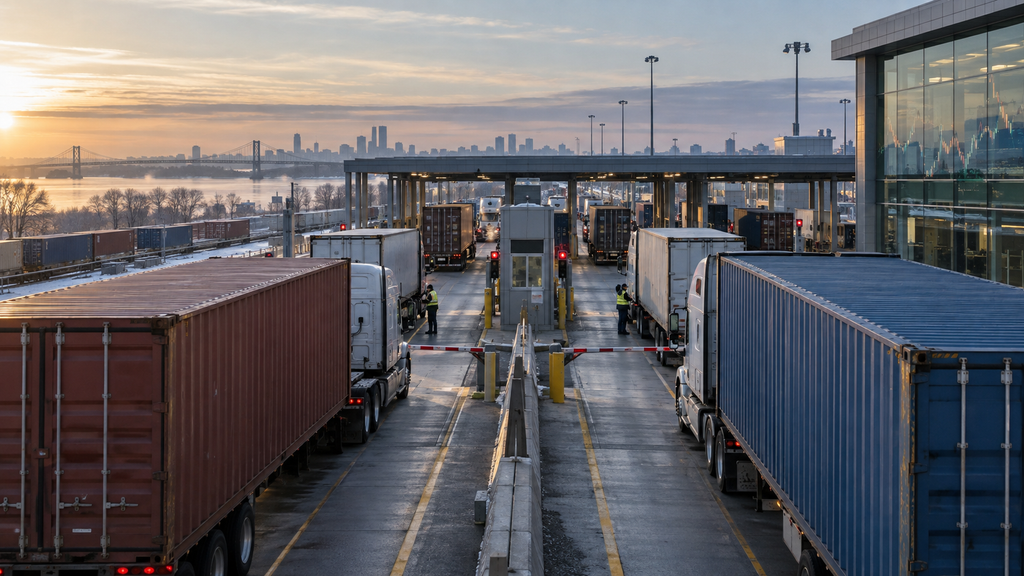
The United States and Canada escalated their trade conflict on September 8, moving the dispute beyond conventional tariffs and towards outright restrictions on market access.
Canada began imposing counter-tariffs of 15%, 25% and 50% on C$27.6 billion of goods imported from the United States. That is equivalent to roughly US$20 billion at contemporary exchange rates.
The measures cover products in industries including steel and aluminium, dairy, appliances, agricultural equipment, pulp and paper, plastics and electronics. In some sectors, existing Canadian tariffs were increased from 25% to 50% to match corresponding U.S. rates. Canadian counter-tariffs on American automobiles also remain in force.
Ottawa described the measures as a dollar-for-dollar response to U.S. tariffs imposed on C$27.6 billion of Canadian goods in August. The Canadian government’s official product list confirms that the latest countermeasures took effect at 12:01 a.m. on September 8.
Washington responded later that day with a new set of restrictions.
The United States said selected Canadian alcoholic beverages, dairy products and motorcycles would be excluded from the American market beginning September 29. Its measures therefore go further than making imported products more expensive: affected goods will not be permitted to enter the country.
The administration also directed the U.S. Trade Representative and General Services Administration to remove US$50 billion of Canadian-origin products from the schedules used by federal agencies to purchase goods and services, according to an official USTR statement.
Why This Story Matters to Investors
The immediate measures are targeted compared with the full economic relationship between the two countries. However, the value of the affected goods does not capture the potential significance of the confrontation.
U.S.–Canada trade in goods and services totalled an estimated US$872.3 billion in 2025, according to USTR trade data. Goods trade alone reached approximately US$715.5 billion.
That relationship supports deeply integrated production networks. Components, raw materials and finished products frequently cross the border as part of manufacturing and distribution processes. A disruption affecting one category can therefore create costs elsewhere in the supply chain.
The central financial issue is uncertainty.
Businesses can model a known tariff, renegotiate contracts or adjust prices. It is more difficult to plan around the possibility that a product could suddenly lose access to an important market.
If companies conclude that cross-border access has become less predictable, they may hold more inventory, add alternative suppliers, duplicate production or postpone investment. These decisions can improve operational resilience, but they usually increase costs and reduce capital efficiency.
From Tariffs to Market Exclusion
The distinction between a tariff and an import ban is important.
A tariff changes the economics of a transaction. Companies can still import the affected product if customers or businesses are prepared to absorb the additional cost.
An import ban removes that option. Exporters may have to redirect goods to another market, reduce production or find alternative distribution arrangements. Importers must locate replacement products regardless of price.
The U.S. alcohol ban appears to cover most categories, including beer, wine, whisky, rum, vodka, vermouth and brandy, according to Reuters’ account of the measures. The dairy restrictions include selected whey and molasses products, while additional Canadian cheeses have been placed under a 50% tariff rather than prohibited outright.
Some paper, aluminium, wood, furniture and lighting products were also added to the U.S. tariff lists.
The precise financial effect will depend on customs guidance, possible exemptions and whether the restrictions take effect exactly as announced on September 29.
An Unusual Legal Foundation
The U.S. measures were issued under Section 338 of the Tariff Act of 1930.
The provision allows the president to impose duties of up to 50% or exclude products from a country found to discriminate against American commerce. Washington argues that Canadian policies affecting U.S. alcohol, dairy products and motor vehicles meet that test.
The legal foundation adds another layer of risk. Section 338 had never previously been used or tested in court, according to an Associated Press examination of the law.
That does not mean the measures will necessarily be overturned. It means businesses cannot rely on a long history of judicial decisions to determine how the authority will be interpreted.
Legal challenges could create temporary relief, further uncertainty or changes to the scope of the restrictions. Investors therefore need to follow both the commercial implementation and the courts.
Corporate and Market Implications
The most direct effects will fall on companies selling products included in the tariff and prohibition lists. Importers may have to absorb higher costs, pass them to customers or replace established suppliers.
The consequences will vary according to pricing power and market structure.
A business selling a specialised component with few substitutes may be able to preserve its margins. A consumer-products company operating in a competitive category may struggle to increase prices without losing sales.
Working-capital requirements could also rise. Companies may increase inventories ahead of implementation dates or carry additional stock from alternative suppliers. That ties up cash and can create excess inventory if the rules are later changed.
The dispute also affects companies that are not yet directly covered. Management teams must consider whether other industries could be included in future retaliation.
Aviation offers an example of this headline sensitivity. Bombardier shares opened more than 6% lower on September 8 after President Donald Trump threatened the Canadian aircraft manufacturer’s access to the U.S. market, before recovering part of the decline. The company generates approximately half its sales in the United States, according to Reuters.
The reaction demonstrated how quickly political statements can change the risk premium attached to a company with substantial exposure to one foreign market.
Inflation and Investment Risks
Tariffs can increase import prices, although the final effect on consumer inflation depends on exchange rates, profit margins, demand and the availability of substitutes.
Companies do not always pass the entire cost to customers immediately. Some absorb it through lower margins, while others negotiate price reductions from suppliers. Over time, however, persistent trade barriers can contribute to higher costs.
At the same time, uncertainty may weaken investment.
A manufacturer deciding where to build a new plant needs confidence that its products will retain access to customers. If that access can change abruptly, the company may delay the project or build extra capacity in multiple countries.
Those decisions matter for productivity and economic growth. They can also affect valuations before the consequences become visible in official trade statistics.
What Investors Should Watch Next
The first milestone is September 29, when the new U.S. import bans are scheduled to begin.
Companies and investors should monitor:
- Detailed customs and implementation guidance
- Product exemptions or changes to the published lists
- Canadian tariff-remission decisions
- The treatment of goods already in transit
- Further restrictions on government procurement
- Negotiations between U.S. and Canadian trade officials
- Corporate disclosures about revenue, suppliers and tariff costs
The most important question is whether the dispute remains contained.
The current measures affect a limited portion of total bilateral commerce. A further cycle involving automobiles, metals, machinery or other strategically important industries would have much larger consequences for North American production.
A negotiated pause would reduce the immediate risk. Continued retaliation would encourage companies to reassess supply chains and investment plans even if their products have not yet been targeted.
The Investor Takeaway
The escalation should not be interpreted as affecting every U.S. or Canadian company equally.
Exposure depends on where a business earns revenue, where its products are manufactured, how its contracts allocate tariff costs and whether alternative suppliers or customers are available.
Companies with diversified markets, flexible sourcing, strong balance sheets and transparent disclosures are generally better equipped to manage sudden policy changes. Businesses that depend on one trade corridor or a narrow group of customers have less room to adapt.
For now, the economic effect remains uncertain and the measures are targeted. Nevertheless, the transition from tariffs to import bans is significant. It suggests that market access itself can no longer be treated as entirely predictable.
In a deeply integrated North American economy, that uncertainty can influence corporate behavior well before it appears in earnings reports or trade data.