No spam - just the latest insights!
Join over 30,000 industry professionals who subscribe for free

Subscribe for free!
We'll never share your information or send you spam
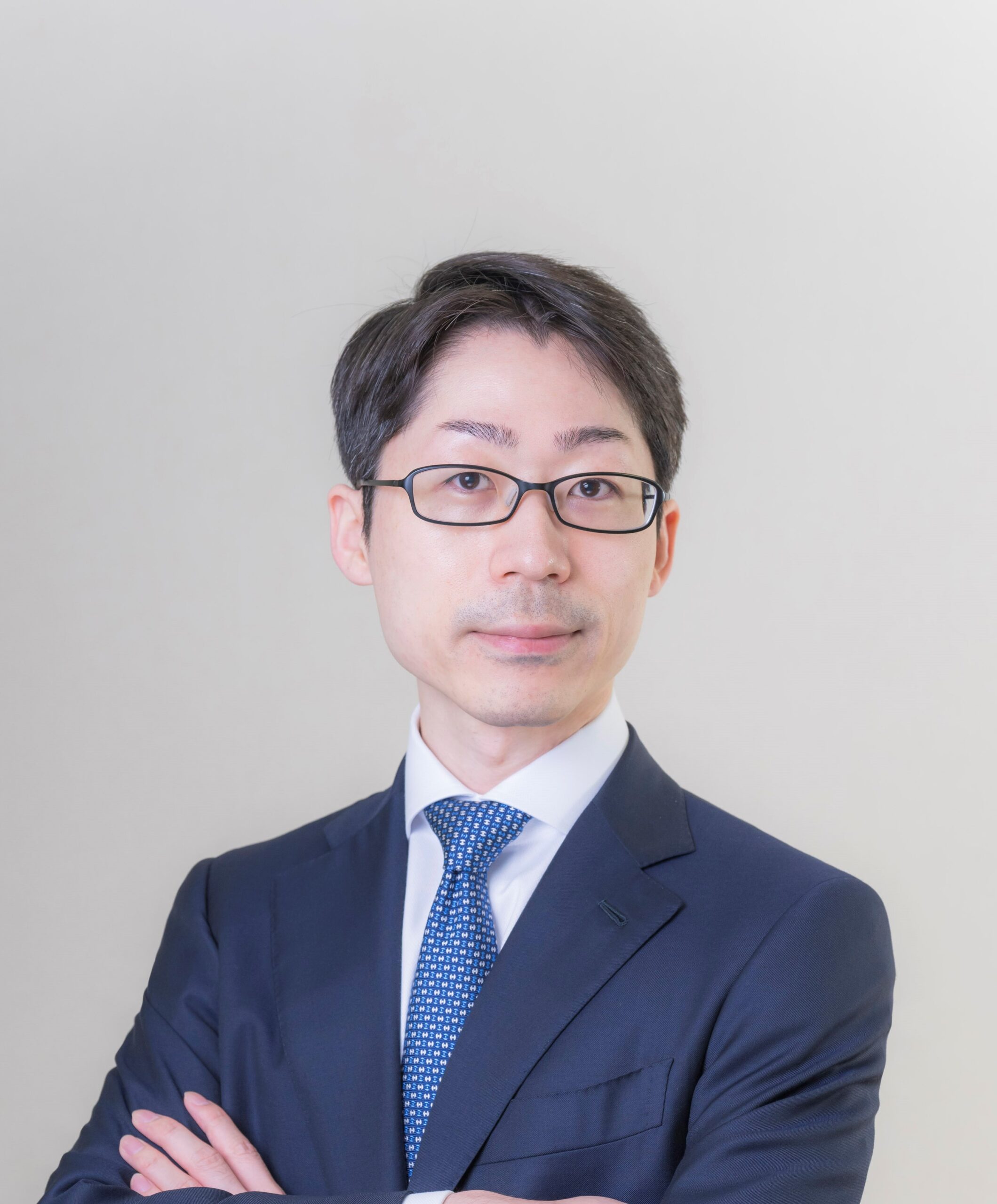
Keita Nakano is a partner at Mori Hamada & Matsumoto, which is one of the leading Japanese law firms in the asset management area. He undertakes a broad range of work for non-Japanese investment fund managers.
Keita has been involved in a number of public offerings and private placements of units/shares of investment trusts/ corporations established in a variety of jurisdictions, such as the Cayman Islands, Luxembourg, and Ireland, in relation to regulatory and disclosure compliance in Japan.
Also, Keita has advised on the formation and fund-raising of domestic and overseas partnership-type funds, such as private equity and venture capital funds and real estate funds. He has substantial experience in advising general partners and similar entities on contract drafting and regulatory compliance, including filing notifications and discussing with the Japanese authorities in connection with the admission of Japanese investors.

Ryosuke Onobori is a senior associate at Mori Hamada & Matsumoto who primarily works in the practice areas of financial regulations, asset management, Japanese real estate investment trusts and capital markets. He specialises in banking, security and payment regulations, and he has extensive experience in advising financial institutions such as banks, asset managers and fintech companies. From 2021 to 2023, he was seconded to the Financial Services Agency of Japan as a deputy director of the Digital and Decentralised Finance Planning Office in the Policy and Markets Bureau. During his secondment, he was actively involved in planning the Japanese regulatory framework for stablecoins, including the development of AML/CFT regulations such as the travel rule, which came into effect on 1 June 2023.

Non-Japanese fund managers seeking to conduct fund management business in Japan must comply with Japanese securities-related regulations. In particular, the Financial Instruments and Exchange Act of Japan (the “FIEA”) regulates investment management business and investment advisory business. Market entrants are required to be registered by the regulatory authority and are subject to financial regulations such as customer disclosure requirements and a duty of care, although some exemptions are available to foreign fund managers providing asset management services to Japanese investment managers or other qualified customers. In addition, the FIEA imposes a lighter regulatory regime, including allowing notification to the regulatory authority rather than registration, on managers providing asset management services such as special business activities for qualified institutional investors and specially permitted services for foreign investors.
The Japanese government and the Financial Services Agency of Japan (the “FSA”) have recently launched an initiative to promote Japan as an international financial centre in an effort to attract non-Japanese asset managers. For example, in 2021, the FSA established a “Financial Market Entry Office” to support foreign asset managers seeking to enter the Japanese asset management market. In addition, in 2023, the FSA established a “Task Force on Asset Management” (the “Asset Management Task Force”), which reviewed the barriers to the efficient conduct of asset management business in Japan.
The FIEA requires an entity to register as a financial instruments business operator if it intends to engage in certain regulated businesses that are considered to be financial instruments businesses under the FIEA. Financial instruments businesses are divided into four types: (i) Type I Financial Instruments Business, which is a collection of sales and trading, broker-dealer-type business, underwriting and other businesses relating to traditional securities, such as shares, bonds, units and derivatives; (ii) Type II Financial Instruments Business, which is similar business to Type I Financial Instruments Business except that it deals with interests in partnership-type funds and other less liquid financial instruments; (iii) Investment Management Business, which includes discretionary investment management contracts ; and (iv) Investment Advisory and Agency Business, which includes non-discretionary investment advice. Among these types of financial instruments businesses, Investment Management Business and Investment Advisory and Agency Business are particularly related to asset management business. More specifically, Investment Management Business covers the management of customer assets on behalf of the customer (discretionary investment management business), the management of investment trusts (investment trust management business) and management of certain collective investment schemes such as partnership-type funds. The main difference between Investment Management Business and Investment Advisory and Agency Business is whether the authority to make investment decisions is fully delegated from a customer to a financial instruments business operator. If authority is fully delegated, the business falls under the category of Investment Management Business.
In principle, persons wishing to engage in Investment Management Business and/or Investment Advisory and Agency Business in Japan are required to be registered as a financial instruments business operator by the regulatory authority. Registration requires, among other things, that an applicant have in place the necessary governance arrangement to conduct financial instruments business in an appropriate manner. Governance arrangements must include a compliance officer with sufficient knowledge and experience to conduct financial instruments business. In addition, an applicant for Investment Management Business is subject to the organisational requirements that it be a Japanese joint stock company or an equivalent non-Japanese company with a board of directors and an office in Japan, and at least JPY 50 million in capital. On the other hand, an applicant for Investment Advisory and Agency Business is not subject to such organisational requirements and capital requirements, however it is required to deposit JPY 5 million with a legal affairs bureau before starting business.
Upon registration, registered investment managers and investment advisors are required to comply with broad conduct regulations such as marketing regulations, conflict of interest prevention obligations and customer reporting obligations; however, exemptions from certain regulations including the provision of information are available if their services are provided to professional investors. In addition to such general regulations, registered investment managers are subject to business restrictions that limit the scope of other types of business in which they may engage. If they fail to comply with the applicable regulations, they may be subject to administrative sanctions such as remedial orders, the suspension of business or the revocation of registration, depending on the extent of the violation.
Given the document-intensive and time-consuming nature of the registration procedures described above, many overseas firms rely on exemptions from registration requirements under the FIEA to conduct their business in Japan.
Non-Japanese Asset Managers Exemption
Under the FIEA, there is an exemption from registration requirements for non-Japanese asset managers. For example, non- Japanese investment management firms conducting discretionary investment business in foreign jurisdictions may provide their services, without registration under the FIEA, to registered financial institutions conducting investment management business under the FIEA. This exemption allows Japanese investment managers to delegate their investment management functions to non-Japanese investment managers. In this case, the non-Japanese investment managers owe fiduciary duties directly to end-Japanese investors under the FIEA. Non-Japanese investment advisors are also able to provide their services, without registration under the FIEA, to registered financial institutions conducting investment management business under the FIEA.
QII-Targeted Fund Exemption
The most popular exemption for non-Japanese asset managers is the QII-Targeted Fund Exemption, which is available to the general partner of a partnership-type fund for the solicitation of interests in the partnership-type fund itself (i.e., a “self-offering”) and its investment management. If the general partner relies on this exemption, it is able to conduct those activities by filing a notification with the authority without registration as a financial instruments business operator. However, there is a limitation on the category of Japanese investors. At least one of the investors must be a “Qualified Institutional Investor” (“QII”) as defined in the FIEA and regulations thereunder and the number of Japanese non-QIIs is limited to 49. In addition, each Japanese non-QII must be an “Eligible Non-QII”, i.e., an investor who meets certain requirements. In addition, a general partner filing a notification to rely on this exemption will be subject to certain conduct regulations under the FIEA.
Simplified Measures for Foreign Investment Managers
As a part of the FSA’s initiative to promote Japan as an international financial centre, simplified measures for non-Japanese investment managers were introduced in 2021 with a view to easing the operational burden on foreign investment managers by introducing notification procedures instead of registration procedures. Such simplified measures consist of two types: (i) an entry scheme for investment managers of funds with overseas qualified clients (non-Japanese corporations and individuals located abroad with a certain amount of assets) and (ii) a pre-registration entry scheme for managers who manage only offshore funds pursuant to an authorisation granted by a foreign regulatory authority and that have a proven track record in specified foreign jurisdictions (a temporary measure for 5 years).
One of the biggest barriers for non-Japanese asset managers to enter the Japanese asset management industry is the need for Japanese language during the application process and in daily communications with financial regulators.
In order to address this challenge, on January 12, 2021, the FSA and the Local Finance Bureaus established a one-stop regulatory office, the “Financial Market Entry Office” to handle the entire regulatory process from pre-application consultation, registration, to post-licensing supervision, with all communication available in English.
Initially, the Financial Market Entry Office offered its services to foreign asset management companies seeking to obtain registration for (i) Investment Management Business; (ii) Investment Advisory and Agency Business; and (iii) Type-II Financial Instruments Business relevant to certain types of asset management business. The coverage of the Financial Market Entry Office was subsequently extended to Type-I Financial Instruments Businesses dealing with units of foreign investment trusts or shares of foreign investment corporations and providing services to certain categories of professional investors.
The introduction of the Financial Market Entry Office was a major step toward realising the goal of transforming Japan into a “Leading Asset Management Centre,” given the costs of translation and the need for Japanese-speaking personnel.
On June 16, 2023, the Japanese government expressed its intention to promote Japan as a “Leading Asset Management Centre” through its “Basic Policy on Economic and Fiscal Management and Reform 2023”. In addition, in its “Grand Design and Action Plan for a New Form of Capitalism 2023” (Revised Version) released on the same day, the government also presented a policy to fundamentally reform the asset management industry through measures that include the improvement and strengthening of the regulatory environment for governance, asset ownership and stewardship activities (i.e., dialogue with companies), and for enhancing the competitiveness of the asset management industry by supporting new entrants, promoting competition among domestic and overseas asset management companies, improving asset management capabilities and diversifying investment targets.
In line with this governmental policy, the FSA indicated in its “Financial Administrative Policy for Fiscal Year 2023” released on August 29, 2023, that it would “promote initiatives to realise a Leading Asset Management Centre,” and established the Asset Management Task Force in October of the same year. The Asset Management Task Force convened four times between October and November and on December 12, 2023, published its report (the “Report”) outlining specific proposals for regulatory amendments in line with the conclusions of the Asset Management Task Force.
The Report proposes the promotion of “New Entry into Asset Management Business” through relaxing the entry requirements based on the outsourcing of middle and back office operations including compliance and accounting functions. Specifically, it concluded that it is appropriate to relax the entry requirements for the investment management business by allowing the outsourcing of middle and back office operations to firms that ensure appropriate quality.
Non-Japanese asset managers wishing to enter the Japanese asset management industry must comply with Japanese securities regulations. While they are, in principle, required to be registered as a financial instruments business operator (investment manager and/or investment advisor) and comply with comprehensive conduct rules, various exemptions are available, the scope of which has been expanded to attract non-Japanese asset managers.
The regulatory environment for non-Japanese asset managers has been improved by the establishment of the Financial Market Entry Office, which allows communication in English, and the relaxation of entry requirements based on the outsourcing of middle and back office operations was also discussed by the Asset Management Task Force. As initiatives to create a better environment for non-Japanese asset managers are expected to continue in line with the Japanese government’s intention to promote Japan as a leading asset management centre, it is worth paying close attention to future regulatory developments in the Japanese asset management industry.