No spam - just the latest insights!
Join over 30,000 industry professionals who subscribe for free

Subscribe for free!
We'll never share your information or send you spam

Trinh Hoang practises in the area of banking law, with a particular focus on special situations financing and restructuring of debt facilities, as well as structured finance, acquisition finance and general corporate loans in Hong Kong and across other countries in Asia.
Trinh’s clients include private credit funds, investment banks and corporate borrowers. Trinh works closely with her clients to understand the commercial drivers affecting their business, helping to bring their goals to fruition.
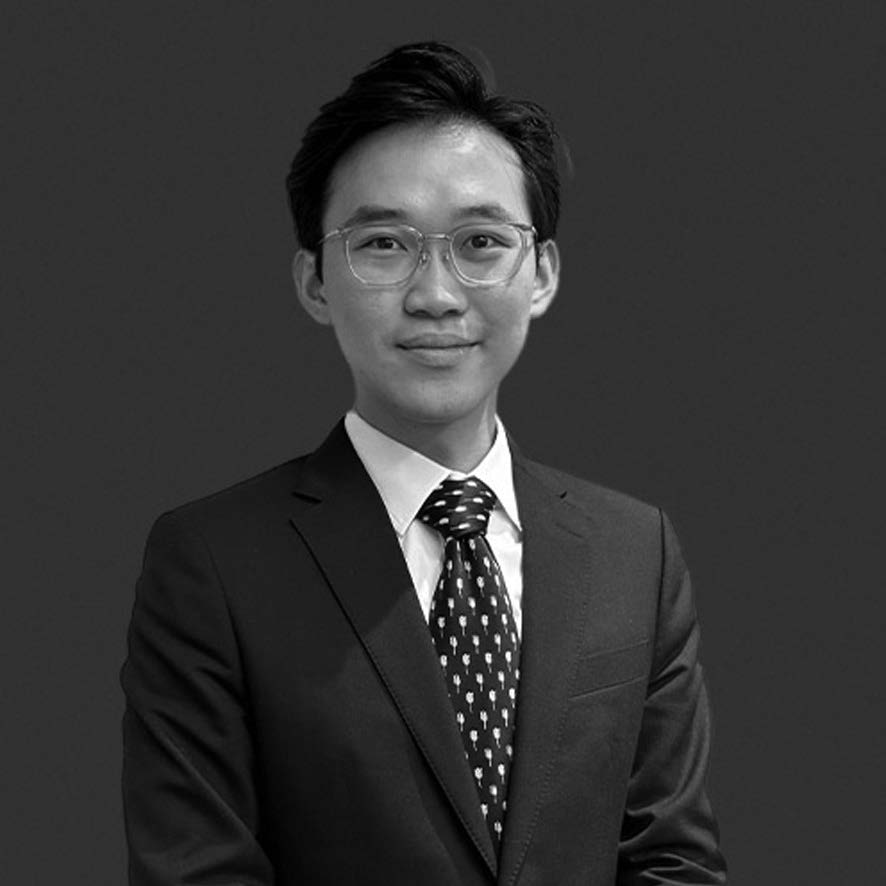
Alvin Wong is a trainee solicitor, currently sitting in the Finance, Projects and Restructuring team.
Alvin obtained his LLB from The Chinese University of Hong Kong with First Class Honours, ranking first in his cohort. Alvin then read for the LLM at the University of Cambridge.
During his studies, Alvin was awarded a string of scholarships and prizes for academic excellence and achievements in mooting.
An avid polo player, Alvin currently holds a handicap of (-1).

After a disappointing 2023 for the Hong Kong banking sector, 2024 may at first glance seem to offer little room for redemption. Repercussions of the Chinese real estate crisis continue to be felt throughout Hong Kong, while interest rates are likely to remain high amidst existing and potential geopolitical tensions, causing a domino effect across all sectors. This paints a stark contrast against the idealistic ESG initiatives and fintech innovations dominating the other half of banking headlines.
Despite this, Hong Kong can and should be optimistic about a 2024 recovery. With businesses adapting well to post-pandemic life, and the major crises behind us, Hong Kong enters 2024 with fresh new plans to advance the development of the city. Major projects in the Northern Metropolis of Hong Kong and the Greater Bay Area will prove crucial in driving economic growth.
Hong Kong’s banking sector has been deeply embroiled in the Chinese real estate crisis since the collapse of the Chinese real estate market in late 2021. This is not surprising given that Hong Kong has long been the main “offshore” platform for Chinese real estate developers to raise foreign capital, primarily through IPOs and bond issuances on the Hong Kong Stock Exchange.
Repercussions of these developers’ collapses can be felt throughout the financial markets. On a macro level, Hong Kong banks and financial institutions are increasingly reluctant to have further exposure to the real estate sector as a whole, and the Chinese real estate sector in particular. Consequently, we are seeing more investment focus both from within and outside of Hong Kong directed towards other industry sectors and across the Asia Pacific region including Australia and India.
Real estate finance in Hong Kong, once a reliable source of new business for banks and financial institutions, now primarily provides opportunities in the restructuring or work out space.
The beginning of 2024 however witnessed a momentous decision from the Hong Kong courts to wind up Evergrande, the world’s most indebted real estate company, whose debt default was the original spark that set off the real estate crisis. The potential collapse of other heavily indebted Chinese real estate developers appears all the more likely with this decision, although some are more hopeful that the winding up of Evergrande provides an even greater incentive for stakeholders to engage in restructuring negotiations given the dire alternative.
Nonetheless, the experts’ view is that Hong Kong banks are generally well-capitalised and highly liquid, and should be able to absorb the impact of this crisis. The optimist’s view is that the situation can only improve from 2024 onward. Indeed, China has rolled out, and is planning to further roll out a series of policies to encourage investments into the real estate sector. Whilst these policies are mainly designed to benefit individual consumers in China, the knock-on effect will be equally beneficial for real estate developers both in China and further afield.
2024 will likely be a year of volatility for the Hong Kong market. Whilst a persistently high interest rate and the corresponding domino effects are likely to result in the continued market stagnation seen in 2023, experts are cautiously optimistic of a bounce back this year.
The case for recovery has not been helped by Moody’s downgrading of Hong Kong’s credit outlook from its “stable” rating to a “negative” rating, following a similar downgrade to China’s rating. Moody’s justified the downgrade by citing the “tight political, institutional, economic and financial linkages between Hong Kong and the Mainland”. Continuing geopolitical tensions, Sino-US competition, and US imposed sanctions on Hong Kong individuals are likely contributing factors that led to the downgrade. The Hong Kong government itself gave a reserved GDP growth forecast, estimating a 3.2% increase, lower than the earlier forecast of 4-5%.
The volatility in the market is closely linked with the high interest rates that dominated headlines during 2023, with the US Federal Reserve raising interest rates 11 times, causing the pegged Hong Kong Dollar to experience similar rises. Whilst general market consensus is that interest rates have peaked, they are likely to stay at a similar level for the majority of 2024. The repercussions have been felt throughout Hong Kong, evident through slashes in property values and low levels of M&A activity, with individuals and corporations unwilling to take on debt.
Recent reforms and initiatives are likely to encourage a reversal against the trend in 2024. In 2023, the Hong Kong Stock Exchange added Chapter 18C to its Listing rules, which will promote the listing of specialist technology companies in Hong Kong. Similar changes made to the secondary GEM board are likewise expected to attract high performing start-ups and SMEs across the Greater Bay Area. These reforms reflect investor’s changing sentiments and a shifting focus towards tech companies. Hong Kong has also strengthened its ties with the Middle East, with the first ever Saudi Arabia exchange-traded fund listed on the Hong Kong Stock Exchange (HKEX), further reinforcing Hong Kong’s position as an international financial centre.
Hong Kong’s central banking institution and regulator, the Hong Kong Monetary Authority (HKMA) launched a number of ESG initiatives in 2023. In July 2023, the HKMA launched an “Enhanced Competency Framework on Green and Sustainable Finance”, with the objective of establishing a set of common and transparent ESG competency standards in the banking sector. This is a voluntary licensing regime that aims to serve as a benchmark of industry level ESG standards. Core to this framework is the provision of training programs for relevant persons, namely those involved in the analysis, development, implementation or execution of ESG related matters within an authorised institution (AI). The training sessions aim to ensure standardisation of ESG competency across these AIs. Concurrently, the HKMA has begun planning for a net-zero transition by identifying high-level principles/guidelines, complying with the Hong Kong government’s objective of attaining carbon neutrality by 2050. Among other plans, this includes setting up a robust governance framework, devising appropriate initiatives and actions to achieve these objectives, and to maintain transparency with the public on goals and progress. Similarly, the Hong Kong regulatory body for securities and futures markets, the Securities and Futures Commission (SFC) has introduced the development of a Voluntary Code of Conduct (VCoC), which will align with international best practices on ESG matters. The development of the VCoC began after an announcement by the Green and Sustainable Finance Cross-Agency Steering Group chaired by the HKMA and the SFC, which announced a series of mandatory enhanced climate-related disclosures to be complied with by players across the financial industry, namely banks, asset managers, insurance companies and pension trustees by 2025.
The HKEX has also launched initiatives to promote green financing following the signing of a Memorandum of Understanding with the China Beijing Green Exchange, with agreements on exploring green financing options, and implementation methods. One of the main initiatives undertaken by the HKEX is to implement climate-related disclosure requirements compliant with ISSB standards in its listing rules, which will take effect on 1 January 2025, covering categories of governance, strategy, risk management, and ESG metrics and targets.
Earlier in 2023, the Loan Markets Association, the Loan Syndication & Trading Association and the Asia Pacific Loan Market Association published updated versions of the Green Loan Principles and Guidance, the Social Loan Principles and Guidance on the Sustainability Linked Loan Principles and Guidelines. These updated principles encourage lenders and borrowers to agree upon certain ESG linked KPIs, such as caps on greenhouse gas emissions or limits on water or energy consumption. Satisfaction of these KPIs will reward the borrower with more beneficial economic terms, such as reducing the interest margin under the relevant loan agreement.
i. Fintech takes priority
The HKMA is prioritising fintech, hedging on its ability to drastically transform the financial landscape. We expect the following three business areas of fintech to be prioritised and developed. The first is wealthtech/investech. These are tech products/initiatives aimed to facilitate the distribution, manufacturing, and trading of wealth management activities, by utilising technology to carry out tasks such as real-time portfolio tracking, performance analysis, risk assessments and rebalancing capabilities. The second category is insurtech, which uses technology innovations to find cost-saving methods, and to improve allocation of resources in the insurance industry. The third and final area is Greentech, which is technology that identifies sustainable investment opportunities by collecting, analysing, and interpreting ESG related metrics. To support the growth and integration of these initiatives, the HKMA plans to utilise artificial intelligence and distributed ledger technology.
Additionally, the HKMA has also required all Authorised Institutions to implement e-banking measures by 31 March 2024, and is encouraging them to educate the public on issues surrounding e-banking fraud, implement more developed security measures to detect fraudsters, and to give customers the autonomy to safeguard their own bank
accounts.
i. Recognising the need for regulation
With the plethora of improvements pushed out by the government, corresponding regulations and legislations are essential. In 2023 alone, Hong Kong proposed two new legislations to address developments in the banking sector.
First, the HKMA has proposed to reduce the current three-tiered banking system to two-tiers. The current banking system consists of licensed banks, restricted license banks, and deposit-taking companies. Traditionally, this threetiered system was designed to strike a balance between flexibility of entry into the banking sector, whilst ensuring sufficient protection for small individual depositors. Due to the dwindling market share of deposit-taking companies, the companies with the lowest entrance-barrier, the HKMA is proposing to phase that category out by merging them with restricted license banks, resulting in a two-tiered banking structure in Hong Kong.
Second, the Financial Services and the Treasury Bureau, together with the HKMA jointly issued a public consultation paper titled “Legislative Proposal to Implement the Regulatory Regime for Stablecoin Issuers in Hong Kong” on 27 December 2023. With the rise of crypto assets, stablecoins have been presented as a method to combat the volatility in the valuation of cryptocurrency. Stablecoins achieve this by pegging their value to specific non-virtual assets, namely fiat-currencies. The proposal aims to target these stablecoins pegged to fiat-currencies, given their high volume usage, by introducing a licensing regime to regulate the industry. This reflects the earlier efforts of the Hong Kong government to regulate the industry, with the SFC amending the Anti-Money Laundering and Counter-Terrorist Financing Ordinance to cover virtual asset
exchanges, and the introduction of the Guidelines for Virtual Asset Trading Platform Operators, providing details on how to implement a Virtual Asset Trading Platform regulatory framework.
As one of the few full-service law firms in Hong Kong, DLA Piper is uniquely positioned to help our clients navigate the latest trends and seize emerging opportunities. Our world class banking, real estate and technology practices are consistently recognised in industry leading publications. As a global law firm, we draw upon our extensive network and deep bench of experience to provide our clients with cutting edge legal advice and commercial insight; enabling them to achieve their goals.
DLA Piper’s banking lawyers have extensive experience in all types of financing and restructuring matters. Our clients include private credit funds, investment banks, and corporate borrowers among others. We work closely with our leading real estate lawyers and other sector specialists to execute new money financings, as well as transactions in the restructuring space.
As pioneers in technology law, our partners are leading the technology legal sector. Our lawyers are at the top of their game, advising clients in all areas, ranging from digital assets blockchains, stablecoins and cryptocurrency to AI, machine learning and robotics
technology.