No spam - just the latest insights!
Join over 30,000 industry professionals who subscribe for free

Subscribe for free!
We'll never share your information or send you spam
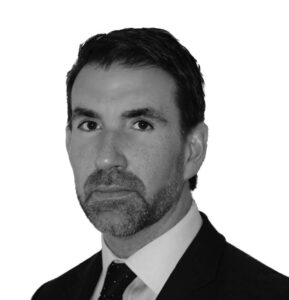
Tom Kehoe joined AIMA as research manager in October 2008 and heads up all research and communications globally for the association. In this role, Tom is responsible for creating and executing the association’s strategies to develop and maintain strong external stakeholder relationships. In doing so, he constructs the association’s narrative through original research and thought leadership as well as design, implement and promote the association’s communications and brand. In this capacity, he has authored more than 50 research and thought leadership pieces, which have been mentioned widely across the trade and business press as well as commented on radio and television.
He has been involved with hedge funds for 15 years. Prior to joining AIMA, Tom spent four years working in hedge fund research and due diligence with BNP Paribas in New York and Dublin.
Tom holds a Masters in Finance from the National College of Ireland, a graduate certificate in Investment Management from Dublin City University and is a Chartered Alternative Investment Analyst member (CAIA).

As we enter 2026, the global backdrop feels anything but settled. Geopolitics and macro uncertainty are back on the agenda, yet for many investors, that has reinforced, rather than diminished, the case for alternative investments as a source of diversification and active risk management. We saw that clearly in 2025 with industry performance data showing hedge funds posted their best returns since 2009. Volatility created opportunity, and active managers were well placed to capture it.
So, what’s changed since last year?
First, the policy mood music has shifted. After several years of friction in major markets, 2025 marked a more constructive phase of regulatory engagement, one that AIMA worked hard to translate into tangible outcomes for the global alternative investment industry. In the US, the SEC withdrew its appeal of AIMA’s landmark court victory on the Dealer Rule. Separately, a judgment in our favour required the SEC to strengthen the economic analysis underpinning its short selling and securities lending reforms. This delivered both clearer guardrails and more workable timelines for market participants.
These developments weren’t isolated. Leadership changes across the SEC and CFTC have opened the door to more consistent guidance on long-running industry themes, and crucially, a more practical, outcomes-focused approach that recognises the difference between collecting information and collecting useful information.
Digital assets, too, have moved closer to the centre of the policy table. With a clearer appetite in Washington to advance a capitalmarkets agenda that includes this fast-growing sector, AIMA has used its research to inform discussions on banking access for digital asset fund managers and engaged directly with the SEC’s Crypto Task Force to advocate for a clear, principles-based framework. The direction of travel is encouraging: a more constructive regulatory tone, particularly in the US, is helping hedge funds and institutional investors broaden exposure across the digital asset universe. The test in 2026 will be whether that constructive approach is applied consistently across jurisdictions.
Private credit was the defining narrative of 2025, growing through heightened scrutiny and plenty of headlines searching for hidden risks. A persistent challenge is still data. Without better, more comparable information, it’s harder than it should be to assess where risks do and don’t sit. AIMA’s private credit affiliate, the Alternative Credit Council (ACC), continues to address that gap, including through its annual Financing the Economy analysis, which shows global private credit AUM now exceeds US$3.5 trillion. Reflecting both growth and the need for better system-wide understanding, leading ACC member firms will participate voluntarily in the Bank of England’s 2026 Private Markets System-Wide Exploratory Scenario exercise. This is work AIMA has supported from the design phase and will continue to support in the year ahead.
Meanwhile, global competition to attract capital is reshaping the map. The Middle East’s ascension is now unmistakable, with more than 100 hedge funds operating in the region. Through its UAE Managers Group, AIMA has helped inform consultations in DIFC and ADGM aimed at streamlining prudential regimes. This work has also provided a credible reference point in discussions with UK and EU authorities on reducing unnecessary complexity within existing frameworks. Across APAC, momentum rebounded. Hong Kong’s activity and listings recovered sharply; China continued to drive outbound investment into alternatives; Singapore strengthened its role as a hub for investor engagement; Australia advanced as a focal point for private credit growth (with close attention from ASIC); and Japan saw deeper participation across public and private markets.
Looking ahead, 2026 will be shaped by a renewed focus on systemic risk reporting as regulators in the US, UK, and EU revisit their frameworks. AIMA is advocating for a “less but better” approach to data collection—targeted, decision-useful reporting that supports market integrity and financial stability without drowning firms (or regulators) in noise. In the US, we expect key discussions to continue across Form PF, FSOC designation, the Dealer definition, Treasury clearing, and the digital asset agenda, alongside AIFMD implementation and SFDR reform in the EU and ongoing changes to the UK market structure.
Across all of this, our objective is consistent: practical rules, clear timelines, and stable frameworks that enable markets to function efficiently while managing genuine systemic risks. On that, at least, you can be confident.