No spam - just the latest insights!
Join over 30,000 industry professionals who subscribe for free

Subscribe for free!
We'll never share your information or send you spam
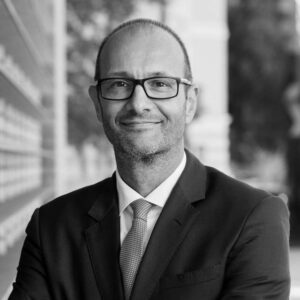
Simon Tribelhorn (born 4 July 1972) is the Director of the Liechtenstein Bankers Association (LBA). A Swiss citizen, he studied at the University of St. Gallen and worked for six years as a lawyer in the banking sector, most recently as a legal advisor in the legal and compliance department of a major Swiss bank. He joined the LBA in February 2006, initially as a lawyer and later as Deputy Director, before being appointed Director in January 2010.
Tribelhorn is particularly focused on the long-term viability and competitiveness of the Liechtenstein financial centre. He emphasises sustainability, ongoing innovation, risk management, and professional public relations. He is a co-initiator of the LIFE Climate Foundation Liechtenstein and represents the LBA in key European and international bodies, including the European Banking Federation (EBF), the European Parliamentary Financial Services Forum (EPFSF), and the International Network of Financial Centres for Sustainability (FC4S).
In a world increasingly defined by uncertainty, fragmentation, and rapid transformation, stability has become one of the most valuable currencies. As CEO of the Liechtenstein Bankers Association, I often find that when international partners look at Liechtenstein, they see a paradox: a small country with a disproportionately strong and resilient financial centre. Yet this apparent contradiction reveals something deeper. Liechtenstein’s strength lies not in its size, but in its ability to combine stability with adaptability, and tradition with innovation.
Today, Europe is navigating geopolitical tensions, economic realignment, and societal change. At the same time, global priorities such as climate action, digital transformation, and sustainable development are reshaping the financial industry. In this environment, Liechtenstein is not standing still. On the contrary, it is evolving—quietly but decisively—into a forward-looking hub for sustainable finance, cross-border investment, and long-term value creation.
From my perspective, what makes Liechtenstein unique is not only its institutional stability or market access, but its mindset: a commitment to thinking in generations. This philosophy shapes how we approach finance, investment, and responsibility in a rapidly changing world.
Europe today is marked by both integration and fragmentation. While the European Union remains a cornerstone of economic cooperation, political divergence, regulatory complexity, and geopolitical tensions have introduced new layers of uncertainty. The war in Ukraine, shifting energy dynamics, and growing global competition have reshaped the strategic landscape.
In such a context, stability is no longer a passive attribute – it is a competitive advantage. Investors, clients, and institutions increasingly seek jurisdictions where rules are clear, institutions are reliable, and long-term planning is possible.
Liechtenstein offers precisely this environment. Its political system is stable, its legal framework is robust, and its institutions operate with a high degree of continuity and trust. As a member of the European Economic Area, Liechtenstein is fully integrated into the European single market, while its close relationship with Switzerland provides additional economic strength and flexibility.
This dual integration creates a unique position. It allows Liechtenstein to act as a bridge between markets, offering access, predictability, and resilience in an otherwise complex and evolving European landscape.
Trust is the foundation of any successful financial centre. In Liechtenstein, trust has been built over decades through a combination of sound regulation, international cooperation, and a strong commitment to transparency.
Our banking sector has undergone significant transformation in recent years. We have embraced international standards, strengthened compliance frameworks, and aligned ourselves with global best practices. This evolution has not only enhanced credibility but also positioned Liechtenstein as a trusted partner in cross-border finance.
At the same time, our financial centre remains deeply rooted in expertise. Asset management, private banking, and wealth structuring are areas where Liechtenstein has long-standing strengths. Increasingly, these capabilities are being combined with new areas of growth, particularly in sustainable finance and digital innovation.
What distinguishes Liechtenstein is the ability to integrate these elements into a coherent whole. Stability does not mean rigidity; it means providing a reliable foundation upon which innovation can flourish.
One of the most significant developments in recent years has been the rise of sustainable finance. What was once considered a niche segment has now become a central pillar of the financial industry.
In Liechtenstein, this transition is well underway. Financial institutions are integrating environmental, social, and governance (ESG) criteria into their investment strategies, product offerings, and advisory services. There is a growing recognition that sustainability is not only a moral imperative but also a driver of long-term economic value.
From my perspective, the next step is to move beyond ESG integration toward impact-oriented finance. This means actively directing capital toward projects and initiatives that generate measurable environmental and social outcomes.
Here, catalytic capital and blended finance play an important role. By combining public, philanthropic, and private resources, these approaches can unlock investments in areas such as renewable energy, climate adaptation, and social infrastructure. Liechtenstein, with its strong network of private investors, foundations, and financial institutions, is well positioned to contribute to this important and urgently needed financial evolution.
If there is one concept that captures Liechtenstein’s approach to finance, it is the idea of thinking in generations. This philosophy goes beyond sustainability in the narrow sense. It reflects a broader commitment to stewardship, continuity, and responsibility.
In practical terms, this means prioritizing long-term value over short-term gains. It means considering not only financial returns but also the broader impact of investment decisions on society and the environment. And it means building institutions and frameworks that can endure over time.
This generational perspective is deeply embedded in Liechtenstein’s financial culture. Many of our clients are family businesses, entrepreneurs, and foundations that share a similar long-term outlook. This alignment creates a natural foundation for sustainable and impact-oriented investment strategies.
In a world that often prioritizes immediacy, this approach offers a valuable counterbalance. It allows us to take a longer view, to invest with patience, and to build resilience for the future.
Alongside sustainability, digitalisation is reshaping the financial industry at an unprecedented pace. New technologies are transforming how financial services are delivered, how risks are managed, and how value is created.
Liechtenstein has embraced this transformation with a pragmatic and forward-looking approach. The country was among the first to introduce a comprehensive regulatory framework for blockchain and token-based assets. This has created a secure and innovative environment for fintech companies and digital asset providers.
At the same time, traditional financial institutions are integrating digital solutions into their operations. From client onboarding and portfolio management to compliance and reporting, digital tools are enhancing efficiency and transparency.
What is particularly important is that innovation in Liechtenstein is guided by the same principles that underpin its financial centre: stability, trust, and responsibility. Technology is not pursued for its own sake, but as a means to improve services, strengthen resilience, and create value for clients.
Another key strength of Liechtenstein is its collaborative ecosystem. The country’s size allows for close interaction between regulators, financial institutions, industry associations, and policymakers.
This proximity fosters dialogue, alignment, and agility. It enables the financial centre to respond quickly to new developments, whether regulatory changes, market trends, or technological innovations.
From my perspective, this collaborative approach is one of Liechtenstein’s greatest assets. It allows us to move forward collectively, to share knowledge, and to develop solutions that are both practical and forward-looking.
It also creates an environment where partnerships can thrive. Whether working with international organisations, development finance institutions, or private investors, Liechtenstein is well positioned to play a role in shaping the future of finance.
While Liechtenstein’s financial centre is deeply rooted in Europe, its outlook is global. Clients, investors, and partners come from all over the world, and the challenges we face—climate change, economic inequality, technological disruption—are global in nature.
This global perspective is reflected in our approach to finance. We aim to connect capital with opportunities, to facilitate cross-border investment, and to contribute to solutions that have a positive impact beyond our borders.
In doing so, Liechtenstein demonstrates that size is not a limitation. On the contrary, it can be an advantage. It allows for flexibility, focus, and the ability to act as a connector between different markets and stakeholders.
As we look ahead, the financial industry will continue to evolve. New challenges will emerge, and existing ones will intensify. The need for sustainable, resilient, and inclusive financial systems will only grow.
In this context, Liechtenstein offers a compelling model. It shows that stability and innovation are not mutually exclusive, but mutually reinforcing. It demonstrates that finance can be both commercially successful and socially responsible. And it highlights the importance of long-term thinking in a world that often focuses on the short term.
From my perspective, the future of finance will be defined by purpose as much as by performance. It will require institutions that are not only efficient and competitive, but also responsible and forward-looking.
Liechtenstein is well positioned to contribute to this future. By building on its strengths—stability, trust, expertise, and a commitment to thinking in generations—it can continue to play a meaningful role in shaping a financial system that serves both today’s needs and tomorrow’s challenges.
In an uncertain world, that is not just an advantage. It is a responsibility.