
Introduction
Thailand 4.0 is more than just a policy—it’s a revolution. We’re talking about a bold leap into the future, where artificial intelligence (AI) isn’t just a tool but the backbone of national transformation. From smart cities to ethical frameworks, Thailand is positioning itself as a regional leader. And trust me, this isn’t just hype; it’s happening right now.
Key Takeaways
- Thailand 4.0 is a strategic blueprint to transition from a manufacturing-based economy to an innovation-driven one.
- AI is central to this vision, with applications spanning healthcare, agriculture, and smart infrastructure.
- The Eastern Economic Corridor (EEC) is the epicentre of AI innovation, attracting global investments.
- Ethical AI governance is a priority, ensuring workforce protection and sustainable development.
- Partnerships with global tech giants are accelerating Thailand’s AI capabilities and education.
No spam - just the latest insights!
Join over 30,000 industry professionals who subscribe for free






Get exclusive early
access before the official launch
Hear directly from the Big Four advisory firms and leading international law firms on emerging issues
- with our authors given full editorial independence to address the topics that truly matter in each jurisdiction
Introduction to Thailand 4.0 and AI
Overview of Thailand 4.0
Thailand 4.0 is the country’s ambitious plan to shift from traditional industries to a value-based economy. We’re talking robotics, biotech, and digital innovation. The goal? To become a high-income nation by 2037. And with initiatives like the Eastern Economic Corridor, the groundwork is already laid.
The Role of AI in Thailand’s Future
AI isn’t just a buzzword here—it’s the engine driving Thailand’s future. From predictive analytics in healthcare to precision farming, AI is transforming every sector. The government’s National AI Strategy (2022–2027) outlines clear objectives, including ethical AI deployment and workforce upskilling. It’s a game-changer, and we’re just getting started.
Thailand’s National AI Strategy and Action Plan (2022 – 2027)
Vision and Objectives
The vision is simple: make Thailand an AI hub in ASEAN. The strategy focuses on research, infrastructure, and talent development. By 2027, we aim to integrate AI into 10 key sectors, from automotive to tourism. It’s not just about technology—it’s about creating a sustainable ecosystem.
Key Components of the Strategy
The plan includes funding for startups, AI ethics guidelines, and partnerships with global leaders. One standout initiative is the AI City project, a collaborative effort to build smart infrastructure. It’s a holistic approach, blending innovation with responsibility.
Thailand’s National AI Strategy and Action Plan (2022 – 2027)
Vision and Objectives
We’re diving into Thailand’s ambitious blueprint for AI dominance, and let me tell you, it’s nothing short of revolutionary. The vision? To position Thailand as a regional AI powerhouse by 2027. Our objectives are crystal clear: drive economic growth, enhance public services, and foster innovation. Imagine a future where AI isn’t just a tool but the backbone of our national progress. That’s the dream we’re turning into reality.
But it’s not just about lofty goals. We’re laying down concrete steps—boosting R&D, upskilling the workforce, and creating a thriving AI ecosystem. Think of it as building a highway for AI-driven transformation. And guess what? We’re already seeing the first signs of success. From smart cities to AI governance, Thailand is on the move.
Key Components of the Strategy
Here’s where things get juicy. The strategy is built on four pillars: infrastructure, talent, innovation, and ethics. First, we’re ramping up digital infrastructure to support AI deployment. Next, we’re investing in education to create a pipeline of AI-savvy professionals. Then, we’re fostering innovation through partnerships with global tech giants. And finally, we’re ensuring ethical AI use with robust regulations.
One standout initiative? The AI Ethics Framework, designed to keep AI development transparent and accountable. It’s not just about growth—it’s about responsible growth. And with these components in place, Thailand is setting the stage for a future where AI benefits everyone.
Policy Framework for AI in Thailand
Ethical Considerations and Regulations
Let’s talk ethics. In Thailand, we’re not just racing ahead with AI; we’re doing it right. Our policy framework prioritises transparency, fairness, and accountability. We’ve established guidelines to prevent bias in AI algorithms and ensure data privacy. It’s like putting guardrails on a high-speed train—necessary for safe, sustainable progress.
We’re also learning from global leaders. For instance, our regulatory approach draws inspiration from Germany’s balanced model. The goal? To create an environment where innovation thrives without compromising ethical standards. Because at the end of the day, trust in AI is just as important as the technology itself.
Workforce Protection and AI
AI is transforming jobs, and we’re not ignoring the human side of the equation. Our policies include reskilling programs to help workers adapt to the AI-driven economy. Think of it as future-proofing our workforce. We’re also exploring universal basic income pilots to cushion the transition. It’s about ensuring no one gets left behind.
But here’s the kicker: we’re not just reacting to change—we’re shaping it. By aligning AI adoption with workforce development, we’re creating a win-win scenario. Businesses get the talent they need, and workers get the skills to thrive. That’s what we call strategic foresight.

Innovation Zones and Their Role in AI Development
Eastern Economic Corridor (EEC) and AI
The EEC is Thailand’s crown jewel for AI innovation. Picture this: a sprawling hub of cutting-edge research labs, startups, and multinational corporations—all focused on AI. We’re talking next-gen robotics, smart manufacturing, and data-driven agriculture. The EEC isn’t just a zone; it’s a launchpad for Thailand’s AI ambitions.
And the results? Stellar. Companies like Google are setting up shop here, drawn by our world-class infrastructure and incentives. The EEC is proof that when you create the right ecosystem, innovation follows. It’s a blueprint for how to turn vision into reality.
Digital Parks and Innovation Hubs
Digital parks are the beating heart of Thailand’s AI ecosystem. These hubs bring together startups, academia, and investors under one roof. The result? A melting pot of ideas and collaborations. Take the Bangkok Digital Valley, for example. It’s not just a workspace—it’s a breeding ground for disruptive technologies.
What’s truly exciting is the ripple effect. These hubs are spawning AI solutions for everything from healthcare to logistics. And with government backing, they’re scaling fast. It’s a testament to Thailand’s commitment to becoming a global AI leader. The future is here, and it’s happening in our digital parks.
Strategic Sectors for AI Application
Healthcare and Biotechnology
We’re seeing AI revolutionise healthcare in Thailand, from diagnostics to personalised treatment plans. Imagine AI-powered systems analysing medical data in seconds, predicting outbreaks before they happen, and even assisting in complex surgeries. It’s not just about efficiency—it’s about saving lives. Our focus is on integrating AI into public health systems, ensuring even remote areas benefit. With initiatives like AI-driven diagnostics, we’re bridging gaps in healthcare accessibility and quality.
Biotechnology is another frontier where AI shines. From drug discovery to genetic research, AI accelerates processes that once took years. Thailand’s investment in biotech startups and research hubs is paying off, with breakthroughs in tropical disease treatments. By leveraging AI, we’re positioning Thailand as a regional leader in biotech innovation. The synergy between AI and biotechnology isn’t just transformative—it’s essential for future-proofing our healthcare systems.
Smart Agriculture and Food Innovation
Agriculture is the backbone of Thailand’s economy, and AI is making it smarter. Precision farming, powered by AI, optimises water usage, predicts crop yields, and detects pests early. We’re empowering farmers with data-driven tools, ensuring sustainability and higher productivity. Projects like AI-driven soil analysis are transforming traditional farming into a tech-savvy industry. It’s not just about yield—it’s about resilience in the face of climate change.
Food innovation is another area where AI plays a pivotal role. From supply chain optimisation to lab-grown meat, AI is reshaping how we produce and consume food. Thailand’s food industry is embracing AI to meet global demand while maintaining quality. With initiatives like sustainable food tech, we’re ensuring Thailand remains a global food hub. The future of agriculture and food isn’t just smart—it’s AI-driven. https://www.youtube.com/embed/E-VSJZNByYM
Developing Infrastructure for Sustainable AI Development
Digital Infrastructure
Building a robust digital infrastructure is the foundation of Thailand’s AI ambitions. We’re investing in high-speed internet, cloud computing, and data centres to support AI applications nationwide. The goal? Seamless connectivity for businesses, researchers, and citizens. Projects like the National Broadband Network are ensuring even rural areas are part of the AI revolution. Without cutting-edge infrastructure, AI innovation stalls—and we’re not letting that happen.
Cybersecurity is equally critical. As AI adoption grows, so do threats. We’re implementing AI-powered security systems to protect data and maintain trust. Partnerships with global tech leaders are strengthening our defences. With initiatives like secure AI frameworks, we’re future-proofing our digital landscape. The message is clear: Thailand’s AI infrastructure is built for growth and security.
Research and Development Facilities
R&D is the engine of AI innovation, and Thailand is revving it up. We’re establishing state-of-the-art labs and innovation hubs to foster AI research. Collaborations between universities, private firms, and government agencies are driving breakthroughs. The Eastern Economic Corridor (EEC) is a prime example, attracting global talent and investment. It’s not just about facilities—it’s about creating an ecosystem where ideas thrive.
Funding is key to sustaining R&D momentum. We’re channelling resources into AI projects with high impact, from robotics to natural language processing. By prioritising R&D, we’re ensuring Thailand stays ahead in the global AI race. The future of AI isn’t just about technology—it’s about the people and places where innovation happens.
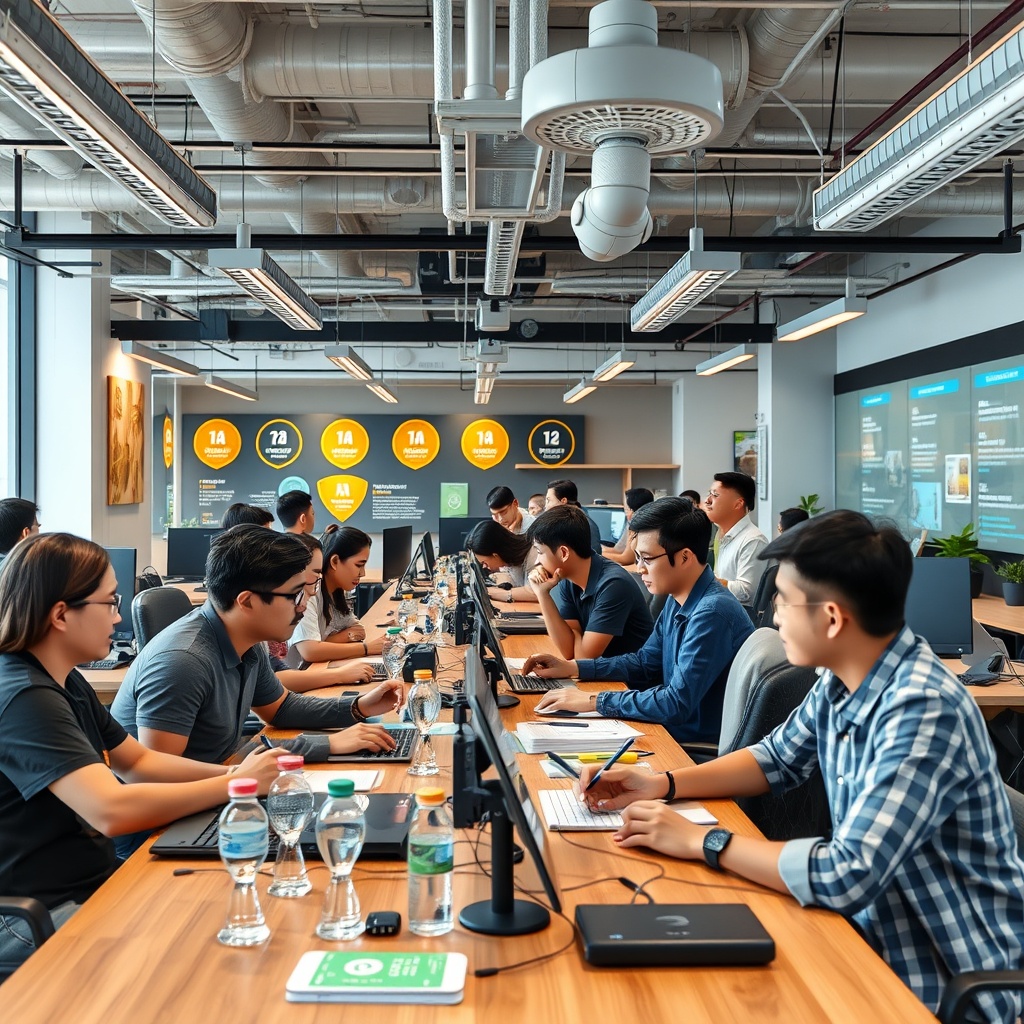
Increasing Human Capability and Improving AI Education
AI Curriculum Development
Education is the cornerstone of Thailand’s AI future. We’re overhauling curricula to include AI literacy from primary schools to universities. The focus? Hands-on learning, ethics, and real-world applications. Programs like AI bootcamps are equipping students with skills for tomorrow’s job market. It’s not just about coding—it’s about fostering a generation of critical thinkers and innovators.
Teacher training is equally vital. We’re upskilling educators to deliver cutting-edge AI education. Partnerships with tech giants are providing resources and expertise. With initiatives like AI educator networks, we’re ensuring no student is left behind. The goal? A workforce ready to lead the AI revolution.
Partnerships with Global Tech Leaders
Collaboration is key to Thailand’s AI success. We’re forging partnerships with global tech leaders to bring expertise and investment. From joint research projects to talent exchanges, these alliances are accelerating our AI capabilities. Companies like Google and Microsoft are setting up innovation labs here, creating a hub for AI development. It’s not just about technology transfer—it’s about building a global AI community.
Startups are also benefiting from these partnerships. Incubators and accelerators are nurturing Thai AI startups, providing mentorship and funding. With initiatives like global AI indices, we’re benchmarking our progress. The message is clear: Thailand is open for business in the AI world.
Driving AI Technology and Innovation Development
Startup Ecosystem and AI
Thailand’s startup ecosystem is buzzing with AI innovation. From fintech to agritech, startups are leveraging AI to solve local and global challenges. We’re providing funding, mentorship, and regulatory support to fuel this growth. The result? A thriving community of AI entrepreneurs pushing boundaries. It’s not just about startups—it’s about creating a culture of innovation.
Success stories are emerging, from AI-powered logistics to healthcare apps. These startups are attracting international attention and investment. With initiatives like AI pitch competitions, we’re showcasing Thailand’s talent. The future of AI isn’t just about big tech—it’s about the startups redefining industries.
Government Incentives for AI Innovation
The Thai government is rolling out incentives to boost AI adoption. Tax breaks, grants, and streamlined regulations are making it easier for businesses to innovate. We’re also funding public-private partnerships to drive AI projects. The goal? To create an environment where AI thrives across sectors. It’s not just about policies—it’s about action.
From smart cities to digital government services, AI is transforming how we live and work. With initiatives like the AI Innovation Fund, we’re ensuring Thailand remains at the forefront of AI development. The message is clear: the future is AI, and Thailand is ready.
Promoting the Use of AI in Public and Private Sectors
AI in Government Services
We’re seeing AI transform how governments operate, making services faster and more efficient. From automating paperwork to predicting urban planning needs, AI is revolutionising public administration. In Thailand, smart city initiatives are leveraging AI to improve traffic management and reduce pollution. By integrating AI, we’re not just streamlining processes but also enhancing transparency and citizen engagement. The goal is to create a government that’s responsive, data-driven, and future-ready.
AI-powered chatbots are already handling citizen queries, reducing wait times and improving satisfaction. Predictive analytics help allocate resources where they’re needed most, from healthcare to disaster response. The key is balancing innovation with ethical considerations, ensuring AI serves the public good. Thailand’s AI governance framework provides a blueprint for responsible adoption. We’re committed to building trust while harnessing AI’s potential to uplift communities.
AI Adoption in Thai Businesses
Thai businesses are embracing AI to stay competitive in a global market. From SMEs to multinationals, AI is driving efficiency and innovation. Retailers use AI for personalised marketing, while manufacturers deploy predictive maintenance to cut costs. The financial sector leverages AI for fraud detection and risk assessment. We’re witnessing a wave of digital transformation, with AI at its core, reshaping industries and creating new opportunities.
Adoption isn’t without challenges, though. Many businesses struggle with data quality and talent gaps. That’s where partnerships with global tech leaders and local digital asset experts come in. Thailand’s government is also offering incentives to ease the transition. The message is clear: AI isn’t optional—it’s the future. By integrating AI now, Thai businesses can secure their place in the global economy.
AI Development in 10 Target Sectors
Automotive and Robotics
Thailand’s automotive sector is a powerhouse, and AI is turbocharging its growth. From autonomous vehicles to smart factories, AI is redefining production and safety standards. Robotics, powered by AI, is enhancing precision and reducing human error. We’re not just building cars; we’re crafting the future of mobility. The Eastern Economic Corridor (EEC) is a hotspot for these innovations, attracting global investments and talent.
The synergy between AI and robotics extends beyond manufacturing. Service robots are entering healthcare and hospitality, improving efficiency and customer experiences. Thailand’s focus on R&D ensures we stay ahead in this competitive space. By fostering collaboration between academia and industry, we’re creating a ecosystem where AI-driven robotics thrives. The road ahead is exciting, and we’re leading the charge.
Tourism and Hospitality
Tourism is Thailand’s lifeblood, and AI is making it smarter. From personalised travel recommendations to AI-driven customer service, the sector is undergoing a digital makeover. Hotels use AI to optimise bookings and enhance guest experiences, while attractions leverage data to manage crowds. We’re not just welcoming tourists; we’re anticipating their needs before they arrive.
The pandemic underscored the need for resilience, and AI is key to recovery. Predictive analytics help tailor marketing campaigns, while chatbots provide instant support in multiple languages. Thailand’s AI leap in tourism sets a benchmark for the region. By blending tradition with technology, we’re ensuring Thailand remains a top destination for years to come.
Economic Growth Through AI
Impact on GDP and Export
AI is a game-changer for Thailand’s economy, projected to add billions to GDP by 2030. By automating processes and boosting productivity, AI is driving growth across sectors. Exports, particularly in tech and agriculture, benefit from AI-driven quality control and logistics. We’re not just keeping pace with global trends; we’re setting them. The economic ripple effect is undeniable, creating jobs and attracting foreign investment.
The key to sustained growth lies in strategic investments. Thailand’s focus on AI startups and innovation hubs is paying off. By aligning AI development with national priorities, we’re ensuring long-term competitiveness. The world is watching, and Thailand is proving that AI isn’t just a tool—it’s an economic catalyst. The future is bright, and we’re ready to seize it.
AI and the Future of Thai Workforce
AI is reshaping the job landscape, and Thailand is preparing its workforce for the shift. While some roles may evolve, new opportunities are emerging in AI development and maintenance. Upskilling programs and AI education initiatives are bridging the gap, ensuring no one is left behind. We’re fostering a culture of lifelong learning, where adaptability is the new currency.
The private sector plays a crucial role in this transition. Companies are partnering with universities to create tailored training programs. Thailand’s asset management of human capital is a model for the region. By empowering workers with AI skills, we’re building a resilient, future-ready workforce. The message is clear: AI isn’t a threat—it’s an opportunity.

Social and Environmental Impact of AI in Thailand
Enhancing Quality of Life
AI is improving lives across Thailand, from healthcare to education. Telemedicine platforms powered by AI bring specialist care to rural areas, while adaptive learning tools personalise education. We’re democratising access to essential services, ensuring no community is left behind. Smart city initiatives are reducing congestion and pollution, making urban living more sustainable. The goal is simple: use AI to create a better, fairer society.
Community engagement is critical to success. By involving citizens in AI projects, we’re ensuring solutions meet real needs. Thailand’s focus on ethical AI ensures technology serves humanity, not the other way around. The results speak for themselves: happier, healthier communities. AI isn’t just about efficiency—it’s about empowerment.
Sustainable Development and AI
AI is a powerful ally in Thailand’s sustainability efforts. From precision agriculture to renewable energy management, AI is driving eco-friendly innovations. Farmers use AI to optimise water and fertiliser use, reducing waste and boosting yields. Smart grids balance energy demand, cutting carbon footprints. We’re proving that economic growth and environmental stewardship can go hand in hand.
The global climate crisis demands bold solutions, and AI is part of the answer. Thailand’s commitment to green AI aligns with international goals. By leveraging AI for climate action, we’re setting an example for the world. The future is sustainable, and AI is helping us build it.
Thailand Position in Global AI Development
Comparison with Singapore and Other ASEAN Countries
When we look at Thailand’s AI landscape, it’s clear that we’re making strides, but how do we stack up against Singapore and other ASEAN nations? Singapore leads with robust government backing and a thriving startup ecosystem, while we focus on integrating AI into traditional sectors like agriculture and tourism. Our approach is more inclusive, ensuring AI benefits all layers of society, not just the tech-savvy elite. This balance sets us apart in the region.
Countries like Malaysia and Indonesia are also investing heavily in AI, but Thailand’s unique blend of policy and grassroots innovation gives us an edge. We’re not just competing; we’re collaborating, learning from Singapore’s governance frameworks while carving our own path. The ASEAN AI ecosystem is growing, and Thailand is poised to be a key player, blending local needs with global trends.
Thailand as an Emerging AI Leader
Thailand’s rise as an AI leader isn’t accidental—it’s the result of deliberate strategy and investment. Our focus on sectors like healthcare and smart agriculture showcases how AI can solve real-world problems. Unlike some nations chasing flashy tech, we’re building a foundation that prioritizes sustainability and ethical AI, ensuring long-term growth.
Our partnerships with global tech giants and local startups are fueling this momentum. By leveraging the lessons from Indonesia’s digital leap, we’re creating a model that’s uniquely Thai. The world is taking notice, and soon, Thailand won’t just be an emerging leader—we’ll be setting the standard for AI in developing economies.
Challenges and Opportunities
Overcoming Technological Barriers
One of our biggest hurdles is bridging the technological gap. While urban centers like Bangkok are tech hubs, rural areas still lack basic digital infrastructure. We’re tackling this by expanding broadband access and investing in local talent. It’s a slow process, but every step forward strengthens our national AI capabilities.
Another challenge is data privacy and security. As AI adoption grows, so do concerns about misuse. We’re addressing this by implementing strict regulations inspired by France’s ethical AI framework. Balancing innovation with protection isn’t easy, but it’s essential for building public trust and ensuring sustainable growth.
Leveraging AI for Competitive Advantage
The opportunities AI presents are limitless. From boosting GDP to creating high-skilled jobs, the potential is enormous. Our focus on strategic sectors like automotive and tourism ensures that AI drives tangible economic benefits. By aligning AI with national priorities, we’re turning challenges into competitive advantages.
Collaboration is key. By learning from global leaders and adapting their strategies to our context, we’re creating a blueprint for success. The German manufacturing model shows how AI can revolutionize industries, and we’re applying those lessons here. Thailand’s AI journey is just beginning, but the future looks brighter than ever.
Future Directions for AI in Thailand
Upcoming Projects and Initiatives
The next phase of Thailand’s AI strategy is packed with exciting projects. From smart cities in the Eastern Economic Corridor to AI-driven healthcare solutions, the roadmap is ambitious. We’re also launching initiatives to upskill the workforce, ensuring no one is left behind in the digital revolution.
Public-private partnerships will play a crucial role. By working with companies like digital asset managers, we’re fostering innovation while maintaining ethical standards. These projects aren’t just about technology—they’re about improving lives and securing Thailand’s place in the global AI landscape.
Long-term Vision for AI Integration
Our long-term vision is clear: AI should be a tool for inclusive growth. By 2030, we aim to have AI deeply embedded in every sector, from education to agriculture. This isn’t just about efficiency; it’s about creating a society where technology serves everyone, not just the privileged few.
Sustainability is at the heart of this vision. We’re learning from global best practices, like those outlined in this external resource on AI-powered enterprises, to ensure our growth is both rapid and responsible. Thailand’s AI future isn’t just bright—it’s equitable, sustainable, and uniquely our own.
Frequently Asked Questions
How does Thailand’s AI strategy compare to Singapore’s?
Thailand’s approach is more inclusive, focusing on integrating AI into traditional sectors like agriculture and tourism, while Singapore prioritizes high-tech innovation and governance. Both models have strengths, but Thailand’s emphasis on grassroots benefits sets it apart in the ASEAN region.
What are the main challenges Thailand faces in AI adoption?
The primary challenges include bridging the urban-rural digital divide, ensuring data privacy, and upskilling the workforce. While progress is steady, these barriers require sustained investment and collaboration between government, industry, and communities.
How is Thailand addressing ethical concerns around AI?
Thailand is implementing strict regulations inspired by global frameworks, such as those from France and the EU. These policies focus on transparency, accountability, and public trust, ensuring AI development aligns with ethical standards and societal values.
What role do innovation zones play in Thailand’s AI development?
Innovation zones like the Eastern Economic Corridor act as hubs for AI research and application. They attract investment, foster collaboration, and accelerate the deployment of AI solutions in key sectors, driving both economic growth and technological advancement.
