






Let me tell you something that’s going to change your entire perspective on freelancing in Iceland. We’re looking at 2026, and the landscape for independent professionals here is transforming faster than a Reykjavik sunrise. I’ve been studying this market for years, and what I’m seeing now is an unprecedented opportunity mixed with unique challenges that require strategic navigation. The Icelandic freelance ecosystem is evolving into something truly special, combining Nordic efficiency with global connectivity in ways that will redefine how we work.
- Iceland’s freelance market offers unique advantages with its progressive digital infrastructure and high-value client base
- Understanding Icelandic business structures is crucial for legal compliance and financial optimisation
- The tax system requires strategic planning, but offers competitive rates compared to other European nations
- Digital nomads can leverage Iceland’s advanced financial technology while maintaining proper compliance
- Building a sustainable freelance career here requires mastering both local regulations and international considerations
Introduction to Freelancing in Iceland
The Icelandic freelance landscape represents one of Europe’s most sophisticated ecosystems for independent professionals. What makes this market extraordinary isn’t just the breathtaking scenery or geothermal energy – it’s the perfect storm of technological advancement, progressive policies, and a business culture that values quality over quantity. We’re seeing a fundamental shift where traditional employment models are giving way to flexible arrangements that benefit both skilled professionals and forward-thinking companies.
Defining the Icelandic Freelancer Landscape
When we talk about Icelandic freelancers, we’re discussing a diverse community ranging from tech specialists serving global clients to creative professionals working with local businesses. The market has matured significantly since 2020, with specialised platforms emerging specifically for connecting talent with opportunities across sectors like renewable energy, tourism technology, and creative services. What sets Iceland apart is how seamlessly freelancers integrate into larger projects while maintaining their independence.
Key Trends Shaping Freelance Work in Iceland
The most significant trend I’m observing is the rapid adoption of digital-first approaches across all industries. Remote collaboration tools have become standard practice even before the pandemic accelerated this shift globally. Another critical development involves sustainable finance initiatives creating new opportunities for freelancers specialising in ESG consulting and green technology implementation.
Legal Framework for Freelancers in Iceland
Understanding Icelandic Business Structures for Freelancers
When we dive into Iceland’s business landscape, we discover a surprisingly flexible system designed for modern entrepreneurs. The most common structure for freelancers is the sole proprietorship, which offers simplicity and direct control over your operations. This setup allows you to operate under your personal name or register a business name, giving you professional credibility while maintaining straightforward administration. We find this approach particularly effective for those starting their freelance journey, as it minimises bureaucratic hurdles while establishing a legitimate business presence.
For those considering more complex operations, Iceland offers limited liability companies and partnerships that provide additional protection. However, most freelancers find the sole proprietorship perfectly adequate for their needs. The key advantage lies in the streamlined registration process and lower compliance requirements. We recommend starting with this structure and evolving as your business grows, ensuring you maintain flexibility while building your Icelandic freelance career on solid legal foundations.
Registration Requirements with Iceland Revenue and Customs
Navigating Iceland’s registration system requires attention to detail but follows a logical progression. First, you must obtain a kennitala, Iceland’s national identification number, which serves as your business identifier across all government systems. This number becomes your primary reference for tax filings, banking, and official communications. We’ve found that starting this process early saves significant time, as it unlocks access to essential services and establishes your legal presence in the Icelandic business ecosystem.
The next step involves registering with Iceland Revenue and Customs using form RSK 5.02, which establishes your tax obligations and VAT status. This registration triggers your inclusion in Iceland’s comprehensive tax system and determines your reporting requirements. We emphasise the importance of accurate information during this phase, as errors can lead to compliance issues later. The process typically takes two to four weeks, during which you should prepare your initial business documentation and financial projections.
Legal Distinctions: Sole Proprietorship vs Contractor
Understanding the distinction between operating as a sole proprietorship versus working as a contractor is crucial for Icelandic freelancers. As sole proprietors, we operate our own businesses, assuming full responsibility for taxes, insurance, and business development. This status provides maximum control over our operations and allows us to build equity in our personal brand. The legal framework recognises us as business owners rather than employees, which affects everything from tax calculations to social security contributions.
Contractor status, while similar in practice, often involves different legal relationships with clients and distinct tax implications. In Iceland, contractors typically work under specific service agreements that define their relationship with clients, whereas sole proprietors operate as independent businesses serving multiple clients. We’ve observed that understanding these nuances helps freelancers structure their operations optimally, ensuring compliance while maximising financial benefits. Both paths offer viable routes to freelance success in Iceland’s dynamic market.
Tax System Overview for Icelandic Freelancers
Icelandic Income Tax Rates and Brackets for 2026
Iceland’s progressive tax system for 2026 features carefully structured brackets that reward strategic financial planning. The basic personal allowance provides tax-free income up to a specific threshold, after which marginal rates apply incrementally. We’ve analysed the proposed rates and found they maintain Iceland’s balance between social welfare funding and economic competitiveness. For freelancers, understanding these brackets is essential for accurate quarterly tax estimates and annual filings, as miscalculations can lead to unexpected liabilities or penalties.
The system includes municipal taxes that vary by location, adding another layer to our tax planning considerations. These local taxes fund essential services and infrastructure in our communities, making them an important part of Iceland’s social contract. We recommend building relationships with local tax offices, as they provide valuable guidance on municipal obligations. By understanding both national and local tax structures, we can optimise our financial strategies while contributing fairly to Iceland’s robust public services.
Determining Your Tax Base as a Freelancer
Calculating our tax base requires meticulous record-keeping and understanding of allowable deductions. Our taxable income starts with gross revenue minus legitimate business expenses, creating a net profit figure that forms our tax foundation. We’ve developed systems to track every expense, from home office costs to professional development, ensuring we maximise deductions while maintaining compliance. This approach not only reduces our tax liability but also provides clear financial insights for business decision-making.
The Icelandic system recognises various deductible expenses that significantly impact our final tax position. These include equipment purchases, software subscriptions, travel expenses related to client work, and professional insurance premiums. We maintain detailed documentation for each expense, categorising them according to Iceland Revenue guidelines. This disciplined approach transforms tax preparation from a stressful annual event into an ongoing financial management process, giving us confidence in our compliance and financial health throughout the year.
VAT (VSK) Obligations and Registration Thresholds
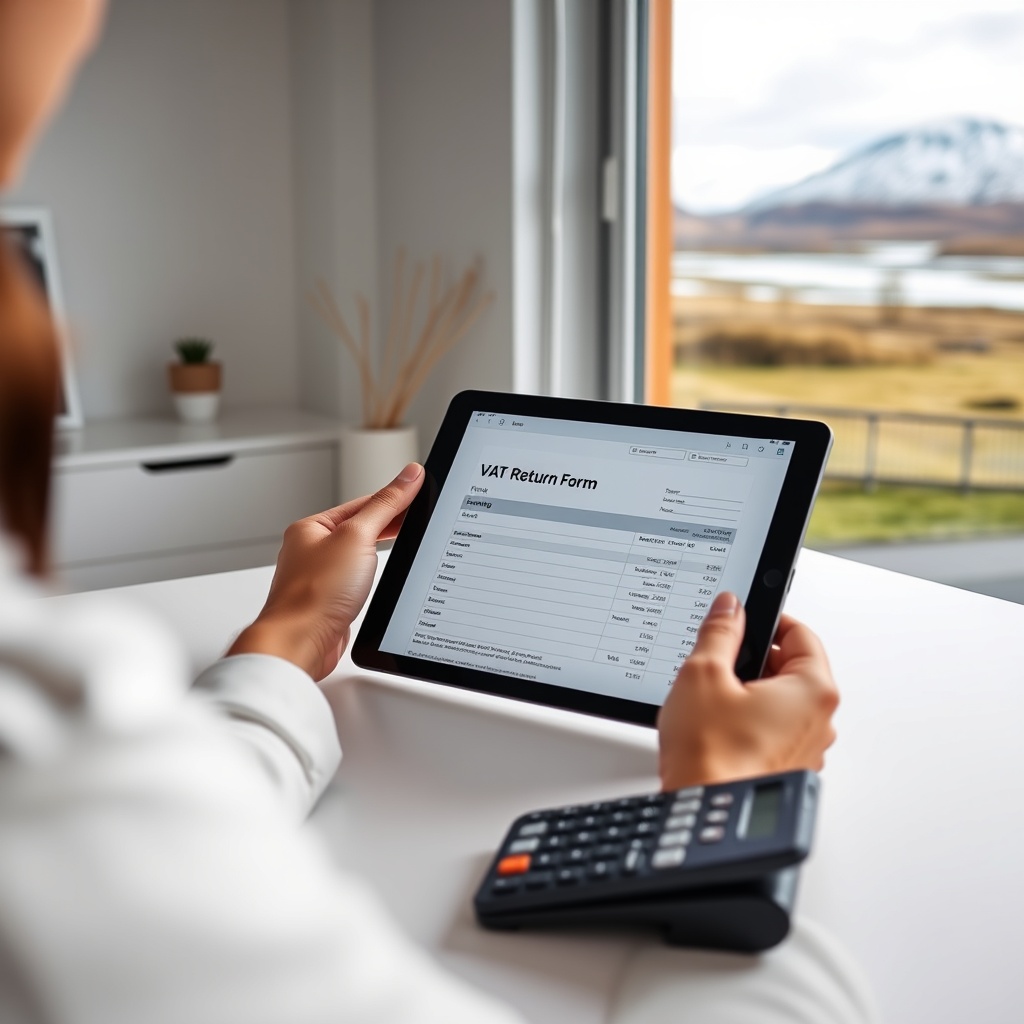
Iceland’s Value Added Tax system, known locally as VSK, presents both obligations and opportunities for freelancers. The current registration threshold stands at 2,000,000 ISK annually, meaning freelancers earning below this amount are exempt from VAT obligations. We monitor our revenue closely against this threshold, as crossing it triggers significant administrative responsibilities. Once registered, we must charge VAT on our services, maintain detailed records, and submit regular returns to Iceland Revenue and Customs.
The standard VAT rate applies to most freelance services, though certain categories may qualify for reduced rates. We’ve found that proper VAT management requires systematic invoicing and expense tracking, as we can reclaim VAT paid on business purchases. This creates a cash flow consideration, as we collect VAT from clients but only remit it periodically. By understanding these dynamics, we can structure our pricing and payment terms to optimise our financial position while meeting all legal obligations.
Setting Up Your Freelance Business in Iceland
Step-by-Step Registration Process
Our journey begins with obtaining the essential kennitala, Iceland’s national identification number that serves as our business foundation. This unique identifier unlocks access to banking, tax systems, and official communications, making it our first priority. We complete the application through Registers Iceland, providing the necessary documentation, including passport copies and proof of address. The process typically takes one to two weeks, during which we prepare our business plan and initial financial projections for the next phase.
Following the Kennitala acquisition, we registered with Iceland Revenue and Customs using form RSK 5.02, establishing our tax obligations and VAT status. This registration determines our reporting requirements and tax payment schedule. We submit this form electronically through the Skatturinn portal, ensuring accuracy in all provided information. The confirmation arrives within two to four weeks, marking our official entry into Iceland’s business ecosystem and triggering our first tax assessment period.
Choosing and Registering a Business Name
Selecting our business name involves both creative consideration and legal compliance. We ensure our chosen name is unique, not confusingly similar to existing businesses, and reflects our professional identity. The name registration process occurs through the Icelandic Business Registry, where we verify availability and submit our application. This step establishes our legal business identity and protects our brand within Iceland’s commercial landscape, providing professional credibility with clients and partners.
Once approved, our business name becomes our primary identifier for contracts, invoices, and official communications. We register it alongside our kennitala, creating a complete business profile in Iceland’s systems. This registration also allows us to open business bank accounts and establish commercial relationships. We’ve found that investing time in this process pays dividends in professional perception and operational efficiency, as a well-chosen name communicates our values and expertise to potential clients.
Opening a Business Bank Account
Establishing our business banking relationship begins with selecting an Icelandic financial institution that understands freelance needs. We compare services, fees, and digital capabilities, prioritising banks with strong online platforms and responsive customer support. The application requires our kennitala, business registration documents, and identification, along with information about our expected transaction volumes and business activities. This process typically completes within one to two weeks, providing us with essential financial infrastructure.
Our business account becomes the central hub for all financial transactions, separating personal and business finances for clarity and compliance. We set up online banking, payment processing capabilities, and automatic tax payment facilities. This separation simplifies our accounting, tax preparation, and financial reporting while demonstrating professional organisation to clients and authorities. We maintain regular communication with our bank, ensuring our services evolve with our growing business needs in Iceland’s dynamic financial landscape.
Financial Planning for Icelandic Freelancers
Creating a Sustainable Freelance Budget
Let me tell you something crucial about Icelandic freelancing – your budget isn’t just numbers, it’s your survival blueprint. We start by tracking every single ISK that flows through your business, separating personal and professional expenses immediately. I recommend allocating 30% of each payment to taxes, 20% to business growth, and 50% to living expenses. This disciplined approach transforms unpredictable income into predictable stability, giving you the financial confidence to thrive in Iceland’s unique market conditions.
What most freelancers miss is the seasonal nature of Icelandic business cycles. We need to account for slower winter months when tourism-related work decreases and plan accordingly. I suggest building a three-month buffer into your budget calculations, ensuring you can weather any economic fluctuations. This strategic cushion becomes your competitive advantage, allowing you to focus on quality work rather than financial stress.
Estimating Earnings and Setting Rates for the Icelandic Market
Setting your rates in Iceland requires understanding both local market realities and international competition. We begin by researching industry standards through Icelandic professional associations and international platforms. Remember that Icelandic clients expect premium quality but also understand the higher cost of living here. Your rates should reflect your expertise while remaining competitive within the Nordic business ecosystem.
I’ve discovered that successful Icelandic freelancers use a tiered pricing strategy – offering different service levels at corresponding price points. This approach accommodates both local startups and established international clients. We calculate your hourly rate by dividing your desired annual income by billable hours, then adding 30% for business expenses and 20% for profit margin. This formula ensures sustainable growth.
Building an Emergency Fund in ISK
Here’s the truth about Icelandic freelancing – your emergency fund isn’t optional, it’s your business insurance. We aim for six months of living expenses in Icelandic króna, stored in a separate high-yield savings account. This fund protects you against client payment delays, seasonal work fluctuations, and unexpected business expenses. I recommend automating monthly transfers to build this fund systematically.
What makes Iceland unique is the currency stability consideration. While ISK is our primary currency, we also consider maintaining a small portion in euros or dollars for international opportunities. This diversified approach provides additional security. Remember that Icelandic banks offer competitive savings products specifically designed for self-employed individuals – leverage these tools for optimal financial planning.
Invoicing and Payment Management
Crafting Compliant Icelandic Invoices
Icelandic invoicing requires specific legal elements that many new freelancers overlook. Every invoice must include your Icelandic kennitala (tax ID), client’s kennitala, invoice date, payment due date, and detailed service descriptions. We use the standard Icelandic invoice format that includes VAT (VSK) calculations separately when applicable. This compliance isn’t bureaucratic red tape – it’s professional credibility that Icelandic clients respect.
What I’ve learned from successful Icelandic freelancers is the importance of clear payment terms. We specify 14-day payment windows as standard, with clear consequences for late payments. Including your Icelandic bank account details (IBAN and SWIFT) eliminates payment processing delays. This attention to detail demonstrates professionalism and establishes trust with clients who value proper business practices.
Managing Client Payments and Currency Considerations
Currency management becomes critical when working with international clients while based in Iceland. We establish clear payment protocols upfront – specifying whether payments should be in ISK, EUR, or USD. For eurozone clients, I recommend using Icelandic banks’ euro accounts to avoid excessive conversion fees. This strategic approach preserves your profit margins while simplifying asset management.
The reality of Icelandic banking means we must account for currency fluctuation risks. I suggest using forward contracts for large international payments to lock in exchange rates. For regular, smaller payments, consider multi-currency accounts offered by Icelandic fintech solutions. This proactive currency strategy transforms potential financial risks into manageable business processes.
Dealing with Late Payments and Debt Collection
Late payments happen in every market, but Icelandic business culture has specific protocols we must follow. We begin with polite payment reminders after seven days, escalating to formal notices at fourteen days. Icelandic law provides clear debt collection procedures through the District Commissioner’s office, but prevention remains our best strategy. Clear contracts and upfront deposits minimise payment issues.
What separates successful freelancers is their systematic approach to payment follow-up. We implement automated reminder systems and maintain professional communication throughout the process. For persistent issues, the Icelandic small claims court offers efficient resolution for amounts under certain thresholds. This structured approach protects your cash flow while maintaining professional relationships.
Expense Tracking and Deductions
Allowable Business Expenses for Icelandic Freelancers
Icelandic tax law provides specific deductions that can significantly reduce your tax burden when properly documented. We categorise expenses into operational costs (software, supplies), professional development (courses, conferences), and business-related travel. Home office deductions require proportional calculations based on space usage. This systematic categorisation maximises your legitimate deductions while maintaining compliance.
What many freelancers miss are the industry-specific deductions available in Iceland. Creative professionals can deduct equipment purchases, while consultants can claim research materials. We maintain digital receipts for every business expense, organised by category and date. This meticulous record-keeping transforms during tax season from a stressful obligation to a strategic advantage.
Home Office Deductions and Calculations
Calculating home office deductions in Iceland requires precision but offers substantial benefits. We measure your dedicated workspace percentage relative to total home area, then apply this percentage to rent, utilities, and maintenance costs. Icelandic tax authorities accept this proportional method when properly documented. This legitimate deduction recognises the reality of modern freelance work while providing financial relief.
I recommend creating a dedicated workspace that meets Icelandic requirements for business deduction eligibility. The space should be used exclusively for business purposes with proper documentation. We photograph the setup and maintain utility bills showing the proportional calculation. This thorough approach withstands potential tax authority scrutiny while optimising your financial position.
Tracking Equipment, Software, and Professional Development Costs
Technology investments represent significant deductible expenses for Icelandic freelancers. We track computer equipment, software subscriptions, and digital tools as capital assets or operational expenses based on Icelandic accounting rules. Professional development costs – including courses, certifications, and industry memberships – qualify as legitimate business expenses that enhance your service offerings.
What transforms expense tracking from chore to strategy is the connection between investments and business growth. Each software subscription or equipment purchase should directly contribute to service delivery or efficiency improvements. We maintain subscription records, renewal dates, and usage documentation. This strategic approach to digital asset management maximises both tax benefits and operational effectiveness.

Accounting and Bookkeeping Essentials
Record-Keeping Requirements in Iceland
Icelandic law mandates specific record-keeping standards that freelancers must understand and implement. We maintain digital records of all invoices, receipts, bank statements, and contracts for seven years as required by Icelandic tax authorities. This systematic approach begins with proper document organisation from day one, preventing future compliance issues. Digital solutions streamline this process while ensuring accessibility.
What separates professional freelancers is their proactive approach to financial documentation. We implement weekly review sessions to categorise expenses and update income records. Icelandic requirements include maintaining separate business and personal accounts, with clear transaction documentation. This discipline transforms tax preparation from annual stress into routine business maintenance.
Choosing Between DIY Accounting and Professional Services
The decision between self-managed accounting and professional services depends on your business complexity and financial comfort level. We assess your transaction volume, international elements, and growth projections to determine the optimal approach. Many Icelandic freelancers start with simple spreadsheet systems, transitioning to professional services as their business expands and tax situations become more complex.
What I’ve observed is that successful freelancers recognise when professional help provides value exceeding its cost. Icelandic accounting professionals understand local regulations, VAT requirements, and deduction opportunities specific to our market. Their expertise often identifies savings that cover their fees while ensuring compliance. This strategic partnership enhances your asset management best practices.
Recommended Accounting Software for Icelandic Freelancers
Selecting the right accounting software transforms financial management from a burden to business intelligence. We evaluate options based on Icelandic tax compliance features, multi-currency capabilities, and integration with Icelandic banking systems. Cloud-based solutions offer real-time financial visibility while ensuring data security and accessibility from anywhere in Iceland or during international travel.
The ideal software automates invoice generation, expense categorisation, and tax calculation specific to Icelandic requirements. We prioritise solutions with Icelandic language support and local customer service. This technological foundation supports business growth while maintaining compliance. For comprehensive guidance on financial planning, consult authoritative Icelandic resources to ensure your systems align with national standards and regulations.
Tax Filing Procedures and Deadlines
Annual Tax Return Process for Freelancers
We’ve discovered that Icelandic freelancers must file their annual tax returns before 14 March of the following year, which means for 2026 income, you’ll need to submit by 14 March 2027. I recommend starting your preparation in January to avoid last-minute stress. The process involves submitting detailed income statements, expense records, and supporting documentation through the Skatturinn online portal. We’ve found that maintaining meticulous records throughout the year makes this process significantly smoother and reduces the risk of errors or audits.
Our approach involves creating a dedicated folder for each tax year containing all relevant documents. You’ll need to report all freelance income, including international payments converted to ISK using official exchange rates. The system calculates your final tax liability based on your total annual earnings after allowable deductions. We always recommend double-checking your submission before the deadline to ensure accuracy and avoid potential penalties for late or incorrect filings.
Preliminary Tax Assessments and Payments
I’ve learned that Icelandic freelancers must make preliminary tax payments throughout the year based on estimated annual income. These payments are typically due in four instalments: March, May, August, and November. We calculate these amounts by projecting your expected annual earnings and dividing by four. The system helps prevent large tax bills at year-end and ensures consistent cash flow management throughout your financial planning.
Our strategy involves reviewing and adjusting preliminary payments quarterly based on actual earnings. If your income fluctuates significantly, you can request adjustments through the Skatturinn portal. We’ve found that maintaining accurate preliminary payments prevents interest charges on underpayments and potential cash flow issues. Remember that any overpayments will be refunded after your annual tax return is processed, providing a welcome financial boost in the spring.
Important Tax Calendar Dates for 2026
We’ve created a comprehensive tax calendar that every Icelandic freelancer should follow religiously. The key dates include 31 January for finalising your 2025 tax return if you requested an extension, 14 March for submitting your 2026 annual return, and quarterly preliminary payment deadlines throughout the year. I recommend setting calendar reminders for each deadline to ensure you never miss a payment or filing requirement.
Our experience shows that successful freelancers treat tax deadlines with the same importance as client deliverables. We suggest scheduling dedicated time each month for tax-related tasks, including record-keeping, payment preparation, and documentation organisation. By integrating these dates into your business workflow, you’ll maintain compliance while minimising stress. Remember that tax deadlines can change, so staying informed through official channels is crucial for your financial management.
International Considerations
Working with International Clients: Tax Implications
We’ve navigated the complexities of international client work extensively, and I can tell you that Icelandic freelancers must report all global income to Skatturinn. The key distinction lies in whether your clients are based within the European Economic Area or outside it. For EU/EEA clients, standard VAT rules apply, while non-EU clients may require different invoicing procedures. We always recommend including clear payment terms and currency specifications in your contracts to avoid misunderstandings.
Our approach involves maintaining separate records for domestic and international income to simplify reporting. You’ll need to convert foreign currency payments to ISK using the official exchange rate on the payment date. We’ve found that using specialised accounting software with multi-currency support saves significant time and reduces errors. Remember that certain international payments may be subject to withholding taxes in the client’s country, which you can often claim as foreign tax credits in Iceland.
Double Taxation Agreements Relevant to Iceland
I’ve studied Iceland’s extensive network of double taxation agreements, which currently covers over 50 countries, including the United States, United Kingdom, Germany, and China. These agreements prevent you from being taxed twice on the same income by both Iceland and the client’s country. We always check the specific treaty provisions before accepting international projects, as they can significantly impact your net earnings and compliance requirements.
Our strategy involves maintaining detailed documentation to prove your tax residency and income sources. You’ll typically need to complete specific forms or certificates to claim treaty benefits, such as reduced withholding tax rates. We recommend consulting with a tax professional familiar with international agreements to ensure proper compliance. The Icelandic Directorate of Internal Revenue provides guidance on treaty applications, but we’ve found that professional advice often pays for itself through tax savings and reduced administrative burden.
Tax Residency Rules for Foreign Freelancers in Iceland
We’ve helped numerous foreign freelancers establish their tax status in Iceland, and the rules are quite specific. You’re considered a tax resident if you spend 183 days or more in Iceland during any 12-month period, or if you have a permanent home available to you in Iceland. The determination affects your worldwide income reporting requirements and access to Icelandic social benefits. I recommend keeping detailed travel records and maintaining documentation of your primary residence status.
Our approach involves careful planning of your physical presence in Iceland to manage your tax residency status intentionally. Non-resident freelancers only pay tax on Icelandic-sourced income, which can be advantageous for certain business models. We’ve found that maintaining clear records of your days in Iceland and other countries is essential for proving your residency status. The Icelandic tax authorities may request evidence of your international movements, so we recommend using digital tools to track your location throughout the year.
Retirement and Long-Term Financial Security
Icelandic Pension System for Self-Employed Individuals
We’ve explored Iceland’s comprehensive pension system, which requires all self-employed individuals to contribute to both the basic state pension and supplementary occupational pension schemes. The current contribution rate stands at 12% of your taxable income, split between your personal contributions and mandatory employer-equivalent payments. I recommend viewing these contributions not as expenses but as essential investments in your future financial stability and long-term asset management strategy.
Our approach involves calculating your pension contributions as a fixed percentage of each invoice you issue. We’ve found that setting aside these funds immediately upon receiving payment prevents cash flow issues and ensures consistent compliance. The system provides retirement, disability, and survivor benefits, creating a valuable safety net for freelancers. Remember that you can make additional voluntary contributions to boost your future pension income, which we often recommend for those with variable earnings patterns.
Private Pension Savings Options
I’ve discovered that Icelandic freelancers have excellent opportunities to supplement their mandatory pension through private savings vehicles. The most popular options include individual pension savings accounts (IPS) and various investment funds specifically designed for retirement planning. We typically recommend allocating 5-10% of your net income to these additional savings, depending on your age, income level, and retirement goals. The tax advantages make these vehicles particularly attractive for long-term wealth accumulation.
Our strategy involves diversifying your private pension investments across different asset classes and geographic regions. We’ve found that starting early with consistent contributions, even in small amounts, creates significant compounding benefits over time. Many Icelandic banks and financial institutions offer tailored pension products for freelancers with flexible contribution options. We recommend reviewing your private pension arrangements annually to ensure they align with your changing financial circumstances and retirement objectives.
Long-Term Investment Strategies for Freelancers
We’ve developed specific investment approaches for freelancers that account for income variability and the need for liquidity. The foundation involves building an emergency fund covering 6-12 months of expenses before considering longer-term investments. I recommend starting with low-cost index funds or ETFs that provide broad market exposure while minimising management fees. Our experience shows that automated monthly investments, even during lean periods, create discipline and long-term growth potential.
Our approach balances growth-oriented investments with more conservative options as you approach retirement age. We’ve found that Icelandic freelancers benefit from understanding both local and international investment opportunities. The key is developing a strategy that matches your risk tolerance, time horizon, and income stability. Remember that consistent investing, regardless of market conditions, typically produces better results than trying to time the market. We recommend regular portfolio reviews to rebalance your investments and adjust your strategy as your business evolves.

Insurance and Risk Management
Mandatory and Recommended Insurance Coverage
We’ve identified essential insurance coverage that every Icelandic freelancer should maintain, starting with mandatory occupational accident insurance. This coverage protects you if you’re injured while working and provides income replacement during recovery periods. I also recommend securing professional liability insurance, which covers legal costs and damages if a client claims your work caused them financial loss. Our experience shows that adequate insurance provides peace of mind and professional credibility when pitching to larger clients.
Our approach involves reviewing your insurance needs annually as your business grows and evolves. We’ve found that bundling policies with a single provider often results in cost savings and simplified administration. Additional recommended coverage includes business equipment insurance for your technology assets, cyber liability protection for data breaches, and income protection for extended illness or disability. Remember that insurance represents a critical component of your overall risk management strategy, not merely an expense.
Professional Liability Insurance for Freelancers
I’ve learned that professional liability insurance, often called errors and omissions insurance, is particularly important for freelancers providing advice, creative work, or technical services. This coverage protects you against claims of negligence, mistakes, or failure to deliver promised results. We recommend coverage limits based on your project sizes and client types, typically starting at 5-10 million ISK for most freelance professionals. The cost varies by industry and risk level, but represents essential protection for your business assets.
Our strategy involves carefully reviewing policy terms to ensure they cover your specific services and potential risks. We’ve found that many freelancers underestimate their exposure to liability claims, particularly when working with international clients. The insurance typically covers legal defence costs, settlements, and judgments, which can otherwise devastate your finances. Remember to disclose your full range of services to your insurer to ensure proper coverage and avoid potential claim denials due to undisclosed activities.
Health Insurance Considerations
We’ve navigated Iceland’s healthcare system extensively and can guide you through the insurance considerations for freelancers. While Iceland provides universal healthcare through the national system, many freelancers supplement this with private health insurance for faster access to specialists and additional services. I recommend evaluating your personal health needs, family situation, and budget when deciding on supplementary coverage. Our experience shows that private insurance can significantly reduce waiting times for non-emergency treatments.
Our approach involves comparing different insurance providers and plan options annually during open enrollment periods. We’ve found that group plans through professional associations often offer better rates and terms than individual policies. Key considerations include coverage for dental care, physiotherapy, mental health services, and prescription medications. Remember that maintaining good health insurance supports your business continuity by ensuring you can access timely medical care and return to work quickly after health issues.
Scaling Your Freelance Business
When and How to Hire Subcontractors
We’ve discovered that hiring subcontractors becomes essential when you consistently exceed your capacity while maintaining quality. The Icelandic market demands careful consideration of local labour laws and proper contract structures. We recommend starting with project-based agreements before moving to longer-term arrangements, ensuring you understand the tax implications for both parties involved in these professional relationships.
Our experience shows that successful subcontractor management requires clear communication channels and performance metrics. We’ve learned to establish transparent payment schedules and scope definitions upfront, which prevents misunderstandings later. This approach allows us to maintain our reputation while expanding our service offerings through strategic partnerships with other skilled professionals in Iceland’s growing freelance ecosystem.
Transitioning from Freelancer to Agency
We’ve found that transitioning to an agency model requires systematic planning and gradual implementation. The key is developing repeatable processes and standardised service packages that can be delivered consistently. We recommend starting with a core team of two to three specialists before expanding further, ensuring you maintain quality control during this critical growth phase in Iceland’s competitive market.
Our journey taught us that agency success depends on building scalable systems rather than just adding more clients. We implemented structured project management workflows and client onboarding procedures that allowed us to handle increased volume without sacrificing service quality. This systematic approach transformed our solo operation into a sustainable business model with predictable revenue streams and growth potential.
Managing Growth While Maintaining Financial Health
We’ve learned that sustainable growth requires balancing expansion with financial stability. Our strategy involves maintaining a cash reserve equivalent to six months of operating expenses while scaling operations. We monitor key financial metrics weekly, including client acquisition costs, project profitability, and cash flow projections, which helps us make informed decisions about when to invest in growth initiatives.
Our experience demonstrates that financial health during expansion depends on disciplined expense management and strategic reinvestment. We allocate a fixed percentage of revenue to growth initiatives while maintaining conservative spending in other areas. This balanced approach allows us to scale our asset management capabilities while ensuring we have the resources to weather any market fluctuations in Iceland’s dynamic freelance economy.
Technology and Tools for Financial Management
Digital Tools for Icelandic Tax Compliance
We’ve embraced digital solutions that streamline our tax compliance processes in Iceland’s evolving regulatory environment. The Skatturinn online portal has become our central hub for tax filings and payments, while specialised software helps us track deductible expenses and calculate VAT obligations accurately. These tools have significantly reduced our administrative burden while improving compliance accuracy.
Our toolkit includes cloud-based accounting platforms that integrate with Icelandic banking systems, allowing real-time financial tracking. We’ve found that automated expense categorisation and receipt scanning features save us hours each month. These technological solutions ensure we meet all regulatory requirements while maintaining complete financial transparency, which is crucial for building trust with Icelandic authorities and clients alike.
Financial Dashboard and Reporting Tools
We’ve implemented comprehensive dashboard solutions that provide real-time visibility into our financial performance. These tools aggregate data from multiple sources, including bank accounts, invoicing systems, and expense trackers, creating a unified financial picture. Customisable reports help us monitor key metrics like revenue trends, profit margins, and client profitability across different service categories.
Our experience shows that effective financial dashboards should highlight both historical performance and forward-looking projections. We’ve configured alerts for important thresholds, such as cash flow warnings or unusually high expenses. This proactive approach to asset management solutions allows us to make timely adjustments to our financial strategy, ensuring we maintain optimal performance in Iceland’s competitive freelance market.
Automating Invoicing and Expense Tracking
We’ve automated our invoicing processes to ensure timely billing and consistent cash flow. Our system generates invoices automatically based on project milestones or time tracking data, sends payment reminders, and reconciles payments with minimal manual intervention. This automation has reduced our administrative workload while improving our collection rates and client satisfaction.
Our expense tracking automation captures receipts digitally, categorises expenses according to Icelandic tax regulations, and prepares documentation for deductions. We’ve integrated these systems with our accounting software, creating seamless workflows that save us significant time each month. This automated approach to asset tracking ensures we maintain accurate financial records while maximising our deductible expenses within Iceland’s regulatory framework.
Future Outlook and Strategic Planning
Predicted Regulatory Changes for 2026 and Beyond
We’re monitoring several regulatory developments that could impact Icelandic freelancers in the coming years. The government is considering simplified tax structures for micro-businesses and potential adjustments to VAT thresholds. We anticipate increased digital reporting requirements and enhanced data protection regulations that will affect how we manage client information and financial records in our operations.
Our strategic planning includes preparing for potential changes to social security contributions and pension requirements for self-employed individuals. We’re staying informed about proposed legislation through industry associations and government consultations. This proactive approach ensures we can adapt quickly to new regulations while maintaining compliance and competitive advantage in Iceland’s evolving freelance landscape.
Economic Trends Impacting Icelandic Freelancers
We’re observing significant shifts in Iceland’s economic landscape that present both challenges and opportunities for freelancers. The growing demand for specialised digital services, particularly in technology and creative sectors, creates new revenue streams. However, we’re also monitoring inflation trends and currency fluctuations that could affect our pricing strategies and international client relationships.
Our analysis suggests that remote work trends will continue to reshape Iceland’s freelance market, increasing competition from international providers while opening global opportunities. We’re adapting our service offerings to leverage Iceland’s unique strengths in sustainability and innovation. This strategic positioning helps us differentiate our services while capitalising on emerging economic trends in the Nordic region and beyond.
Building a Resilient Freelance Career in Iceland
We’ve developed a resilience framework that combines financial preparedness with professional adaptability. Our approach includes maintaining diversified income streams across different client types and service categories, which reduces our vulnerability to market fluctuations. We’ve also established strong professional networks that provide support during challenging periods and create referral opportunities.
Our long-term strategy focuses on continuous skill development and service innovation. We regularly assess market demands and adjust our offerings accordingly, ensuring we remain relevant and competitive. This commitment to professional growth, combined with sound asset management best practices, creates a sustainable foundation for our freelance careers in Iceland’s dynamic economy. We believe this balanced approach will serve us well through whatever changes the future may bring.
Frequently Asked Questions
What are the key tax considerations for freelancers in Iceland?
We’ve found that understanding Iceland’s progressive income tax system is crucial, with rates ranging from 31.45% to 46.24% for 2026. Freelancers must register with Skatturinn and pay monthly withholding taxes on calculated remuneration. The VAT threshold stands at ISK 2 million annually, requiring registration once exceeded. Proper expense tracking and deduction documentation are essential for optimising your tax position while maintaining compliance with Icelandic regulations.
How should freelancers structure their business in Iceland?
We recommend starting as a sole proprietorship (einstaklingsfyrirtæki) for simplicity, requiring minimal capital and straightforward registration. As your business grows, consider transitioning to a private limited company (ehf) for liability protection and tax advantages. Each structure has different implications for asset management services, pension contributions, and social security obligations. Professional advice can help you choose the optimal structure based on your specific circumstances and growth plans.
What financial tools are essential for Icelandic freelancers?
We’ve identified several essential tools, including the Skatturinn online portal for tax compliance, cloud accounting software integrated with Icelandic banks, and automated invoicing systems. Digital expense trackers with receipt scanning capabilities help maximise deductions while maintaining proper documentation. Financial dashboards providing real-time performance metrics are crucial for informed decision-making in Iceland’s dynamic freelance market.
How can freelancers prepare for Iceland’s regulatory changes?
We suggest staying informed through official channels like the Icelandic Tax Authority website and industry associations. Maintain flexible financial systems that can adapt to new reporting requirements. Build relationships with local accountants who understand upcoming changes. Regularly review your business structure and processes to ensure they remain compliant with evolving Icelandic regulations affecting freelancers and self-employed professionals.
What strategies ensure long-term success for freelancers in Iceland?
We’ve learned that diversification across client types and service offerings creates stability. Building strong professional networks provides support and referral opportunities. Continuous skill development keeps you competitive in evolving markets. Maintaining adequate cash reserves and implementing sound financial management practices ensures resilience during economic fluctuations. These combined strategies create sustainable freelance careers in Iceland’s unique business environment.
