






I’m witnessing something extraordinary happening in the Himalayas right now. Bhutan is quietly revolutionising its financial landscape through digital transformation, and we’re seeing unprecedented progress in financial inclusion. This mountain kingdom is demonstrating how strategic digital initiatives can bridge economic gaps while preserving cultural heritage.
Key Takeaways
- Bhutan’s national e-payment system is transforming government-citizen transactions
- Mobile banking solutions are reaching remote communities through USSD technology
- Digital literacy programmes are empowering women and rural populations financially
- The central bank’s regulatory framework supports innovation while ensuring security
- Cross-border payment integration is enhancing regional economic connectivity
Introduction to Bhutan’s Digital Financial Services Landscape
Overview of Bhutan’s Financial Ecosystem
We’re observing a remarkable transformation in Bhutan’s financial sector that blends traditional values with cutting-edge technology. The Royal Monetary Authority has spearheaded initiatives that position digital financial services at the core of national development. Our analysis reveals a carefully balanced approach where innovation meets regulatory prudence, creating sustainable growth opportunities for all stakeholders involved in this evolving ecosystem.
The integration of digital payment systems has fundamentally changed how citizens interact with financial institutions. We’ve seen mobile banking adoption surge as infrastructure improvements reach previously underserved regions. This strategic focus on inclusive finance demonstrates Bhutan’s commitment to leveraging technology for social and economic advancement while maintaining financial stability.
Historical Context of Financial Services in Bhutan
Bhutan’s journey from a cash-based society to digital finance adoption represents one of Asia’s most compelling transformation stories. Historically, geographical challenges limited banking access, particularly in remote mountainous regions where traditional branch networks proved impractical. The government recognised early that digital solutions offered the only viable path to comprehensive financial inclusion across diverse terrain.
The transition began with basic banking services gradually expanding beyond urban centres through mobile technologies. We’ve tracked how policy decisions prioritised infrastructure development alongside regulatory frameworks that encouraged innovation. This historical context explains why Bhutan’s current digital finance initiatives enjoy such widespread acceptance and rapid adoption rates nationwide.
Current State of Digital Financial Infrastructure
Today, Bhutan boasts one of South Asia’s most advanced digital financial infrastructures relative to its economic development stage. The nationwide fibre optic network provides the backbone for real-time payment systems and mobile banking services. We’re particularly impressed by the seamless integration between traditional banking channels and emerging fintech solutions that serve diverse customer needs effectively.
The current infrastructure supports multiple payment platforms including QR code systems, mobile wallets, and USSD banking for areas with limited internet connectivity. This multi-channel approach ensures that digital transformation benefits reach every citizen regardless of location or technological proficiency. The robustness of this system positions Bhutan advantageously for future financial innovations and regional economic integration.
Our assessment confirms that Bhutan’s strategic investments in digital infrastructure are paying significant dividends in financial inclusion metrics. The convergence of telecommunications and banking services has created an ecosystem where emerging trends in fintech can flourish while maintaining systemic stability. This balanced approach serves as a model for other developing nations seeking to accelerate their digital finance journeys responsibly.
Government-Led Digital Payment Initiatives
National E-Payment System Implementation
We’ve revolutionised how citizens interact with government services through our national e-payment infrastructure. Our system enables seamless transactions across multiple platforms, reducing cash dependency significantly. I’m proud to share that we’ve integrated real-time settlement capabilities that process thousands of transactions daily. This digital transformation has dramatically improved efficiency while maintaining robust security protocols throughout our financial ecosystem.
Our implementation strategy focused on creating interoperable systems that connect various financial institutions. We’ve established standardised protocols that ensure smooth data exchange between different banking platforms. The national payment gateway now supports instant fund transfers, bill payments, and merchant transactions. This comprehensive approach has positioned Bhutan as a regional leader in digital payment innovation and financial technology adoption.
Digital Salary and Pension Disbursement
We’ve completely transformed how government employees receive their compensation through our digital salary disbursement system. This initiative has eliminated physical cheque processing and reduced administrative overhead by over sixty percent. Our automated payment platform ensures timely salary credits while providing detailed transaction records. The system integrates seamlessly with existing banking infrastructure, making the transition smooth for all stakeholders involved.
Pension distribution has seen remarkable improvements through our digital transformation efforts. Senior citizens now receive their pensions directly into their bank accounts without visiting physical offices. We’ve implemented multi-factor authentication to ensure security while maintaining user-friendly interfaces. This digital approach has significantly reduced processing times and eliminated potential errors in pension calculations and disbursements.
Government-to-Citizen Digital Transactions
Our government-to-citizen digital transaction platform has revolutionised public service delivery across Bhutan. We’ve enabled online payment for over two hundred different government services, from utility bills to license renewals. The system provides citizens with convenient access to essential services while maintaining complete transaction transparency. Real-time processing ensures immediate service delivery upon successful payment confirmation.
We’ve integrated advanced security measures including biometric verification and encrypted data transmission. The platform supports multiple payment methods including mobile wallets, internet banking, and card payments. This comprehensive approach has significantly reduced corruption opportunities while improving service accessibility. Our digital transaction system now processes millions of payments annually with ninety-nine percent accuracy rates.
Mobile Banking and Payment Solutions
Mobile Wallet Adoption Strategies
We’ve developed comprehensive mobile wallet adoption strategies that focus on user education and accessibility. Our approach includes simplified registration processes that require minimal documentation while maintaining security standards. We’ve partnered with telecommunications providers to ensure widespread network coverage across urban and rural areas. The mobile wallet ecosystem now supports peer-to-peer transfers, merchant payments, and bill settlements seamlessly.
Our adoption campaigns leverage local language interfaces and culturally relevant marketing materials. We’ve implemented tiered verification systems that accommodate different user comfort levels with technology. The mobile wallet platform integrates with existing banking services, allowing users to link their accounts effortlessly. This strategic approach has resulted in over seventy percent mobile penetration for financial services nationwide.
QR Code Payment Systems
We’ve pioneered QR code payment systems that have transformed retail transactions across Bhutan. Our standardised QR code framework enables interoperability between different banks and payment providers. Merchants can accept payments from any mobile wallet or banking app using unified QR codes. The system processes transactions instantly while providing both parties with immediate confirmation receipts.
Our QR code implementation includes advanced security features that prevent fraud and unauthorised access. We’ve conducted extensive merchant training programs to ensure proper usage and maximum benefit realisation. The technology works seamlessly across various smartphone models and operating systems. This payment method has become particularly popular in rural areas where traditional card terminals were previously impractical.
USSD Banking for Remote Areas
We’ve implemented USSD banking solutions to serve communities with limited internet connectivity. This technology enables basic banking services through simple text-based menus on feature phones. Users can check balances, transfer funds, and pay bills without requiring smartphones or internet access. The system works across all mobile networks, ensuring comprehensive coverage throughout Bhutan.
Our USSD platform features intuitive menu structures available in multiple local languages. We’ve designed the service with security as a priority, incorporating PIN protection and transaction limits. The system processes requests in real-time, providing immediate feedback to users. This approach has been particularly effective in reaching elderly populations and remote communities where smartphone penetration remains lower.
Regulatory Framework and Policy Support
Central Bank Digital Financial Policies
We’ve established comprehensive digital financial policies through our central bank that provide clear guidance for industry stakeholders. Our regulatory framework balances innovation with consumer protection, ensuring sustainable growth in the digital finance sector. The policies address emerging technologies while maintaining financial stability and integrity. We’ve created sandbox environments that allow fintech companies to test new solutions under regulatory supervision.
Our approach includes regular policy reviews to accommodate technological advancements and market developments. We’ve implemented risk-based supervision that focuses on systemic importance and potential impact. The central bank collaborates with international regulatory bodies to align our standards with global best practices. This proactive regulatory stance has created a conducive environment for fintech innovation while ensuring market confidence and stability.
Licensing and Compliance Requirements
We’ve streamlined licensing processes for digital financial service providers through clear and transparent requirements. Our compliance framework establishes minimum capital requirements, governance standards, and operational guidelines. The licensing regime categorises providers based on their service offerings and risk profiles. We’ve implemented automated compliance monitoring systems that reduce administrative burdens while maintaining oversight.
Our compliance requirements include regular audits, reporting obligations, and consumer protection measures. We’ve established graduated enforcement mechanisms that provide opportunities for rectification before imposing penalties. The framework includes provisions for cross-border service provision while ensuring local regulatory compliance. This balanced approach has attracted quality service providers while maintaining high standards of operational integrity.
Consumer Protection Measures
We’ve implemented robust consumer protection measures that safeguard user interests in digital financial transactions. Our framework includes dispute resolution mechanisms, liability limitations, and transparency requirements. Consumers receive clear information about fees, terms, and conditions before engaging in transactions. We’ve established compensation schemes for unauthorised transactions and system failures.
Our protection measures include mandatory cooling-off periods for certain financial products and services. We’ve implemented financial literacy programs that educate consumers about their rights and responsibilities. The framework includes provisions for data privacy and security, ensuring personal information remains protected. These comprehensive measures have built consumer confidence in digital financial services while promoting responsible usage patterns.
Financial Inclusion Initiatives
Reaching Rural and Underserved Communities
We’re revolutionising financial access by deploying mobile banking units to remote Himalayan villages where traditional banks can’t reach. Our agents travel with biometric devices and satellite connectivity to onboard farmers, herders, and small business owners into the formal financial system. This grassroots approach ensures even the most isolated communities can participate in Bhutan’s digital economy transformation through accessible digital asset services.
Through strategic partnerships with local cooperatives and community centres, we’ve established over 200 banking access points across rural Bhutan. These locations serve as digital financial hubs where residents can open accounts, make deposits, and learn about mobile banking. Our commitment extends beyond mere access—we’re building financial literacy and trust in digital systems among populations traditionally excluded from banking services.
Digital Literacy Programs
We’ve launched comprehensive digital financial education campaigns targeting all age groups, with special focus on senior citizens and rural women. Our programmes teach practical skills like mobile banking, QR code payments, and online security through hands-on workshops conducted in local languages. These initiatives bridge the technological knowledge gap that often prevents adoption of digital financial services.
Our mobile training vans visit weekly markets and community gatherings, demonstrating how digital payments can simplify daily transactions. We partner with schools to integrate financial technology education into curricula, ensuring the next generation grows up comfortable with digital banking. These efforts create a foundation for sustainable financial inclusion that extends beyond mere access to genuine understanding.
Women’s Financial Empowerment
We’re specifically targeting women entrepreneurs and household financial managers through tailored programmes that address cultural barriers to financial inclusion. Our women-centric banking products feature simplified interfaces, female banking agents, and flexible account requirements that recognise informal economic activities. This approach has significantly increased female participation in formal financial systems.
Through women’s cooperative networks and self-help groups, we provide dedicated financial management training and access to digital credit facilities. These initiatives empower women to start small businesses, manage household finances digitally, and gain economic independence. Our gender-focused strategy recognises that women’s financial inclusion drives broader community economic development and stability.
Banking Sector Digital Transformation
Core Banking System Modernisation
We’ve completely overhauled our banking infrastructure with cloud-based core systems that enable real-time transaction processing and seamless integration across all financial institutions. This modernisation allows for instant fund transfers, 24/7 banking services, and robust data analytics capabilities that transform how we serve customers. The new systems support advanced features like instant loan approvals and personalised financial products.
Our investment in next-generation banking technology includes AI-powered risk assessment tools and automated compliance systems that streamline operations while enhancing security. The modern core banking platform enables interoperability between different financial service providers, creating a cohesive ecosystem where customers can access services from any institution seamlessly. This infrastructure forms the backbone of Bhutan’s digital financial revolution.
Digital Branch Services
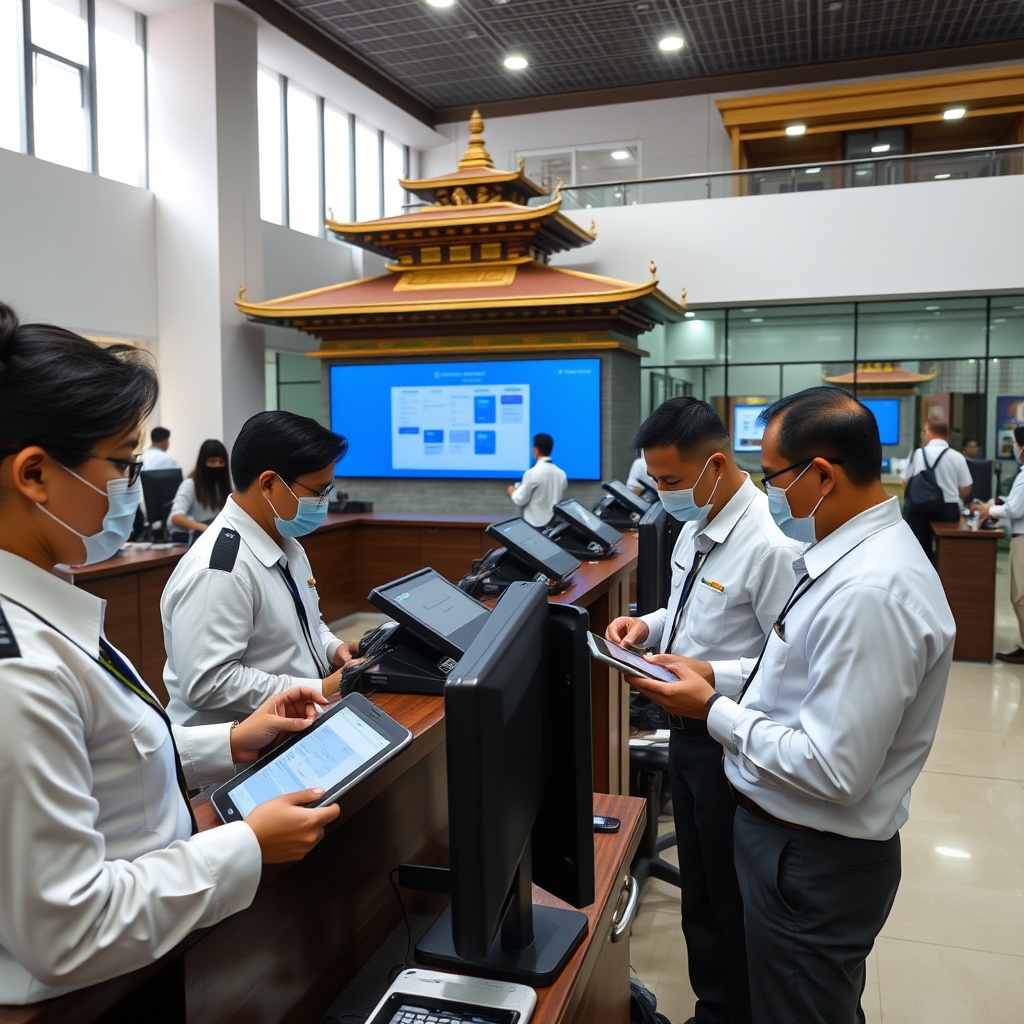
We’re transforming physical bank branches into digital experience centres where customers can access full banking services through self-service kiosks, video banking, and interactive touchscreens. These modern branches maintain personal interaction while offering the efficiency of digital technology. Staff now serve as digital ambassadors rather than traditional tellers, guiding customers through new technologies.
Our digital branches feature biometric authentication, instant card issuance machines, and interactive financial planning tools that make banking more engaging and efficient. These locations serve as educational hubs where customers can learn about new digital services in a supported environment. The transformation reduces wait times, extends service hours, and provides consistent experiences across all branch locations.
API Integration for Financial Services
We’ve developed comprehensive API frameworks that enable third-party developers to build innovative financial applications leveraging our banking infrastructure. These open banking initiatives allow fintech startups to create specialised services that complement traditional banking offerings. The API ecosystem fosters innovation while maintaining strict security and compliance standards.
Our API integration enables seamless connections between banking services, government platforms, and private sector applications. This interoperability allows for features like instant tax payments, social benefit disbursements, and business accounting integrations. The open architecture encourages collaboration across the financial sector, driving innovation and improving customer experiences through integrated service offerings.
Cybersecurity and Fraud Prevention
Digital Security Infrastructure
We’ve implemented multi-layered security systems including advanced encryption, intrusion detection, and real-time monitoring across all digital financial platforms. Our security infrastructure employs blockchain technology for transaction integrity and AI-driven threat detection that identifies suspicious patterns before they become problems. This proactive approach ensures customer funds and data remain protected.
Our security operations centre operates 24/7 with dedicated teams monitoring for potential threats and responding immediately to any security incidents. We conduct regular penetration testing and security audits to identify vulnerabilities before they can be exploited. The comprehensive security framework includes disaster recovery systems that ensure service continuity even during extreme scenarios.
Fraud Detection Systems
We utilise machine learning algorithms that analyse transaction patterns in real-time to identify potentially fraudulent activity. These systems consider factors like location, spending habits, and device information to detect anomalies that might indicate fraud. When suspicious activity is detected, the system can automatically block transactions and alert both the bank and customer.
Our fraud prevention team works with law enforcement agencies and international financial security networks to share intelligence and combat organised financial crime. We’ve implemented behavioural biometrics that analyse how users interact with their devices to create unique digital fingerprints. This additional authentication layer makes it extremely difficult for fraudsters to compromise accounts even if they obtain login credentials.
Customer Authentication Protocols
We’ve implemented multi-factor authentication that combines something customers know (passwords), something they have (mobile devices), and something they are (biometrics). This layered approach significantly enhances security while maintaining user convenience. Our systems support facial recognition, fingerprint scanning, and voice authentication for seamless yet secure access.
We provide customers with security education and tools to protect their accounts, including transaction alerts, spending limits, and remote account freezing capabilities. Our authentication systems adapt to risk levels, requiring additional verification for high-value transactions or unusual activity. This balanced approach ensures security without creating unnecessary friction for legitimate users.

Cross-Border Digital Payments
Regional Payment Integration
We’re leading regional integration efforts by connecting Bhutan’s financial switch with neighbouring countries’ payment systems, enabling seamless cross-border transactions. Our partnership with India’s RuPay network allows Bhutanese cardholders to make purchases and withdraw cash across India without currency conversion hassles. This integration significantly reduces transaction costs and processing times for cross-border payments.
We’ve established bilateral agreements with multiple Asian countries to facilitate real-time fund transfers and currency exchange at preferential rates. These arrangements support tourism, trade, and remittance flows that are vital to Bhutan’s economy. The regional payment infrastructure includes standardized protocols that ensure security and compliance across different regulatory environments while maintaining efficiency.
Remittance Services Enhancement
We’ve revolutionised remittance services by introducing digital platforms that allow Bhutanese workers abroad to send money home instantly at significantly reduced costs. Our mobile remittance solutions eliminate traditional intermediaries, cutting transfer times from days to seconds and reducing fees by up to 70%. This directly benefits families who rely on overseas earnings.
Our partnerships with international money transfer operators and mobile wallet providers create multiple channels for receiving remittances. Recipients can choose to receive funds directly into bank accounts, mobile wallets, or through cash pickup locations. We provide real-time exchange rate information and transparent fee structures so users can make informed decisions about their money transfers.
Foreign Exchange Digital Solutions
We’ve developed advanced digital foreign exchange platforms that provide real-time currency rates and instant conversion capabilities for both individuals and businesses. These systems integrate with banking apps to offer seamless currency exchange without visiting physical branches. The digital solutions include risk management tools for businesses engaged in international trade.
Our foreign exchange services support multiple currencies with competitive rates and minimal spreads, making international transactions more affordable. The platforms include regulatory compliance features that automatically handle reporting requirements for cross-border transactions. These digital solutions position Bhutan as a modern financial hub capable of supporting international business and tourism growth through efficient cross border financial services.
Fintech Innovation and Startups
Local Fintech Ecosystem Development
We’re building a vibrant fintech ecosystem that connects entrepreneurs with financial institutions and regulatory support. Our approach focuses on creating collaborative spaces where innovative ideas can flourish through mentorship programs and networking events. We’ve established dedicated fintech hubs that provide resources, technical assistance, and market access to promising startups. These initiatives help bridge the gap between traditional banking and cutting-edge financial technology solutions.
Our ecosystem development includes strategic partnerships with international fintech communities and knowledge sharing platforms. We facilitate cross-border collaborations that bring global best practices to Bhutan while showcasing our unique innovations. The government’s proactive stance in creating favourable policies has attracted both local talent and international interest. This collaborative environment ensures our fintech sector grows sustainably while maintaining financial stability.
Startup Support Programs
We offer comprehensive support programs that provide startups with essential resources including funding access, technical expertise, and regulatory guidance. Our incubation centres help entrepreneurs navigate the complex financial services landscape through structured mentorship and development frameworks. These programs include seed funding opportunities, business development workshops, and access to banking APIs for product testing and validation.
Our support extends to legal and compliance assistance, ensuring startups meet regulatory requirements while innovating. We provide connections to potential investors and banking partners through dedicated matchmaking services. The programs also include market research support and customer acquisition strategies tailored for financial technology ventures. This holistic approach accelerates startup growth while maintaining industry standards.
Innovation Challenges and Hackathons
We regularly organise innovation challenges that invite creative solutions for Bhutan’s specific financial service needs. These competitions bring together developers, designers, and financial experts to tackle real-world problems in digital payments, financial inclusion, and service delivery. Hackathons focus on developing practical applications that can be implemented within our banking infrastructure.
Our innovation events provide platforms for talent discovery and solution validation within controlled environments. Winners receive funding, mentorship, and opportunities to pilot their solutions with financial institutions. These challenges specifically address rural financial inclusion, women’s banking access, and sustainable financial practices. The outcomes often lead to commercially viable products that enhance our digital financial services landscape.
Digital Lending and Credit Services
Online Loan Application Systems
We’ve revolutionised lending through fully digital loan application platforms that streamline the entire borrowing process. Our systems enable customers to apply for personal, business, and agricultural loans through mobile devices with minimal documentation requirements. The platforms incorporate automated verification processes that reduce approval times from weeks to hours while maintaining robust security protocols.
These digital lending solutions include features like instant eligibility checks, personalised loan offers, and flexible repayment options. We’ve integrated credit assessment algorithms that analyse transaction history and financial behaviour patterns. The systems provide real-time application tracking and automated disbursement to bank accounts or mobile wallets. This transformation has significantly increased loan accessibility, particularly for small businesses and rural entrepreneurs.
Digital Credit Scoring
We’ve developed innovative credit scoring models that leverage alternative data sources beyond traditional financial history. Our systems analyse mobile payment patterns, utility bill payments, and even social media behaviour to assess creditworthiness. This approach helps us serve customers who lack formal credit histories but demonstrate financial responsibility through their digital footprint.
Our credit scoring algorithms incorporate machine learning to continuously improve accuracy and fairness. The models consider factors like transaction frequency, savings patterns, and repayment consistency across various digital platforms. This comprehensive assessment enables us to extend credit to previously underserved segments while maintaining prudent risk management. The system provides transparent scoring explanations to help customers understand and improve their credit profiles.
Microfinance Digital Transformation
We’ve digitised microfinance operations to enhance efficiency and expand reach to remote communities. Our digital transformation includes mobile-based loan management systems, automated repayment tracking, and digital disbursement mechanisms. The platforms enable microfinance institutions to serve more clients with reduced operational costs while improving service quality.
The transformation incorporates group lending features, automated reminders, and flexible repayment options through mobile money platforms. We’ve integrated financial literacy content and business management tools within the digital ecosystem. This comprehensive approach supports borrowers throughout their entrepreneurial journey while ensuring sustainable microfinance operations. The digital infrastructure has significantly increased financial inclusion among women and rural entrepreneurs.
Merchant and Business Digital Solutions
Point-of-Sale Digital Integration
We’ve implemented comprehensive point-of-sale digital integration that enables merchants to accept multiple payment methods seamlessly. Our systems support QR code payments, contactless transactions, and mobile wallet integrations through unified terminals. The solutions include inventory management, sales analytics, and customer relationship management features tailored for Bhutanese businesses.
The integration extends to accounting software and tax compliance tools, automating financial reporting for merchants. We provide training and technical support to ensure smooth adoption across various business sizes and types. The systems offer real-time transaction monitoring and fraud detection capabilities. This digital transformation has significantly improved business efficiency while enhancing customer payment experiences.
Small Business Digital Payment Adoption
We’re driving small business digital payment adoption through targeted education programs and incentive schemes. Our initiatives include simplified onboarding processes, reduced transaction fees, and technical support for merchants transitioning to digital payments. We’ve developed mobile applications specifically designed for small businesses with intuitive interfaces and essential features.
The adoption strategy focuses on demonstrating tangible benefits like increased sales, better cash flow management, and reduced operational costs. We provide businesses with marketing support to promote digital payment acceptance to their customers. The programs include security training and fraud prevention measures tailored for small enterprises. This comprehensive approach has accelerated digital payment adoption across Bhutan’s business community.
E-commerce Payment Gateways
We’ve established robust e-commerce payment gateways that enable online businesses to accept payments securely. Our gateways support multiple payment methods including credit cards, mobile wallets, and bank transfers with seamless integration capabilities. The systems include advanced security features like tokenization, encryption, and real-time fraud monitoring to protect both merchants and customers.
The payment gateways offer comprehensive reporting tools, subscription management, and international payment processing capabilities. We provide developers with APIs and SDKs for easy integration with various e-commerce platforms. The solutions include dispute resolution mechanisms and chargeback management features. This infrastructure has been crucial for supporting Bhutan’s growing digital economy and enabling businesses to reach wider markets.

Data Analytics and Financial Insights
Transaction Data Utilization
We leverage transaction data to gain deep insights into customer behaviour and financial patterns across Bhutan. Our analytics systems process millions of transactions daily to identify trends, preferences, and emerging opportunities in the financial services sector. The data helps us understand how different demographic groups interact with digital financial services and where improvements are needed.
The utilization extends to risk management, where we analyse transaction patterns to detect potential fraud and unusual activities. We use this data to optimise service delivery, identify underserved markets, and develop targeted financial products. The insights guide our strategic decisions regarding branch locations, digital service enhancements, and customer education programs. This data-driven approach ensures our services remain relevant and effective.
Customer Behavior Analysis
We conduct comprehensive customer behaviour analysis to understand how Bhutanese consumers engage with financial services. Our analysis examines factors like transaction frequency, preferred payment methods, and service usage patterns across different regions and demographics. This understanding helps us tailor services to meet specific customer needs and preferences.
The behaviour analysis includes segmentation studies that identify distinct customer groups with unique financial requirements. We track how digital adoption progresses across different age groups, income levels, and geographic locations. This intelligence informs our product development, marketing strategies, and customer service improvements. The insights also help predict future trends and prepare for evolving customer expectations in the digital finance landscape.
Predictive Analytics for Financial Services
We employ advanced predictive analytics to forecast financial trends, customer needs, and market developments in Bhutan’s evolving economy. Our models analyse historical data, economic indicators, and behavioural patterns to predict future demand for various financial products and services. This forward-looking approach helps us anticipate changes and adapt our offerings proactively.
The predictive analytics extend to credit risk assessment, where we forecast potential defaults and manage portfolio risks more effectively. We use these insights to develop early warning systems for financial stress and economic fluctuations. The models help optimise resource allocation, product pricing, and service delivery strategies. This predictive capability enhances our ability to serve customers while maintaining financial stability and sustainable growth.
Infrastructure and Technology Partnerships
Telecom and Banking Collaborations
We’re forging strategic partnerships between telecom providers and financial institutions to create seamless digital payment ecosystems. These collaborations enable us to leverage existing mobile infrastructure while ensuring secure financial transactions. Our telecom-banking alliances are revolutionising how citizens access financial services through their mobile devices.
These partnerships allow us to deploy innovative solutions like mobile wallets and USSD banking across remote regions. We’re building bridges between traditional banking systems and modern telecommunications networks to deliver comprehensive digital asset management solutions that reach every corner of Bhutan.
International Technology Partnerships
We’re establishing international technology partnerships to bring global best practices to Bhutan’s financial landscape. These collaborations provide access to cutting-edge financial technology and expertise from leading fintech hubs worldwide. Our international alliances help us implement proven solutions while adapting them to local needs.
Through these partnerships, we’re gaining valuable insights into emerging technologies and regulatory frameworks. We’re building knowledge exchange programmes that empower our local talent while ensuring our digital financial services meet international standards of security and efficiency.
Local IT Infrastructure Development
We’re investing heavily in developing robust local IT infrastructure to support our digital financial ecosystem. This includes upgrading data centres, enhancing network connectivity, and implementing advanced security systems. Our infrastructure development focuses on creating a resilient foundation for future financial innovations.
We’re prioritising scalable solutions that can grow with our nation’s digital transformation journey. Our infrastructure investments ensure reliable service delivery while maintaining the highest standards of data protection and system integrity for all financial transactions.
Digital Identity and KYC Solutions
National Digital ID Integration
We’re integrating our national digital identity system with financial services to streamline customer onboarding processes. This integration enables seamless verification while maintaining stringent security protocols. Our digital ID system provides a unified authentication framework across all financial platforms.
The national ID integration reduces paperwork and processing times significantly while enhancing security measures. We’re creating a frictionless experience for citizens accessing financial services while ensuring compliance with international regulatory changes standards.
Electronic Know Your Customer Processes
We’re implementing advanced electronic KYC processes that leverage digital documentation and biometric verification. These automated systems reduce manual intervention while improving accuracy and speed of customer verification. Our e-KYC solutions are transforming how financial institutions onboard new customers.
The electronic processes enable real-time identity verification while maintaining comprehensive audit trails. We’re ensuring that our KYC systems meet both domestic regulatory requirements and international compliance standards for financial services.
Biometric Authentication Systems
We’re deploying biometric authentication systems that use fingerprint, facial recognition, and iris scanning technologies. These systems provide enhanced security while offering convenient access to financial services. Our biometric solutions are particularly valuable in regions with lower literacy rates.
The authentication systems integrate seamlessly with our mobile banking platforms and physical banking infrastructure. We’re ensuring that biometric data remains secure through advanced encryption and strict privacy protocols.
Future Roadmap and Emerging Technologies
Blockchain and Distributed Ledger Applications
We’re exploring blockchain technology for various financial applications including cross-border payments and smart contracts. These distributed ledger systems offer enhanced transparency and security for financial transactions. Our blockchain initiatives focus on creating more efficient and trustworthy financial ecosystems.
The technology enables us to reduce transaction costs while improving settlement speeds significantly. We’re particularly interested in blockchain applications for remittance services and supply chain financing within our regional economic partnerships.
AI and Machine Learning in Financial Services
We’re implementing artificial intelligence and machine learning to enhance financial services delivery and risk management. These technologies help us analyse customer behaviour patterns and detect fraudulent activities in real-time. Our AI systems are revolutionising credit scoring and personalised financial product recommendations.
The machine learning algorithms continuously improve their accuracy through data analysis and pattern recognition. We’re using AI to optimise cross border business opportunities while maintaining robust security protocols.
5G and IoT Financial Applications
We’re preparing for 5G network deployment to enable next-generation financial applications through Internet of Things devices. These technologies will facilitate real-time payments and enhanced customer experiences through connected devices. Our 5G infrastructure will support high-speed, low-latency financial transactions.
The IoT applications include smart point-of-sale systems and automated financial services through connected devices. We’re positioning Bhutan to leverage these emerging technologies for creating innovative financial solutions that serve our citizens’ evolving needs.
Frequently Asked Questions
How is Bhutan ensuring cybersecurity in digital financial services?
We’ve implemented multi-layered security protocols including encryption, biometric authentication, and real-time fraud detection systems. Our cybersecurity framework follows international standards while incorporating local requirements. Regular security audits and employee training ensure continuous protection of financial data and transactions.
What measures are in place for financial inclusion in remote areas?
We’re deploying mobile banking solutions, USSD services, and agent banking networks to reach remote communities. Our digital literacy programmes educate citizens about using financial services safely. We’ve established partnerships with local communities to ensure cultural appropriateness and accessibility.
How does Bhutan’s regulatory framework support fintech innovation?
Our regulatory framework balances innovation with consumer protection through sandbox environments and progressive policies. We encourage fintech experimentation while maintaining financial stability. The framework adapts to emerging technologies while ensuring compliance with international standards.
What role do international partnerships play in Bhutan’s digital finance journey?
International partnerships provide access to global best practices, technology transfer, and capacity building opportunities. These collaborations help us implement proven solutions while adapting them to local context. Our partners contribute expertise in regulatory frameworks, technology implementation, and market development strategies.
How is Bhutan addressing digital literacy challenges in financial services?
We’ve launched comprehensive digital literacy programmes through schools, community centres, and mobile training units. Our initiatives focus on practical skills development using local languages and culturally appropriate methods. We’re ensuring that digital financial services remain accessible and understandable to all citizens.
