






Understanding AML and KYC Fundamentals
Defining Anti-Money Laundering (AML)
Anti-Money Laundering (AML) is a set of regulations and procedures designed to prevent criminals from disguising illegally obtained funds as legitimate income. It’s a cornerstone of financial crime prevention, ensuring institutions can detect and report suspicious activities. Without AML, the financial system would be vulnerable to exploitation by organised crime, terrorism, and fraud. We’ve seen how AML frameworks evolve to counter emerging threats, making compliance a dynamic challenge.
AML isn’t just about ticking boxes—it’s about safeguarding the integrity of the financial system. By implementing robust AML measures, we protect our institutions and customers from becoming unwitting participants in criminal schemes. The stakes are high, and the consequences of non-compliance can be severe, including hefty fines and reputational damage. That’s why AML is a priority for every financial institution.
Exploring Know Your Customer (KYC)
Know Your Customer (KYC) is the process of verifying the identity of clients and assessing their risk profiles. It’s a critical component of AML, ensuring we understand who we’re dealing with and their financial behaviours. KYC helps us spot red flags, such as unusual transaction patterns or politically exposed persons (PEPs). Without KYC, we’d be operating blind, unable to distinguish legitimate customers from potential threats.
KYC isn’t a one-time exercise—it’s an ongoing commitment. As customer circumstances change, so do their risk profiles. Regular updates and due diligence are essential to stay ahead of risks. For example, best practices in asset management highlight the importance of continuous monitoring to ensure compliance and mitigate risks effectively.
The Importance of AML and KYC in Financial Security
AML and KYC are the bedrock of financial security, protecting institutions and the broader economy from illicit activities. They create transparency, deterring criminals from exploiting the financial system. When AML and KYC are effectively implemented, they foster trust between institutions, regulators, and customers. This trust is invaluable in maintaining a stable and secure financial environment.
The intersection of AML and KYC with technology is particularly exciting. Innovations like AI and blockchain are revolutionising how we detect and prevent financial crime. For instance, technological advancements in asset management are enabling more efficient and accurate compliance processes. By leveraging these tools, we can stay one step ahead of criminals while reducing the burden on compliance teams.
The Regulatory Landscape of AML and KYC
Global AML and KYC Regulations Overview
Navigating the global regulatory landscape for AML and KYC can feel like deciphering a complex puzzle. We’ve seen regulations evolve rapidly, with frameworks like the Financial Action Task Force (FATF) setting the gold standard. Countries worldwide are adopting these guidelines, but local nuances add layers of complexity. For instance, the EU’s AMLD5 and the US Bank Secrecy Act (BSA) share core principles but differ in enforcement. Staying ahead means understanding these variations and ensuring compliance across jurisdictions. It’s not just about ticking boxes—it’s about safeguarding our financial systems.
One of the biggest challenges we face is the lack of uniformity. While FATF provides a blueprint, implementation varies. Some regions, like Singapore, are lauded for their stringent AML/KYC frameworks, while others lag. This disparity creates gaps that criminals exploit. We must advocate for harmonised standards while adapting to local requirements. The stakes are high: non-compliance can result in hefty fines and reputational damage. By staying informed, we can turn regulatory complexity into a competitive advantage.
Key Regulatory Bodies and Their Roles
Regulatory bodies are the gatekeepers of financial integrity, and understanding their roles is crucial. The FATF leads the charge, issuing recommendations and evaluating countries’ AML/KYC efforts. In the US, FinCEN and the SEC enforce compliance, while the UK’s FCA oversees adherence to local laws. These bodies don’t just set rules—they collaborate globally to combat financial crime. Their work ensures that no jurisdiction becomes a safe haven for illicit activities.
But it’s not just about enforcement. These organisations also provide guidance, helping institutions navigate the regulatory maze. For example, FinCEN’s advisories on emerging threats are invaluable. We’ve seen how proactive engagement with regulators can streamline compliance. By fostering open dialogue, we can align our strategies with their expectations. After all, their mission is our mission: to protect the financial system from abuse.
Compliance Requirements for Financial Institutions
Compliance isn’t optional—it’s a cornerstone of trust in the financial sector. Institutions must implement robust AML/KYC programs, including customer due diligence (CDD) and transaction monitoring. These measures aren’t just about detecting suspicious activity; they’re about preventing it. For example, asset management solutions often integrate compliance tools to streamline these processes. The goal is to balance efficiency with thoroughness, ensuring no red flags slip through the cracks.
But compliance goes beyond technology. Training staff to recognise risks is equally vital. We’ve seen how human oversight complements automated systems, creating a layered defence. Regular audits and risk assessments are also non-negotiable. They help identify vulnerabilities before they’re exploited. In a world where financial crime tactics evolve daily, staying compliant means staying vigilant. It’s a continuous journey, not a one-time task.
The Process of Implementing AML and KYC
Steps to Establish an AML Program
Building an effective AML program starts with a clear roadmap. First, conduct a risk assessment to identify vulnerabilities. Next, develop policies tailored to these risks, ensuring they align with regulatory requirements. Technology plays a pivotal role here—automated tools can enhance accuracy and efficiency. For instance, digital asset management platforms often include AML features to streamline compliance. The key is to integrate these tools seamlessly into existing workflows.
But technology alone isn’t enough. Employee training is critical to ensure everyone understands their role in compliance. Regular updates to policies and procedures are also essential, as regulations and risks evolve. We’ve found that a culture of compliance, driven from the top down, fosters accountability. By embedding AML into the organisational DNA, we can create a resilient defence against financial crime.
Developing a KYC Process
A robust KYC process is the first line of defence against financial crime. It begins with verifying customer identities and assessing their risk profiles. Advanced tools, like biometric authentication and AI-driven document verification, can enhance accuracy. However, the human element remains irreplaceable. Analysts must interpret data and spot anomalies that machines might miss. It’s a delicate balance between automation and intuition.
Ongoing monitoring is equally important. Customers’ risk profiles can change, and our processes must adapt. For example, portfolio management systems often include KYC modules to track these changes. By continuously updating customer information, we can detect suspicious activity early. The goal isn’t just to comply with regulations—it’s to build trust with clients by safeguarding their assets.
Integrating AML and KYC into Business Operations
AML and KYC shouldn’t be siloed—they should be woven into every aspect of operations. This means aligning compliance with customer onboarding, transaction processing, and even marketing. For example, sustainable asset management platforms often integrate AML/KYC checks to ensure ethical investments. The key is to make compliance a seamless part of the user experience, not a bottleneck.
Collaboration across departments is also crucial. Compliance teams must work closely with IT, legal, and customer service to identify and mitigate risks. We’ve seen how cross-functional teams can innovate solutions that enhance both security and efficiency. By embedding AML/KYC into our DNA, we can protect our business while delivering exceptional service.

Technology’s Role in AML and KYC Compliance
Emerging Technologies in AML and KYC
The fight against financial crime is being revolutionised by technology. AI and machine learning are at the forefront, enabling real-time analysis of vast datasets. These tools can identify patterns and anomalies that humans might overlook. For example, AI-supported AML solutions are transforming how we detect suspicious activity. The result? Faster, more accurate compliance with less manual effort.
Blockchain is another game-changer. Its transparency and immutability make it ideal for tracking transactions and verifying identities. We’re already seeing pilot projects in digital identity verification and cross-border payments. While challenges remain—like scalability and regulatory acceptance—the potential is undeniable. By embracing these innovations, we can stay ahead of criminals who are equally tech-savvy.
The Impact of AI and Machine Learning
AI and machine learning are redefining AML/KYC compliance. These technologies excel at detecting subtle patterns in transaction data, flagging potential risks in real time. For instance, AI can analyse customer behaviour to identify deviations that may indicate fraud. The more data it processes, the smarter it becomes. This continuous learning loop enhances accuracy and reduces false positives, saving time and resources.
But AI isn’t infallible. Human oversight is still needed to interpret results and make judgment calls. We’ve found that the best outcomes come from combining AI’s speed with human expertise. Training models on diverse datasets is also critical to avoid biases. By striking this balance, we can harness AI’s full potential while maintaining ethical standards.
Blockchain and Its Potential in Financial Crime Prevention
Blockchain’s promise for AML/KYC lies in its transparency and security. Every transaction is recorded on an immutable ledger, making it easier to trace illicit flows. Smart contracts can automate compliance checks, reducing manual errors. For example, blockchain-based identity verification systems can streamline KYC processes while enhancing security. The technology is still maturing, but its potential is clear.
However, adoption isn’t without hurdles. Regulatory frameworks for blockchain are still evolving, and interoperability between systems remains a challenge. We’re optimistic, though. Pilot projects in sectors like trade finance are showing promising results. By collaborating with regulators and industry peers, we can unlock blockchain’s potential to combat financial crime effectively.
Risk Assessment in AML and KYC
Identifying and Evaluating Financial Crime Risks
We start by identifying potential risks that could expose our business to financial crime. This involves analysing transaction patterns, customer behaviour, and external threats. By understanding these risks, we can prioritise our efforts and allocate resources effectively. It’s not just about spotting red flags; it’s about anticipating them before they become a problem. Our goal is to stay one step ahead of criminals who constantly evolve their tactics.
Evaluating risks requires a combination of data analysis and human judgment. We use advanced tools to sift through vast amounts of data, but our team’s expertise is irreplaceable. For example, unusual transaction spikes or inconsistent customer information can signal trouble. By integrating best practices into our risk assessment, we ensure a robust defence against financial crime.
Customer Risk Profiling Techniques
Customer risk profiling is a cornerstone of our AML/KYC strategy. We categorise customers based on factors like transaction history, geographic location, and business type. High-risk customers, such as those in politically exposed positions, undergo stricter scrutiny. This tailored approach ensures we don’t waste resources on low-risk clients while focusing on potential threats.
Our profiling techniques are dynamic, adapting to new information and changing circumstances. For instance, a customer’s risk level might increase if they start transacting in high-risk jurisdictions. By leveraging regulatory insights, we refine our profiles to reflect the latest compliance standards. This proactive stance helps us mitigate risks before they escalate.
Mitigating Risks Through Effective Controls
Once risks are identified, we implement controls to mitigate them. These include transaction monitoring systems, employee training, and regular audits. Our controls are designed to be both preventive and detective, stopping illicit activities while uncovering hidden threats. For example, automated alerts flag suspicious transactions for further investigation.
Effective controls also involve collaboration across departments. Compliance, IT, and operations teams work together to ensure seamless risk management. By embedding technological innovations into our processes, we enhance our ability to detect and respond to risks. This holistic approach ensures our controls remain robust in the face of evolving threats.
Customer Due Diligence (CDD) and Enhanced Due Diligence (EDD)
Understanding CDD and Its Importance
Customer Due Diligence (CDD) is the foundation of our AML/KYC efforts. It involves verifying customer identities and understanding their financial activities. Without CDD, we’d be operating blind, unable to distinguish legitimate customers from potential threats. It’s not just a regulatory requirement; it’s a critical safeguard for our business.
CDD goes beyond basic identity checks. We assess the purpose of customer relationships and monitor transactions for consistency. For example, a customer claiming to run a small business but making large international transfers would raise concerns. By integrating cross-border insights, we ensure our CDD processes are thorough and up-to-date.
When and How to Apply EDD
Enhanced Due Diligence (EDD) is reserved for high-risk customers. This includes politically exposed persons (PEPs) and those from high-risk jurisdictions. EDD involves deeper scrutiny, such as verifying the source of funds and conducting ongoing monitoring. It’s a resource-intensive process, but necessary to mitigate elevated risks.
Applying EDD requires a balance of thoroughness and efficiency. We use automated tools to gather data but rely on human analysts to interpret it. For instance, a PEP’s transactions might be cross-referenced with public records to ensure legitimacy. By following industry best practices, we ensure our EDD processes are both effective and compliant.
Best Practices for Conducting Due Diligence
Best practices for due diligence include maintaining accurate records, training staff, and staying updated on regulatory changes. We document every step of the CDD and EDD processes to ensure transparency and accountability. Regular training ensures our team understands the latest threats and compliance requirements.
Technology plays a key role in streamlining due diligence. Automated systems reduce manual errors and speed up processes, but human oversight remains crucial. For example, AI can flag anomalies, but analysts must investigate them. By combining technology with expertise, we achieve a balanced and effective due diligence framework.
AML and KYC in Different Financial Sectors
Banking and AML/KYC Compliance
Banks are the frontline defenders against financial crime, making AML/KYC compliance a top priority. We implement stringent controls, such as real-time transaction monitoring and customer screening. The stakes are high; a single oversight can lead to regulatory penalties and reputational damage. Our approach is proactive, leveraging data analytics to identify risks before they materialise.
Collaboration with regulators and other banks enhances our compliance efforts. Sharing insights on emerging threats helps us stay ahead of criminals. For example, patterns of suspicious activity in one institution can alert others to potential risks. By fostering a culture of compliance, we ensure AML/KYC remains a shared responsibility.
AML/KYC in the Insurance Industry
The insurance sector faces unique AML/KYC challenges, such as fraudulent claims and money laundering through policies. We address these by verifying customer identities and monitoring claim patterns. High-value policies, like life insurance, undergo additional scrutiny to prevent misuse.
Technology is transforming AML/KYC in insurance. AI-powered tools analyse claims for inconsistencies, while blockchain ensures transparent record-keeping. For instance, a claim with multiple beneficiaries might trigger further investigation. By integrating these innovations, we strengthen our defences against financial crime in the insurance sector.
Challenges in the Cryptocurrency Sector
Cryptocurrencies present a complex landscape for AML/KYC compliance. Their anonymity and cross-border nature make them attractive to criminals. We tackle this by implementing robust identity verification and transaction tracking. For example, crypto exchanges must verify user identities and report suspicious activities.
Regulatory uncertainty adds to the challenges. We stay ahead by monitoring global regulations and adapting our processes accordingly. By working with regulators and industry peers, we aim to create a safer crypto ecosystem. Our goal is to balance innovation with compliance, ensuring cryptocurrencies can thrive without enabling crime.
Cross-Border Transactions and AML/KYC
Navigating International AML/KYC Regulations
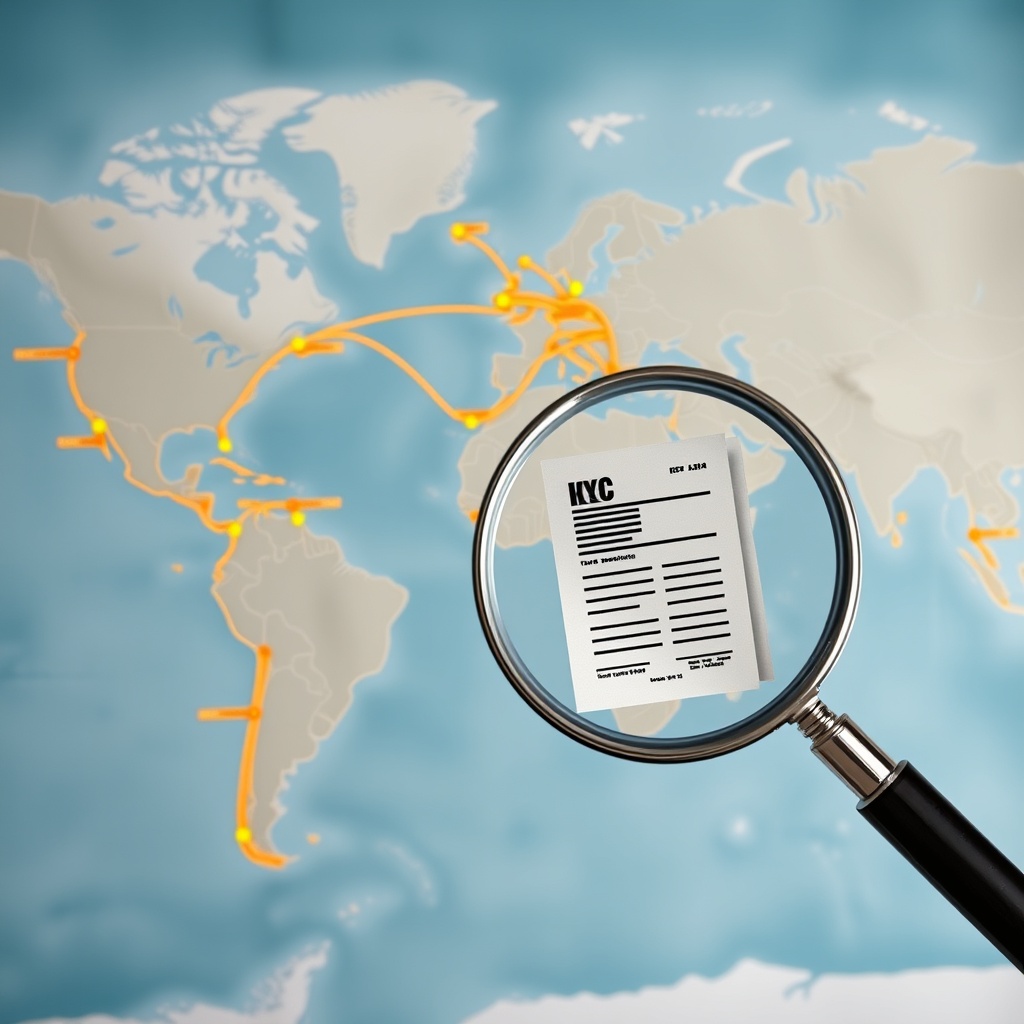
Cross-border transactions introduce complexities due to varying AML/KYC regulations across jurisdictions. We navigate this by maintaining a global compliance framework that adapts to local laws. For example, a transaction involving a high-risk country might require additional checks. Our team stays informed about regulatory changes to ensure seamless compliance.
Technology simplifies cross-border compliance by automating regulatory checks. AI-driven systems flag transactions that violate local laws, reducing manual workload. However, human oversight ensures nuanced decisions, such as assessing the legitimacy of a high-risk transaction. By blending technology with expertise, we achieve compliance without compromising efficiency.
Challenges in Cross-Border Compliance
Challenges include inconsistent regulations, data privacy laws, and cultural differences. We address these by standardising processes while allowing for local adaptations. For instance, GDPR in Europe affects how we handle customer data, requiring tailored solutions. Our goal is to harmonise compliance across borders without sacrificing flexibility.
Collaboration with international partners is key. Sharing best practices and threat intelligence helps us overcome jurisdictional barriers. For example, a suspicious transaction in one country might be part of a larger scheme elsewhere. By working together, we create a unified front against financial crime.
Strategies for Managing Global Transactions
Our strategies include centralised monitoring, local expertise, and scalable technology. Centralised systems provide a holistic view of cross-border activities, while local teams ensure compliance with regional laws. Scalable technology allows us to handle increasing transaction volumes without compromising accuracy.
Continuous improvement is at the heart of our approach. We regularly review our processes to identify gaps and implement enhancements. For example, feedback from local teams might reveal inefficiencies in transaction screening. By fostering a culture of learning, we ensure our global transaction management remains robust and adaptive.
The Future of AML and KYC
Predicting Trends in Financial Crime Prevention
The landscape of financial crime prevention is evolving rapidly, driven by technological advancements and regulatory changes. We anticipate a surge in AI-driven solutions that can predict and mitigate risks before they materialise. Machine learning algorithms will become more sophisticated, enabling real-time monitoring and anomaly detection. The integration of blockchain technology will also enhance transparency, making it harder for criminals to exploit loopholes in the system.
Another trend we foresee is the increasing collaboration between financial institutions and regulators. Shared databases and cross-border cooperation will streamline compliance efforts and reduce duplication. As criminals become more tech-savvy, we must stay ahead by leveraging innovation. The future of AML and KYC lies in proactive, data-driven strategies that prioritise efficiency and accuracy.
The Role of Innovation in Shaping AML/KYC
Innovation is the cornerstone of modern AML and KYC frameworks. We’re already seeing the impact of automation in reducing manual workloads and improving accuracy. AI-powered tools can analyse vast datasets in seconds, flagging suspicious activities with unparalleled precision. These advancements not only enhance compliance but also reduce operational costs for financial institutions.
Blockchain is another game-changer, offering immutable records and traceable transactions. By adopting these technologies, we can create a more resilient financial ecosystem. However, innovation must be balanced with regulatory compliance. We need to ensure that new tools align with global standards while addressing emerging threats.
Preparing for Regulatory Changes
Regulatory landscapes are constantly shifting, and staying compliant requires agility. We must monitor updates from key bodies like the Financial Action Task Force (FATF) and the European Banking Authority (EBA). Proactive compliance teams will invest in training and technology to adapt swiftly. The focus will be on creating scalable systems that can accommodate new requirements without disrupting operations.
Collaboration with regulators is also crucial. By engaging in dialogue, we can shape policies that balance security and innovation. The future will demand a dynamic approach, where compliance is not just a box-ticking exercise but a strategic priority.
AML and KYC Training and Awareness
Building an Effective Training Program
A robust training program is essential for fostering a culture of compliance. We recommend tailored modules that address specific roles within the organisation. Frontline staff need practical guidance on identifying red flags, while senior management requires strategic insights into regulatory risks. Interactive e-learning platforms can enhance engagement and retention.
Regular updates are also critical, as regulations and threats evolve. By incorporating real-world case studies, we can make training relatable and actionable. The goal is to empower employees with the knowledge and tools they need to uphold compliance standards.
The Importance of Employee Awareness
Employee awareness is the first line of defence against financial crime. We’ve seen that even the most advanced systems can fail if staff are unaware of their responsibilities. Regular workshops and awareness campaigns can reinforce the importance of AML and KYC. Encouraging a speak-up culture ensures that potential issues are reported promptly.
Metrics play a key role here. By tracking participation and comprehension levels, we can identify gaps and refine our approach. Awareness is not a one-time effort but an ongoing commitment to safeguarding the financial system.
Measuring the Impact of Training Initiatives
To ensure training delivers tangible results, we must measure its impact. Key performance indicators (KPIs) like reduced false positives and increased reporting rates can gauge effectiveness. Surveys and assessments provide qualitative insights into employee confidence and understanding.
Continuous improvement is vital. By analysing feedback and outcomes, we can refine our programs to address emerging challenges. Training should evolve alongside the regulatory and technological landscape, ensuring sustained compliance.
Case Studies: AML and KYC in Action
Successful AML/KYC Implementations
One standout example is a global bank that reduced false positives by 40% using AI-driven transaction monitoring. By integrating machine learning, they improved accuracy while cutting operational costs. Another success story involves a fintech firm that streamlined customer onboarding with automated KYC checks, reducing processing times from days to minutes.
These cases highlight the transformative power of technology. By adopting innovative solutions, organisations can achieve compliance without sacrificing efficiency. The key is to align technology with business objectives and regulatory requirements.
Lessons Learned from Compliance Failures
Not all implementations go smoothly. A notable failure involved a bank fined for inadequate customer due diligence. The root cause was over-reliance on outdated systems and insufficient staff training. Another case saw a cryptocurrency exchange hacked due to weak KYC controls, resulting in significant losses.
These failures underscore the importance of robust systems and vigilant oversight. Compliance is not just about technology; it’s about people and processes working in harmony. Learning from mistakes helps us build stronger frameworks.
Analysing Real-World Financial Crime Cases
Real-world cases offer valuable insights into criminal tactics. For instance, the Panama Papers revealed how shell companies exploit lax KYC controls. Another case involved trade-based money laundering, where criminals manipulated invoices to move illicit funds.
By studying these cases, we can identify vulnerabilities and strengthen our defences. Collaboration with law enforcement and industry peers is essential to staying ahead of evolving threats.

Tools and Resources for AML/KYC Compliance
Software Solutions for AML/KYC
The market offers a range of software solutions designed to streamline compliance. Platforms like Thomson Reuters Risk & Fraud Solutions provide end-to-end AML and KYC capabilities. These tools automate customer screening, transaction monitoring, and reporting, reducing manual effort and errors.
Cloud-based solutions are gaining traction for their scalability and accessibility. By leveraging these technologies, we can ensure compliance across jurisdictions while maintaining operational efficiency. The right software can be a game-changer for organisations of all sizes.
Leveraging Data Analytics for Compliance
Data analytics is revolutionising AML and KYC by uncovering hidden patterns and risks. Advanced analytics can identify unusual transaction behaviours and link seemingly unrelated activities. This proactive approach enables us to detect and prevent financial crime before it escalates.
Integration with existing systems is key. By combining analytics with AI and machine learning, we can enhance accuracy and reduce false positives. Data-driven compliance is the future, and early adopters will reap the benefits.
Essential Resources for Compliance Officers
Compliance officers need access to reliable resources to stay informed. Industry reports, regulatory updates, and professional networks are invaluable. Online platforms like the Association of Certified Anti-Money Laundering Specialists (ACAMS) offer certifications and training.
Internal knowledge-sharing is equally important. Creating a repository of best practices and case studies ensures continuity and learning. By equipping teams with the right tools and knowledge, we can build a resilient compliance framework.
Common Pitfalls in AML and KYC Compliance
Overlooking Red Flags
One of the most common mistakes in AML and KYC compliance is ignoring red flags. These warning signs, such as unusual transaction patterns or inconsistent customer information, are often subtle but critical. We’ve seen cases where financial institutions missed these cues, leading to regulatory penalties. It’s essential to train teams to recognise and act on red flags promptly. A robust monitoring system can help, but human vigilance remains irreplaceable.
Another issue is the tendency to prioritise speed over thoroughness. In our experience, rushing through customer due diligence can result in overlooked risks. Balancing efficiency with accuracy is key. Implementing automated tools for initial screening can free up time for deeper analysis. Remember, catching a red flag early can save millions in fines and reputational damage.
Inadequate Customer Verification Processes
Weak customer verification processes are a recipe for disaster. Relying solely on basic identity checks without deeper scrutiny leaves gaps for fraudsters to exploit. We recommend a multi-layered approach, combining document verification, biometric checks, and third-party data sources. This ensures a comprehensive view of the customer’s identity and risk profile.
Outdated verification methods are another pitfall. With technological advancements, manual processes no longer cut it. Leveraging AI and machine learning can enhance accuracy and efficiency. Regularly updating your verification protocols to align with emerging threats and regulatory changes is non-negotiable. Compliance isn’t static; neither should your processes be.
Failing to Update Compliance Programs
Compliance programs must evolve with the regulatory landscape. Many institutions make the mistake of treating AML and KYC programs as one-time projects. We’ve observed that stagnant programs quickly become obsolete, exposing firms to risks. Regular audits and updates are crucial to staying ahead of new threats and regulatory requirements.
Another oversight is neglecting employee training. Even the best programs fail if staff aren’t trained to use them effectively. Continuous education ensures everyone understands their role in compliance. Integrating regulatory updates into training sessions keeps teams informed and proactive. Compliance is a collective effort, and everyone must be on board.
Best Practices for AML and KYC Compliance
Developing a Culture of Compliance
A strong compliance culture starts at the top. Leadership must demonstrate a commitment to AML and KYC principles, setting the tone for the entire organisation. We’ve found that firms with a compliance-first mindset are better at identifying and mitigating risks. Embedding compliance into daily operations ensures it becomes second nature for employees.
Transparency and accountability are also vital. Encouraging open communication about compliance challenges fosters a proactive environment. Rewarding employees for identifying risks can reinforce positive behaviour. Remember, a culture of compliance isn’t built overnight, but the long-term benefits are undeniable.
Continuous Monitoring and Reporting
Real-time monitoring is a game-changer in AML and KYC compliance. Static checks are no longer sufficient in today’s dynamic financial landscape. We advocate for systems that provide ongoing surveillance of customer activities. This allows for timely detection of suspicious behaviour and swift action.
Effective reporting is equally important. Ensuring that suspicious activity reports (SARs) are accurate and submitted on time is critical. Automation can streamline this process, reducing human error. Partnering with asset management solutions providers can enhance your monitoring capabilities. Staying vigilant is the best defence against financial crime.
Engaging Stakeholders in Compliance Efforts
Compliance isn’t just the responsibility of the compliance team. Engaging all stakeholders, from front-line staff to senior management, creates a unified approach. We’ve seen success when firms involve IT, legal, and operations teams in compliance discussions. This cross-functional collaboration ensures a holistic view of risks and solutions.
External stakeholders, such as regulators and industry peers, also play a role. Participating in forums and sharing best practices can provide valuable insights. Building strong relationships with regulators fosters trust and can ease the compliance burden. A collaborative approach strengthens your overall compliance framework.
The Intersection of AML, KYC, and Cybersecurity
Protecting Against Financial Cyber Crimes
Financial cyber crimes are a growing threat, and AML/KYC measures must adapt. Cybercriminals often exploit weak verification processes to launder money. We recommend integrating cybersecurity measures into your AML/KYC strategies. This includes encrypting sensitive data and using multi-factor authentication to protect customer information.
Regular cybersecurity audits are also essential. Identifying vulnerabilities before they’re exploited can prevent breaches. Training employees to recognise phishing attempts and other cyber threats adds another layer of protection. In our digital age, AML/KYC and cybersecurity are inseparable.
The Role of KYC in Preventing Identity Theft
KYC processes are a frontline defence against identity theft. Fraudsters often use stolen identities to open accounts or conduct illicit transactions. We’ve found that robust KYC measures, such as biometric verification and liveness detection, can significantly reduce this risk. Verifying identities at the onboarding stage is critical.
Ongoing identity verification is equally important. Regularly updating customer records and monitoring for anomalies can catch identity theft early. Leveraging digital tools for identity verification enhances accuracy and efficiency. Protecting customers’ identities protects your institution’s integrity.
Integrating Cybersecurity Measures into AML Strategies
AML strategies must include cybersecurity to be effective. Cyber threats can undermine even the most robust AML programs. We advocate for a unified approach, where AML and cybersecurity teams work together. Sharing data and insights between these teams can identify threats more effectively.
Investing in advanced technologies, such as AI-driven threat detection, can enhance both AML and cybersecurity efforts. Regularly updating your systems to address emerging threats is crucial. In our experience, institutions that integrate these disciplines are better equipped to combat financial crime. The future of compliance lies in this synergy.
Frequently Asked Questions
What are the most common red flags in AML compliance?
Common red flags include unusual transaction patterns, inconsistent customer information, and high-risk jurisdictions. These indicators often signal potential money laundering. Training staff to recognise and act on these signs is essential for effective compliance.
How often should AML and KYC programs be updated?
AML and KYC programs should be reviewed and updated at least annually. However, more frequent updates may be necessary if regulatory changes or emerging threats arise. Regular audits ensure your programs remain effective and compliant.
What role does technology play in AML/KYC compliance?
Technology enhances AML/KYC compliance by automating processes, improving accuracy, and enabling real-time monitoring. Tools like AI and machine learning can identify patterns and risks that manual processes might miss. Investing in the right technology is a game-changer.
How can firms balance compliance with customer experience?
Balancing compliance and customer experience requires efficient processes and clear communication. Streamlining verification steps and using user-friendly tools can reduce friction. Transparency about why certain information is needed builds trust and improves cooperation.
Why is stakeholder engagement important in compliance?
Engaging stakeholders ensures a unified approach to compliance. Collaboration across departments and with external partners provides diverse insights and strengthens risk management. A collective effort is more effective than siloed compliance efforts.
