No spam - just the latest insights!
Join over 30,000 industry professionals who subscribe for free

Subscribe for free!
We'll never share your information or send you spam

Yolande C. Julien was called to the Bar of England and Wales in 2003. After gaining valuable experience at two local law firms in The Bahamas, she joined Glinton Sweeting O’Brien (“GSO”) as an associate in 2007.
Yolande’s practice is wide ranging as she is versed in all aspects of residential and commercial property sales and financing transactions; immigration matters, specifically short/long term work permit applications and permanent/ annual residency applications; estate planning and probate law, administering both international and local estates and resealing estates.
She also advises clients on foreign direct investment projects and represents international companies in their bid to operate local business operations/branches in The Bahamas.
Yolande is a member of the Honorable Society of Lincoln’s Inn. She holds an LLB from Queen Mary, University of London, and completed the bar vocational course at BPP Law School in London, England. She was called to the Bahamas Bar in 2016.
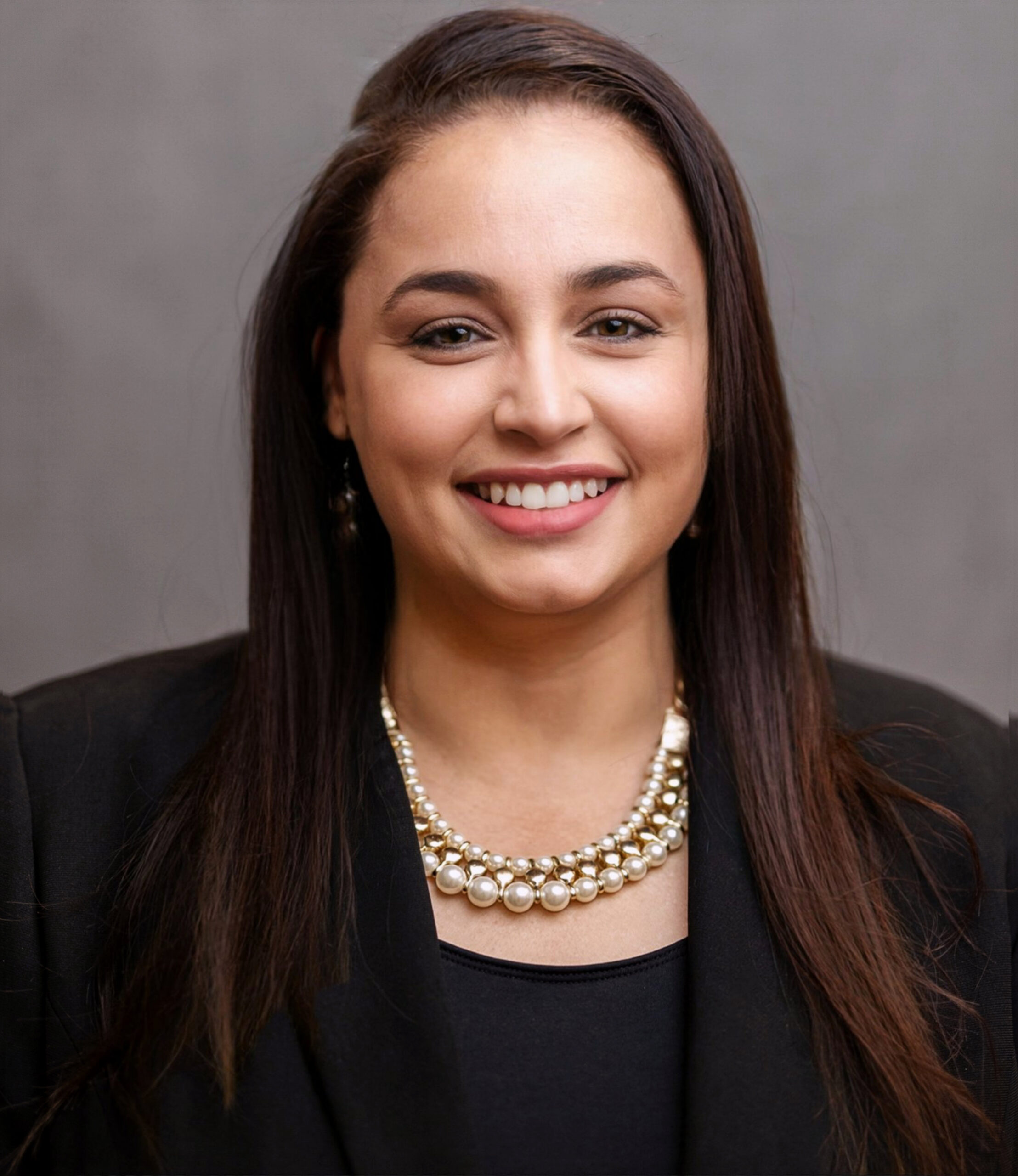
Johanna J. Mayson obtained a Bachelor of Arts diploma (Magna Cum Laude) in Florida, USA and later completed the Bar Vocational Course in London, England. In 2010, she was called to the Bar of England and Wales and in the same year, she was also called to The Bahamas Bar.
Johanna joined Glinton Sweeting O’Brien (“GSO”) in 2011 as a pupil and is currently a partner in the firm’s Real Estate, Resort Development, and Immigration Practice Groups.
Johanna specialises in real estate transactions, conveyancing, financing, resort and hotel development, government licencing, title insurance, subdivision planning and approval, local taxes, foreign direct investment, condominium and marina developments, as well as immigration and residency matters with a focus on economic permanent residency and work permits for foreign nationals.
Johanna has advised on a variety of title matters including the $1.75 billion refinancing of a mega resort on Paradise Island, and the $2.5 billion secured financing of another luxury resort in Cable Beach, New Providence. She has also acted for vendors and purchasers of private islands/cays in The Bahamas.
Johanna’s clientele include high net worth commercial, corporate, and private clients participating in the sale, acquisition, financing, and development of real estate in the Bahamian ultra luxury resort and residential markets, including communities such as Albany, Lyford Cay, Old Fort Bay, Paradise Island, Ocean Club, Baker’s Bay, and more.
In its quest to become a leading tourism destination, The Bahamas welcomed approximately 9,654,838 visitors in 2023. This is a worthy milestone, and the Government of The Bahamas continues to take active steps to attract visitors to its shores. The target for 2024 is 12 million visitors and as of August 2024 approximately 6.8 million tourists have visited The Bahamas, with approximately 1.16 million arriving via air. This push by the Government is deliberate, because amongst many benefits, visitors to The Bahamas potentially turn into property owners and residents. In this vein, the Government is committed to making the process of owning property and becoming a resident as seamless and streamlined as possible.
Most recently, the Land Reform Committee recommended a transition from our current deed registration system to a title registration, a step which will revolutionise the way real estate transactions are done in The Bahamas. This modernisation of the current registration system is still in the initial stages and will be rolled out in phases, commencing as early as the first quarter of 2025. These land reforms promise to offer, amongst other advantages, clear and marketable title in a shorter timeframe, access to credit, reduction in land disputes, and enhanced land transfer taxes.
As it stands, the process to acquire property in The Bahamas initially involves working with a realtor to identify a property. Once identified, an attorney registered to practice law in The Bahamas should be contacted
to spearhead the transaction. Our Legal Profession Act provides that only a qualified attorney from the jurisdiction may prepare documents relating to real estate transactions. Accordingly, it is prudent that checks are made to ensure the selected attorney is qualified to practice in The Bahamas. The Bahamas Bar Association maintains an up-to-date website containing a listing of attorneys in good standing.
Once an offer to purchase property is accepted, the first step is the preparation of an Agreement for Sale outlining the terms and conditions of the transaction. It provides for (not an exhaustive list):
Pursuant to the International Persons Landholding Act, a foreign national acquiring property in The Bahamas is required to apply for and obtain either a Permit or a Certificate of Registration, which applications are vetted by the Bahamas Investment Authority (“BIA”). The Permit application is a pre-closing requirement, so it is important to reference the same in the Agreement for Sale. If the Permit is not approved for any reason, the deposit is typically returned to the Purchaser. In contrast, the Certificate of Registration application is a post-closing requirement. The BIA’s main aims are to vet investors to confirm they are not nefarious characters, verify their sources of funds, and monitor their acquisition of property/ ies to ensure they are not acquiring for speculative or land banking purposes. Having tirelessly worked to be removed from the European Union’s blacklist earlier this year, the BIA plays a crucial role in ensuring The Bahamas is maintaining high international standards to restrict money laundering and terrorism financing. Supporting documents required from an applicant include a police reference from their country of residence, financial reference from a reputable banking institution and a character reference.
Once the Agreement for Sale is agreed by both parties, it is executed, and the deposit is paid in escrow to the vendor’s attorney. A purchaser’s attorney is responsible for reviewing and approving title within the parameters outlined in the Conveyancing and Law of Property Act.
Ultimately upon completion of the transaction, Value Added Tax (“VAT”) of Ten percent (10%) of the purchase price is payable to the Department of Inland Revenue. As a note, our Value Added Tax Act provides the following definition:
“foreign person” means –
(a) an individual who is not –
(i) a citizen of The Bahamas; or
(ii) a permanent resident with a right to work in The Bahamas;
(b) a company incorporated in The Bahamas where any of its shares or other capital is legally or beneficially owned by a person who is not a Bahamian or where it is in any manner, whether directly or indirectly, controlled by a person who is not a Bahamian;
(c) a company incorporated at any place outside of The Bahamas;
(d) an unincorporated association or body firm in which any of the partners or members is not a Bahamian or where it is in any manner, whether directly or indirectly, controlled by any person who is not a Bahamian; or
(e) a trust in which any of the trustees or any person having a beneficial interest in the trust is not a Bahamian
Accordingly, any purchaser described in (a) (b) (c) (d) or (e) above must pay VAT of Ten percent (10%) on the acquisition of property in The Bahamas.
As it relates to (c) above, a company incorporated outside of The Bahamas must first be registered under the Companies Act, as only Bahamian registered entities may acquire real estate in The Bahamas. There is also the option to incorporate a new Bahamian International Business Company (“IBC”) to take title. The incorporation of an IBC is more straight forward as opposed to the registration of a foreign company in The Bahamas, which is a document intensive process.
More and more local commercial banks are lending to foreign nationals for the financing and acquisition of property in The Bahamas. In the instance where a temporary resident (long term work permit holder) is acquiring an owner-occupied property, they may borrow up to B$1,000,000 to finance the transaction. Approval is however required from the Central Bank of The Bahamas for a USD mortgage loan to acquire property.
The Vendor and Purchaser attorneys shall draft, review, and agree the final form of the conveyance (transfer deed), as well as draft and finalise any other closing deeds or documents, such as mortgages and affidavits.
Once a real estate transaction is completed, the post-closing steps include the following:
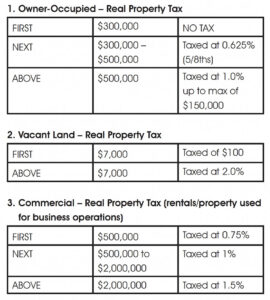
A property owner may place his or her residence in a condo-hotel rental pool/program and receive some tax benefits.
Below is a breakdown of how the condo-hotel tax is calculated using an example value of $1,000,000.00:
The Central Bank has recently relaxed many of the previously required steps a foreign national was required to take on completion of a transaction. Additionally, they have delegated authority to local commercial banks so that foreign nationals can transact business as it relates to their property and generally. Some examples are:
One major incentive of acquiring property in The Bahamas is the opportunity to apply for residency. Why visit when you can live in paradise.
Foreign nationals who have purchased or leased property in The Bahamas may apply for residency status to live, or work on an annual or permanent basis. The Bahamas offers multiple options to reside in paradise, including applications for an Economic Permanent Residence, Homeowners Resident Card, Annual Resident Permit, Work Permit, or BH-1B Visa. A brief overview of each residency option is discussed below.
Currently foreign nationals may qualify for an Economic Certificate of Permanent Residence by making a minimum investment of $750,000 in real estate in The Bahamas. For an additional fee, applicants are also able to apply for a right to work in their own business. An Economic Permanent Resident is able to live in The Bahamas permanently and enjoys most benefits of a Bahamian citizen; however, they will not be able to vote or participate in certain concessions only available to Bahamians. In most instances, a spouse and minor dependents (up to age 18 years old) may also be endorsed on a primary applicant’s Certificate of Permanent Residence.
The Government of The Bahamas recently enacted legislation which will increase the minimum economic investment threshold to qualify for Economic Permanent Residence from $750,000 to $1,000,000 for a minimum period of 10 years. Additionally, investments will be diversified to not only include real estate acquisitions but also purchases of Zero Coupon Bonds from the Central Bank of The Bahamas. The proceeds of these Zero Coupon Bonds shall be used to develop education, health, family island infrastructure or youth and sports in The Bahamas. These new changes will commence on 1st January 2025.
The International Persons Landholding Act provides an opportunity for foreign nationals who have purchased a residence in The Bahamas to apply for a Homeowners Resident Card, which is granted for a one-year period and can be renewed annually.
Foreign nationals who have not purchased a home in The Bahamas may still obtain immigration status in The Bahamas by way of an Annual Resident Permit (also called a “Permit to Reside”). This option grants the applicant residency in The Bahamas for one year and can be renewed on an annual basis. The spouse and dependents of a citizen, economic permanent resident, or work permit holder may also apply for an Annual Resident Permit.
While the Government endeavours to ensure that Bahamians are given priority in relation to employment options in The Bahamas, they do consider and approve work permits for foreign nationals offering specialty skills. Before the Dept. of Immigration considers a work permit application for a foreign national, the prospective employer will need to provide evidence that the job was advertised in the local market with no suitable candidates available. Additionally, a Certificate from the Labour Board will need to be procured indicating there are no Bahamians registered for the position. Short term work permits can be issued for 1 to 90 days. Long Term Work Permits can be issued for 1 to 3 years and can be renewed in most cases.
The Bahamas has established a programme to encourage foreign business owners in certain industries to move their international operations to The Bahamas. The Commercial Enterprises Act grants work permits to companies investing $250,000 or more in The Bahamas and requiring BH-1B work visas for their management and key personnel. The BH-1B visas are only available in the following industries:
Captive Insurance, Reinsurance, Mutual Fund Administration, Arbitration, Wealth Management, International Trade, International Arbitrage, Computer Programming, Software Design & Writing, Bioinformatics & Analytics, Maritime Trade, Nano Technology, Biomedical Industries, Boutique Health Facilities, Data Storage or Warehousing, Aviation Approved Maintenance Operations, Aviation Registration, Call Centres, Manufacturing or Assembly of Manufactures.
The standard processing period for most residency applications is approximately 3 months, however, the Government of The Bahamas recently introduced an expedited service which, for an additional fee, allows most residency applications to be processed within 2 to 3 weeks from the date the application is submitted. Work Permit applications require a pre-approval certificate from the Labour Board which may take an additional 3 to 4 weeks processing time. Economic Permanent Residence applications, however, take a longer time and average 5 to 8 months processing time. The expedited service is not available for Economic Permanent Residence applications.
All immigration applications must be accompanied by a $200 fee per application (subject to change by the Dept. of Immigration). As an illustration, an application fee for a husband, wife and their child will be a total of $600 ($200 x 3 persons). An expedited application for the same family will be an additional $1,200 ($400 x 3 persons).
The application and expedited fees for the family would total $1,800.00.
Supporting documents vary, however generally residency applications will need to be supported by the following documents:
Birth Certificate for primary applicant and each dependent (if applicable)
With its powdery beaches, crystal clear azure waters, golden sunsets, easy travel access, stable government and economy, The Bahamas offers an endless array of investment and residence opportunities for everyone, including the professional bankers, the beach combers, the island bungalow dwellers and the ultra-luxury resort jetsetters. Buying and living in The Bahamas is an incredible opportunity to experience a new culture and lifestyle. Given the increased visitors to The Bahamas and the dynamic foreign direct investment over the past year, we expect to see more and more development in the Bahamian real estate and residency space in the future.