No spam - just the latest insights!
Join over 30,000 industry professionals who subscribe for free

Subscribe for free!
We'll never share your information or send you spam

Rennos has almost 30 years of experience in the financial and advisory fields respectively with a deep understanding of the lending and NPL sectors. He has been involved for over 20 years in the management of corporate and retail loans, both performing and distressed, as well as with distressed and onboarded real estate assets.
Since joining KPMG in Cyprus in 2016, Rennos has taken a key role in leading the fields of corporate financial restructurings and insolvency work, being a licensed Insolvency Practitioner (receiverships, liquidations, examinerships, corporate and personal schemes of arrangement), independent business reviews and lenders’ due diligence for existing and new financing, the provision of debt advisory services to corporate clients and expert training to the financial and corporate sectors. Rennos has also been involved in various real estate market studies, real estate onboarding, options assessment and monetisation strategies.

Elena started with KPMG in Cyprus in 2012. She has completed numerous engagements with clients in a number of industry sectors including financial services, retail, tourism & leisure and other sectors.
Elena has an extensive experience in the provision of financial restructuring services as she was involved in various projects including option analysis on the restructuring/ recovery strategy of major banks, independent Business Reviews on the financial performance of corporate clients, and review of Borrower Summaries at the request of financial institutions, providing an insight into the background, current position and recoverability of their NPL exposure.

Athos joined KPMG in Cyprus in 2014. He has been involved in delivering various engagements to clients in a number of industry sectors including real estate, financial services, retail, tourism & leisure and other sectors.
Athos has a wide experience in the provision of debt advisory services, financial restructuring services and insolvency work. He has been involved in many projects including receiverships for trading and non-trading companies, Independent Business Reviews on the financial performance of corporate clients, options analysis on the restructuring/ recovery strategy of major banks and review of Borrower Summaries at the request of financial institutions, providing an insight into the background, current position and recoverability of their NPL exposure.

The Republic of Cyprus, a member country of the European Union and the Eurozone, is a small, open and service-oriented economy.
Located at the crossroads of Europe, Middle East-Asia and Africa, Cyprus is considered to be a business gateway between the East and the West.
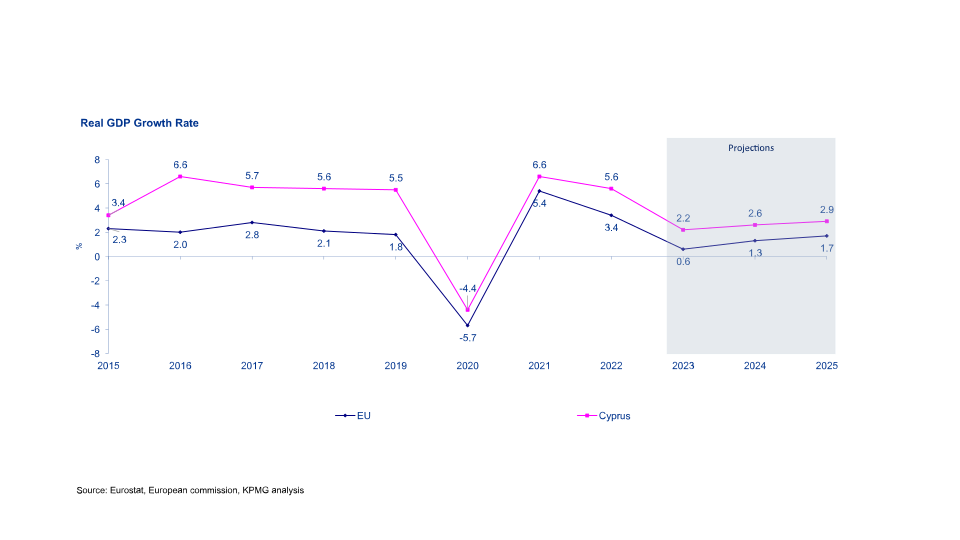
In the first half of 2023, the real GDP growth rate reached 2,2%.
It is expected that it will reach 2,2% for the full year compared to 0,6% in the EU.
Real GDP Growth Rate
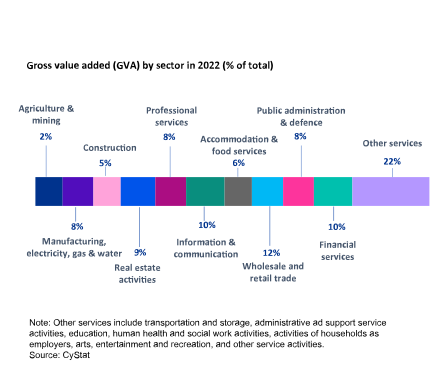
The economy is dominated by services, which accounted for 85% of gross value added in 2022.
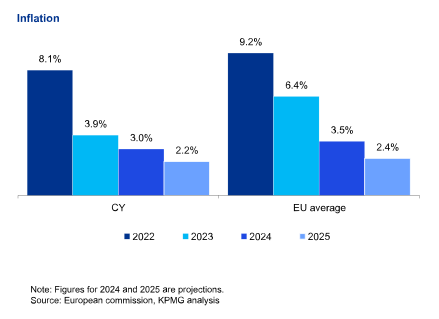
After peaking in 2022, inflation is now slowing. It declined from 8,1% in 2022 to 3,9% in 2023, and is expected to further decline to 2,2% in 2025.
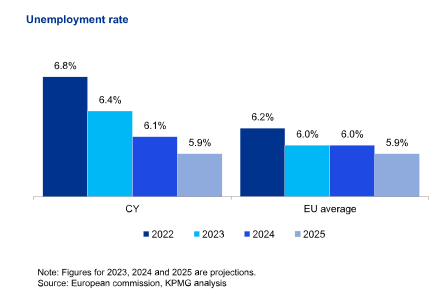
The unemployment rate is expected to decline at a slow pace in the next few years.
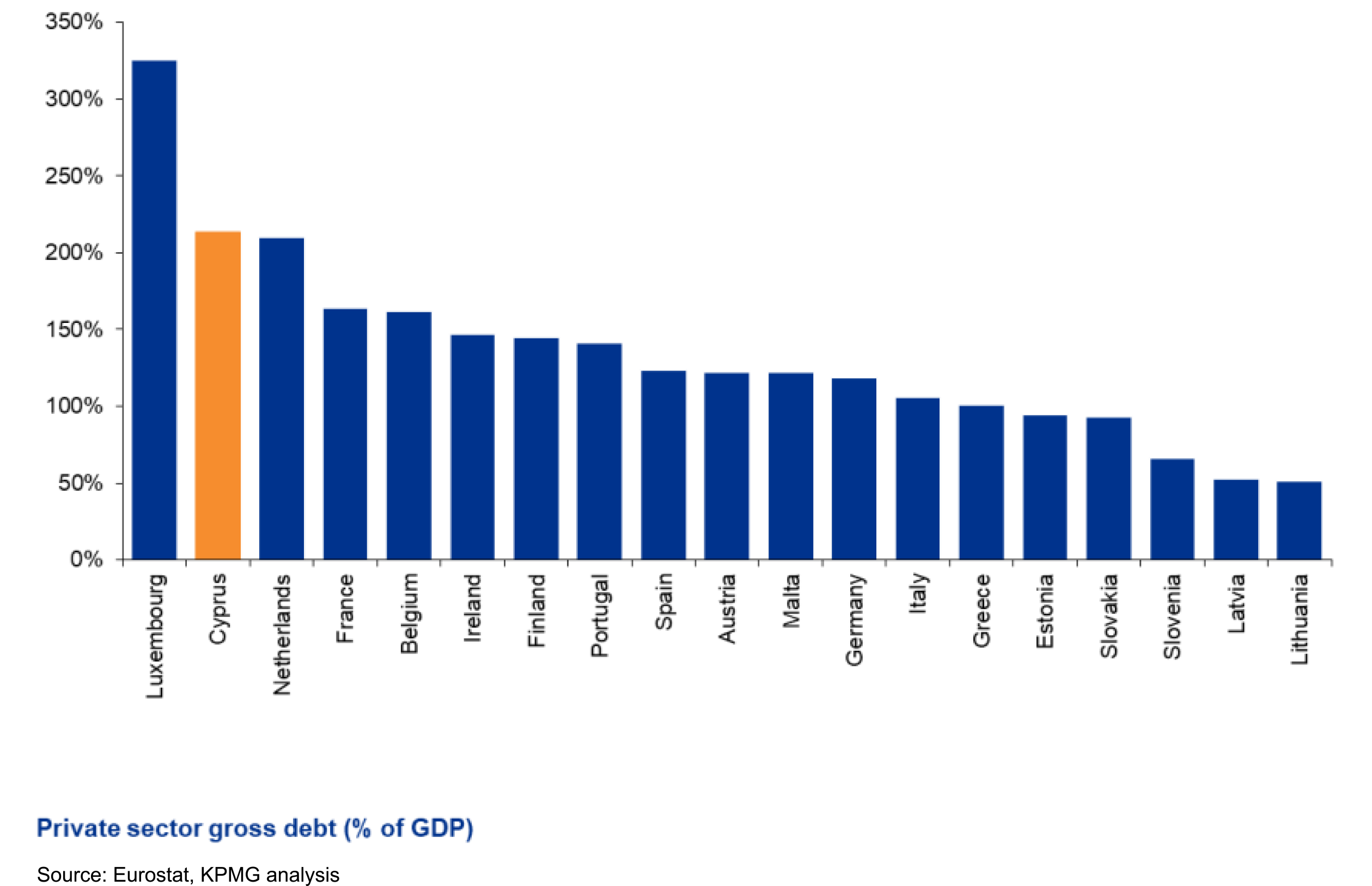
By the end of 2022, the private debt has reached approximately 213% of GDP, falling from nearly 250% of GDP at the end of 2021.
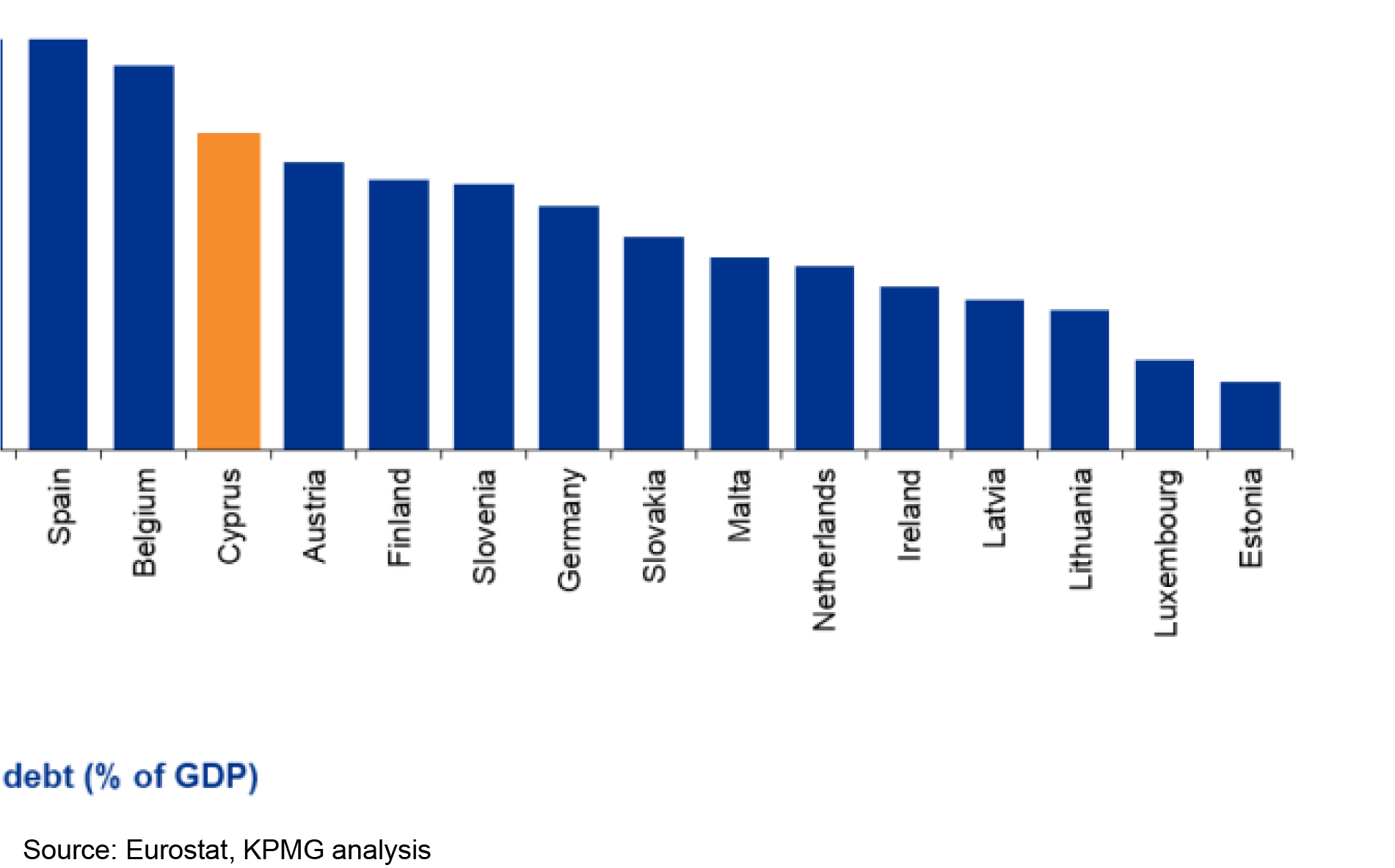
In 2022, the public debt ratio fell by approximately 15% to 85,6% of GDP, and it is projected to continue on a downward path in the coming years driven by economic growth.
In an effort to modernise and minimise the administrative burden on businesses, Cyprus has recently undertaken several initiatives to improve current procedures. The ultimate goal is to facilitate strategic investments and have a positive impact on growth. Such initiatives include, inter alia:
• Establishment of the Business Facilitation Unit (BFU) in January 2022, which facilitates a fast and efficient processing of requests from foreign companies regarding their establishment in Cyprus.
• Implementation of the “Facilitation of Strategic Development Projects” law of 2023 which aims to simplify and accelerate the licensing of procedures for strategic investments.
• Establishment of the “Hippodamus” System for the
digitisation of the submission and examination of
planning permits in June 2021 with further reforms in
the relevant legislation expected in 2024 aiming into
the simplification of the overall procedure especially
for small scale construction projects.
• Invest Cyprus’ tool “Project Bank” was introduced in 2021. This is an online tool that helps investors to identify market opportunities in Cyprus.
The primary market
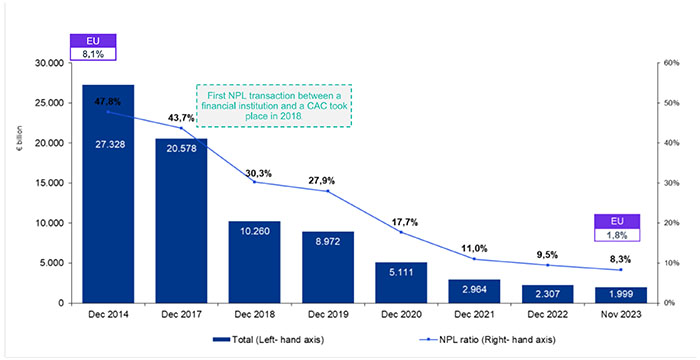
The Cyprus banking sector has experienced a noteworthy drop in the Non-Performing Loan (“NPL”) volumes. The NPL ratio within the local banking system has plummeted by 39.5 percentage points, resulting in a €25.3 billion reduction between 2014 (47.8%, €27.3 billion) and November 2023 (8.3%, €2.0 billion). However, the NPL ratio is still considerably higher than the EU average.
A key catalyst behind this reduction has been the purchase of approximately €17 billion, predominantly real estate-backed loans, by Credit Acquiring Companies (CACs). Additionally, organic means have contributed to NPL volumes reduction, such as write-offs, cash repayments, loans cures, and debt-to-asset swaps.
Non-Perfoming Loans
 Note: EU average ECB data as of June 2023, CBC data for CY as of November 2023
Source: CBC, ECB
The establishment of CACs in Cyprus was introduced as a measure for tackling the high volumes of NPLs that burdened the island’s financial system. The Sale of Credit Facilities and Related Matters Law which governs the establishment of such companies came into effect in 2015 allowing local banks to “catch a breath”, by enabling the securitisation of NPLs.

Recent data suggests a deceleration in this downward trend. Specifically, comparing the substantial reductions of €2.2 billion in 2021 and €0.7 billion in 2022 to the more modest €0.3 billion reduction up to November 2023, raises the question of whether the primary market is navigating a period of contraction.
Despite the significant strides by the island’s systemic banks in reducing “bad loans” to meet EU targets, the latest reported results suggest that there is still a considerable journey ahead at an aggregate level. This is particularly evident in the Less Significant Institutions (LSIs). As per the Financial Stability report published by CBC in December 2023, the NPL ratio for the LSIs was approx. 25% as at 31 December 2022, much higher than the average local NPL ratio.
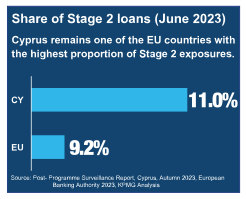
Adding a layer of concern, the European Banking Authority (EBA) warns that early signs of asset quality deterioration, due to geopolitical tensions, higher interest rates and inflationary pressures, are visible at an EU level.
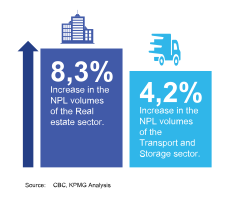
According to the EBA, this is especially visible for sectors that are most vulnerable to economic downturns, such as real estate activities. In Cyprus, this is exemplified by an increase in the NPL volume of the Real Estate and Transport and Storage sectors between Q2 and Q3 2023.
Amid potential future challenges, ongoing developments in the primary market are expected to shape forthcoming sales and securitisations, albeit on a reduced scale. The changing dynamics within this shrinking primary market, already populated by prominent key players, have made it less appealing to new private equity investors.
Additionally, the prevailing uncertain macroeconomic landscape complicates NPL recoveries, with decreasing household disposable income and increasing operating costs and declining turnover for NFCs, creating a less favorable environment in the primary market.
Therefore, the trajectory of Cyprus’ primary NPL market future depends significantly on smaller banks effectively deleveraging, a pivotal factor influencing its upcoming prospects.
The secondary market
Amidst a shift in the primary market dynamics, where bank disposals ease, it is expected that investors will increasingly opt for strategic offloading of NPL portions in the secondary market, which is poised for greater attention and activity.

Re-entry of re-performing loans into the banking system
In a recent development in Cyprus with reference to the former approach, the State-Owned Cyprus Asset Management Company (Kedipes) announced an agreement with the Bank of Cyprus Public Company Limited in December 2023, involving the sale of a portfolio comprising serviced and re-performing loans which will effectively re-enter the banking system.
Re-sale of targeted/smaller portfolios to specialised acquirers
This trend extends across the European Union, where private equity investors, aligning with deleveraging strategies, seek to divest segments of their portfolios in the secondary market. A notable approach involves segmenting portfolios into specific themes or sectors, catering to specialised acquirers. A recent example is Intrum’s Tethys Project in Greece, featuring the sale of hospitality-related NPLs to a consortium of investors, including a hotel and commercial real estate investment group in 2022.

The evolution of the market has significantly improved data availability, with a broader and better quality dataset now accessible
Regulatory measures, including the adoption of data templates like EBA’s Implementing Technical Standards (ITS) for NPL transactions, along with other data initiatives, seek to improve the availability, quality, and comparability of NPL data.
In addition, the preparatory work leading up to these transactions, such as data remediation efforts, not only enhances the attractiveness of these opportunities but also guarantees transparent portfolio performance, providing investors with valuable insights into their potential returns.
Use of sophisticated tools for achieving a deeper insight into portfolio performance
The use of sophisticated tools, such as Artificial Intelligence and Machine Learning, further enhances transparency in portfolios performance, offering a strategic advantage to investors navigating the dynamic landscape of the secondary market.
Secondary market opportunities in Cyprus
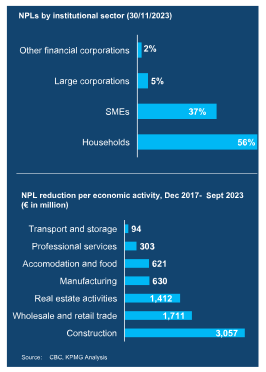
Analysing the data published by the CBC with respect to NPL volumes per economic activity, it is apparent that significant reductions have been consistently witnessed over the years within sectors such as real estate activities, construction, wholesale and retail trade. In a lesser extend this pattern is also visible for the manufacturing, accommodation & food service activities, professional, scientific & technical activities, and the transport & storage industries.
While acknowledging that these reductions stem from a combination of organic processes, and not solely
from loan portfolio sales via the primary market, one can recognise the inherent opportunities awaiting
exploration within the secondary market for these sectors. This nuanced perspective underscores the
potential for strategic investments in the evolving landscape of NPLs, presenting a captivating prospect for forward-thinking investors.
New Civil Procedure Rules

Over the years, the legal system of Cyprus has evidenced significant evolution, adapting both to internal and external legal changes and developments, especially to those arising from the European Union. The implementation of legal reforms was deemed essential to align Cypriot laws with the standards set by the EU.
Since September 1, 2023, there has been a transformational change in the way that civil cases are handled by the Cyprus District Courts. This change stems from the replacement of the previously in-force Civil Procedure Rules with an entirely new code, signifying a noteworthy reform within the Cypriot Legal System.
Scope
Overload of courts and delays
The overload of courts in Cyprus with a vast number of cases has led to prolonged delays in the adjudication of those cases, causing concerns about the effectiveness of the legal system, as well as the timely protection of citizens’ rights.
The new Civil Procedure Rules aim at addressing the above issues. The introduction of clearer procedural guidelines could assist in eliminating ambiguity and potential misinterpretations that lead to delays.
Furthermore, the enforcement of stricter timelines could ensure that cases are adjudicated within a shorter timeframe.
The formalisation of the pre-trial protocols process
The process of pre-trial protocols is being introduced. This is a mandatory procedure that one must adhere to before resorting to court.
Specifically, a detailed demand letter shall be send to the other party, and if settlement of the demand is not achieved through negotiation efforts, only then can a legal action be initiated at court. If one fails to follow this procedure and/or does so inadequately, it may have consequences during the adjudication of the case.
Main changes compared to previews rules
Pre-trial Protocols
According to the new regulations, as noted earlier, the procedure of pre-trial protocols must be followed before a legal action can be initiated at court. The newly assigned responsibilities of the parties and their legal representatives, along with the more ‘active’ role of the court are intended to induce the parties of legal proceedings to undertake significantly more actions. This is aimed at either facilitating the resolution of a claim at the early stages or ensuring a more thorough preparation of a case, which ultimately aims in expediting the judicial process.
Role of the court
Until recently, the court did not have an active role in case management. More specifically, the court’s mission was to adjudicate the case and not to intervene in matters related to settlement efforts. With the new rules in place, the courts have an active role in encouraging settlement and compromise through assistance and settlement efforts.
Costs and fees
The new rules have introduced a more transparent fee structure for civil court cases. There are now clear guidelines for costs and provisions regarding the calculation of legal expenses. Additionally, judges have the authority to issue cost management orders to control the expenses of the judicial proceedings.
In a rapidly evolving technological landscape, the promise of a highly efficient and backlog-free judicial reality looms large. This transformation holds particular significance in the context of the regulatory framework, especially in jurisdictions like Cyprus where specialised courts for corporate proceedings are lacking. The infusion of advanced technology into the legal system can bring about a profound shift, fostering harmonised proceedings and homogeneity in case handling.
The advantages stemming from the implementation of cutting-edge technology are far-reaching, extending beyond the scope of the following list:
• Automation of Document Processing: Streamlining the routing and filing of all incoming documents without manual intervention.
• Digitalisation of Physical Documents: The conversion of physical documents into digital formats, enhancing accessibility and reducing reliance on paper-based processes.
• Efficient Data Analysis: Harnessing the power of advanced technology to analyse vast datasets and extract information swiftly, thereby drastically increasing overall efficiency.
• Automated Legal Document Drafting: The creation of initial drafts of legal documents, revolutionising the time-consuming process of document preparation.
The adoption of such technological advancements, will open-up new possibilities for efficiency, transparency, and a more streamlined legal process.
ESG considerations shaping the local economy
While Cyprus is making progress in embracing the ESG principles, there are several challenges to overcome which may present great opportunities in the future. ESG is expected to shape the local economy in the future in several ways.

• Consulting firms and service providers specialising in ESG integration are acquiring the essential expertise needed to offer assistance in reporting, compliance, and implementing sustainable business practices.
• Board members and employees will need to engage in training programmes to acquire specific skills and knowledge pertinent to the green transition and ESG.

• During 2023, the proportion of solar energy in Cyprus, comprised only 15% of the overall electricity mix. To address the fossil fuel dependency of the Cypriot economy, a more ambitious and rapid deployment of renewables in energy production is essential.
• Cyprus has ample sunshine, making it well-suited for solar energy projects. Government incentives and the overall EU commitment for sustainable energy make this sector attractive with investments in solar farms, wind energy, and other renewable sources gaining traction.

• Financial institutions that prioritise ESG considerations are gaining prominence. Sustainable banking, green bonds, and investment funds focused on ESG criteria are expected to emerge in the following years.
• ESG ratings are now integrated into the early stages of the loan transaction process. The evaluation of the presence, monitoring, functionality, and effectiveness of ESG policies is emerging as a new element in financial due diligence and affects the final terms agreed between lenders and borrowers.

• Cyprus is grappling with challenges in meeting the EU greenhouse gas emission reduction obligations, particularly in the transport sector, which accounts for 40% of the final energy demand. Additionally, the country faces challenges in waste management, with per capita waste generation exceeding the EU average, and a recycling rate of 14.9% far lower than the EU average of 48,5% in 2021.
• Investments in sustainable infrastructure, such as energy-efficient transportation and waste management systems, are crucial in addressing the above challenges.

• Establishing a sustainable water management system is crucial for Cyprus due to its high water stress levels, exacerbated by low precipitation and high temperatures. Water scarcity is a pressing issue, necessitating investments in water conservation technologies, desalination projects, and efficient irrigation systems.

• Environmental responsibility is expected to push the growth in demand for technologies that monitor and mitigate environmental impacts such as environmental monitoring solutions, sustainable agriculture technologies, and waste reduction innovations.

• Real estate developers and investors are expected to be involved in constructing or retrofitting buildings to meet ESG standards. Eco-friendly, energy-efficient buildings with sustainable features can attract environmentally conscious tenants and buyers.

• Socially responsible investing involves supporting initiatives that contribute positively to society. Therefore, investments in companies engaged in education, healthcare, affordable housing, and community development are expected to occur.
Special thanks to our colleagues from Restructuring & Debt Advisory, KPMG Cyprus, for their contribution to the above publication: Andreas Papamichael, Ioanna Kanari, Vagia Dimoyianni, Dionysios Kollyriotis, Alexandros Demetriou and Nicolas Yiannakou.